Qualified specialists in Kelvinator systems
Kelvinator Air Conditioner Service and Repairs
A Kelvinator split system rarely fails without warning. Usually there is a hint first, and that hint is what brings most owners to our team in the end.
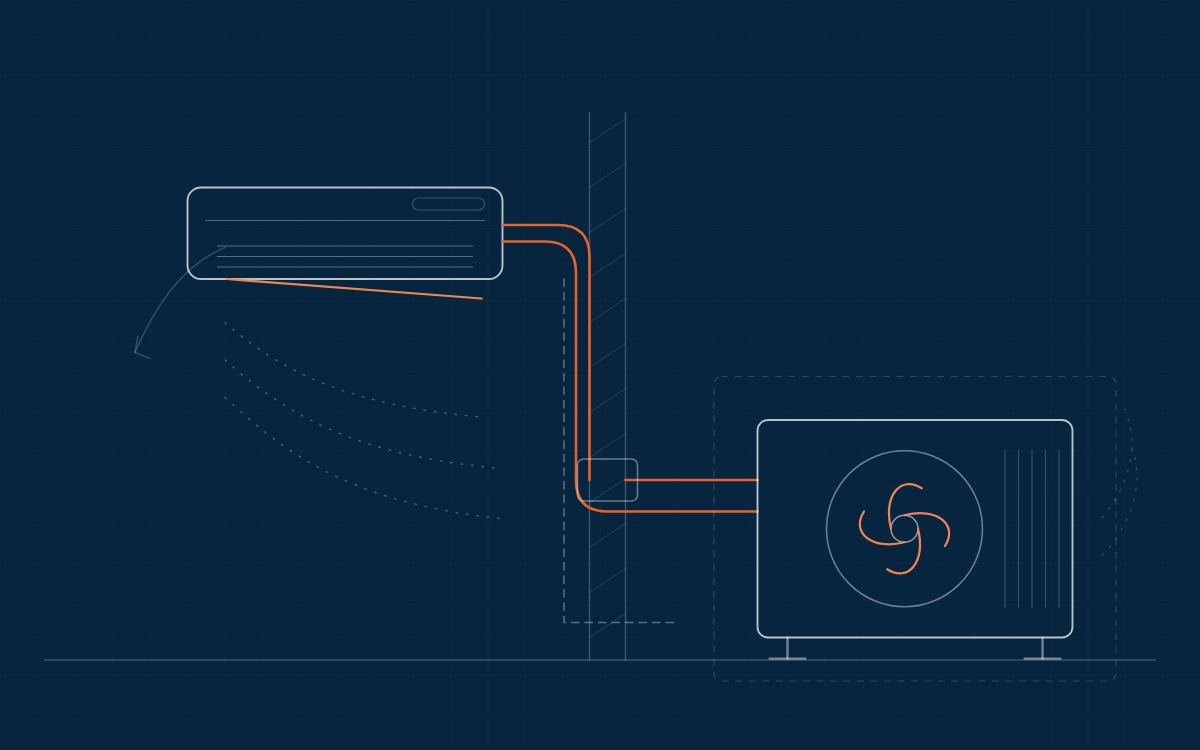
Those hints matter, because each one points to a different part of the system. Read the sign correctly and a small fix stays small. Ignore it and a minor fault can reach the compressor.
So this page starts where you are standing, in front of a unit that is behaving strangely. Then it works outward to causes, checks and repairs.
Treat this Kelvinator air conditioner service and repairs guide as practical advice rather than a sales pitch. We are not the manufacturer, and we work on the brand every week.
On this page
- What the Early Warning Signs Actually Mean
- The Faults We Find Most Often
- Less Common Causes Worth Ruling Out
- Matching the Work to the System You Own
- Safe Checks You Can Make Before Booking
- Getting the House Ready for the Visit
- When to Stop and Call Qualified Experts in Kelvinator Systems
- How Our Technicians Diagnose a Fault
- Reading the Codes Your System Shows
- Noise, Vibration and the Neighbours
- Where the Water Goes and Why It Matters
- Repairs, Parts and the Kelvinator Warranty
- Renting, Landlords and Strata Approvals
- Keeping a Record of Your System
- Servicing That Prevents the Next Breakdown
- Filters, Dust and the Air You Breathe
- Deciding Between a Repair and a New System
- What Shapes the Cost of a Repair Visit
- Questions Worth Asking Before You Approve Work
- Where We Provide Kelvinator Repairs Australia Wide
- How to Arrange a Visit From Our Team
- How the Seasons Shape Our Diary
- Storms, Power Cuts and Restarts
- Simple Habits That Keep Running Costs Down
- Questions Owners Ask Most
- Putting This Into Practice
What the Early Warning Signs Actually Mean
Air that feels cool but never cold usually points to airflow or refrigerant. Both faults look identical at the vent. Therefore the symptom alone cannot name the cause.
A rattle at startup often means a loose fan blade or a mounting bracket that has shifted. Meanwhile a grinding note suggests a bearing on its way out.
Water running down the wall below an indoor head points to a blocked drain. Because the condensate has nowhere to travel, it backs up into the tray and spills.
An error code on the remote is the system reporting the result of its own self test. Write that code down before you clear it, since it saves diagnostic time later.
Smells carry information too. A musty note usually means biological growth on the indoor coil. A sharp chemical note means stop and seek Kelvinator air conditioner help straight away.
Finally, a system that runs constantly without reaching the set temperature is telling you something. Either it has lost capacity, or the load on the room has grown.
The Faults We Find Most Often
Across a normal working week the same handful of causes accounts for most callouts. They appear here in rough order, from the ones we see constantly to the ones we see now and then.
Notice how many of those trace back to dirt rather than a broken part. Regular servicing and maintenance removes most of them before they become a fault.
The order also shifts with the season. Airflow faults dominate the first hot week, while electrical faults cluster later, once the system has run hard for a month.
- Dirty filters and a clogged indoor coil, which starve the system of airflow and drop output on the hottest afternoons.
- Blocked condensate drains, which cause dripping, staining and sometimes a shutdown on newer models.
- Low refrigerant from a slow leak at a flare joint or a chafed line, which shows up as weak cooling and a frosted pipe.
- Failed capacitors in the outdoor unit, which leave the fan or compressor humming without starting.
- Faulty thermistors and sensors, which report the wrong temperature and make the system cycle at odd moments.
- Worn indoor fan bearings, which turn a quiet room into a noisy one over a season or two.
- Remote and control board faults, which look like a dead unit but often trace back to a single component.
- Outdoor coils packed with grass, lint and garden debris, which trap heat the system needs to reject.
Less Common Causes Worth Ruling Out
Some faults appear rarely, yet they matter because owners chase the wrong thing for weeks. A tripping circuit breaker is one example. It can mean a failing compressor, though a nesting animal in the outdoor unit does the same job.
Reversing valve faults are another. On a reverse cycle system the valve switches the flow between heating and cooling. When it sticks, the unit heats in summer or cools in winter with no obvious warning.
Then there is undersizing. A unit that was right for the room years ago may struggle after renovations, new glazing or a wall coming down. Nothing has broken, yet the complaint sounds the same.
Voltage problems round out the list. A long circuit run, a loose terminal or a shared load can starve the compressor exactly when it needs current most.
Airflow design deserves a mention too. Furniture pushed against a return grille, a closed door or a curtain across a head will all reduce output. Nothing inside the machine has changed, yet the room feels worse.
Matching the Work to the System You Own
Not every unit hangs on a bedroom wall. The brand appears in wall mounted splits, multi head systems, ducted installations, window and wall boxes and portable machines.
Each type fails in its own way. A wall split usually shows drainage and airflow faults, while a ducted system hides its trouble in the roof space.
Multi head systems add a layer, because one outdoor unit feeds several rooms. Therefore a fault in one head can look like a fault in all of them.
Window and wall boxes are simpler, yet they suffer more from corrosion and worn fan motors. Portable machines mostly fail at the hose, the tank or the compressor.
Ducted work deserves a warning of its own. Because the fan coil sits in a roof space, summer access is limited to the cooler hours of the morning.
Model numbers help more than descriptions do. The sticker under the front flap of the indoor unit names the series, and that name tells us which board and sensor set to expect.
So tell us the type when you book. That single detail decides which parts and which ladders go into the van.
Safe Checks You Can Make Before Booking
Some checks need no tools and carry no risk. Working through them in order gives our technicians a much better picture, and now and then it solves the problem outright.
Those seven Kelvinator air conditioner service and repairs tips take about half an hour. Even if they change nothing, they narrow the field and shorten the visit.
Keep a short note of what you find. A photograph of the outdoor unit and a line about when the fault appears both travel well over the phone.
Then leave the system off until we arrive if anything looked unsafe. Running a suspect machine to test it again rarely tells you more than the first attempt did.
Check the mode on the remote. Fan only and dry mode both feel like a cooling failure to anyone standing in the room.
Set the temperature well below the room reading, then listen for the outdoor unit starting within a few minutes.
Open the indoor unit and slide out the filters. Wash them in cool water, shake them dry and refit them the same way around.
Look behind and above the outdoor unit. Clear leaves, clippings and anything stacked against the fins.
Follow the drain line to its outlet and check for a steady drip while the unit cools.
Reset the circuit at the switchboard once, and only once. If it trips again, stop there.
Write down any error code, the time it appeared and what the unit did next.
Talk it through with a technician
Tell us the model and what the unit is doing, and we will bring the right parts to the first visit.
Getting the House Ready for the Visit
A little preparation shortens the visit and lowers what it costs you. Most of it takes minutes, and none of it needs any skill.
Clear a path to the indoor head first. Furniture, shelving and hanging clothes all sit in the way of a ladder more often than owners expect.
Then unlock the side gate and move anything stacked against the outdoor unit. Bins, bikes and firewood tend to gather in exactly the space a technician needs.
Pets deserve a plan of their own. Doors stay open while we work, so a nervous dog or a curious cat is safer in another room.
Find the switchboard before we arrive and check whether the circuit carries a label. If nobody knows which switch feeds the unit, say so when you book.
Lastly, have the model number ready along with a note of the fault. Two minutes of preparation there saves twenty on the day.
When to Stop and Call Qualified Experts in Kelvinator Systems
There is a clear line between owner maintenance and technician work. Anything behind a panel, inside a refrigerant circuit or connected to mains wiring sits on the far side of it.
Refrigerant is the other hard boundary. Australian law restricts handling to licensed people, so topping up a system yourself is neither legal nor safe. In addition, a top up without a leak repair simply wastes the gas.
Ice on the pipework deserves the same respect. Although melting it looks like progress, the ice is a symptom of restricted flow, and running the unit in that state loads the compressor badly.
Three situations end the do it yourself stage outright. A breaker that trips twice, water reaching a power point, or a unit that ignores every input.
In each of those cases the sensible move is Kelvinator air conditioner support from someone qualified. Waiting rarely improves the outcome, and it sometimes widens the damage.
Stop immediately if you smell burning, see scorch marks near the terminals or hear a sharp electrical crack. Switch the circuit off at the board and leave it off.
How Our Technicians Diagnose a Fault
The Conversation Before the Toolbox
Good diagnosis starts with questions. When did the behaviour change, and what does it sound like now. Does the fault show in heating as well as cooling.
We also ask about the house itself. New insulation, a removed wall or a west facing window can change the load without touching the unit.
Those answers shape the order of testing. For example, a fault that only appears late on hot afternoons suggests heat rejection at the outdoor unit rather than a control problem.
Testing Under Real Running Conditions
Next comes measurement. Our technicians read supply and return air temperatures, then check current draw at the compressor and the fan.
Pressures matter as well, though only against the conditions on the day. A reading that looks normal in mild weather can be plainly wrong at forty degrees.
Electrical testing follows the same logic. Capacitors get a capacitance reading rather than a visual glance, because a capacitor can look perfect and still sit well outside tolerance.
Leak detection uses an electronic detector along the joints and line set, plus a dye trace where a leak hides inside a wall cavity. Guesswork has no place here.
Finally the technician explains what the readings mean in plain words, along with the options. You should never be asked to approve work you do not understand. Our air conditioner repairs page covers the common jobs in more detail.
What Happens on the Day of the Visit
A visit starts with a walk through rather than a toolbox. The technician looks at the indoor head, the outdoor unit and the switchboard before touching anything.
Then the machine runs while the readings come in. Because a fault often shows only under load, that running time matters more than it looks.
Once the cause becomes clear, you hear the options in plain words. Some jobs finish within the hour, while others wait on a part.
If a component has to come from a supplier, we say so on the day. Then we book the return visit before we leave, so nothing drifts.
Lastly the technician repeats the readings taken at the start. Numbers before and after remain the only honest proof that a fault has gone.
Reading the Codes Your System Shows
Modern units report their own faults. A code on the indoor display and a pattern of blinks on the timer light both carry the same message.
Codes point at a circuit rather than at a part. For example, a sensor code sends us to a thermistor, while a communication code points at the wiring between the two units.
Because of that, a code narrows the search without ending it. The technician still has to prove which component failed before fitting anything new.
Write the letter and number down exactly, along with the time it appeared. Our manuals library and the error code guides explain the common ones.
Clear the code once, then watch what the unit does next. If it returns within minutes, stop resetting and book the visit instead.
Noise, Vibration and the Neighbours
Sound carries further at night than anyone expects. An outdoor unit that nobody notices at two in the afternoon can dominate a quiet street at two in the morning.
Start by naming the noise. A hum, a rattle, a buzz and a grinding note each point at a different part of the machine.
Mounting is the usual culprit behind vibration. Rubber feet flatten with age, brackets work loose, and the frame then passes every tremor into the wall behind it.
Fan noise changes with speed and with debris. A single leaf against a blade produces a tick that sounds far worse indoors than out.
Neighbour complaints deserve an early answer rather than a defensive one. Councils treat mechanical noise seriously, and a quiet unit is usually a healthy unit as well.
So book a look when the sound changes rather than when it becomes unbearable. Noise is often the first symptom a system offers.
Where the Water Goes and Why It Matters
Every cooling system makes water. A cold coil pulls moisture out of the air, and that water has to leave the building somehow.
On a wall split it runs into a tray, then down a pipe that relies on gravity alone. Any sag, blockage or lifted section stops the flow.
The first sign is rarely a drip. More often it is a musty smell, a gurgle from the indoor unit or a damp patch on the wall below.
Ducted systems hide the same problem above the ceiling. There the first sign can be a stain on plasterboard, long after the tray started spilling.
Condensate pumps add a moving part to the story. When one fails, water rises in the tray until a sensor trips the system or the tray overflows.
So treat any water where it should not be as urgent. Timber, plaster and wiring all cost far more to put right than a drain clean.
Repairs, Parts and the Kelvinator Warranty
A repair is only as good as the part that goes into it. Where a component still has a factory match available, that is what we fit. Otherwise we use an equivalent that meets the same specification.
The Kelvinator warranty belongs to the manufacturer. We do not administer it and we cannot decide a claim on the behalf of the brand. What we can do is document the fault clearly so an owner has something solid to lodge.
Our own workmanship guarantee is separate from that. It covers the labour we perform and the parts we supply, and we explain the terms before starting.
If a unit sits inside its manufacturer warranty period, tell us early. Then we can advise whether a claim through the brand makes more sense than a paid repair.
Age changes the maths as well. On an older system we compare the repair against the remaining life, because pouring money into a tired compressor rarely pays off.
Renting, Landlords and Strata Approvals
Not every caller owns the unit they are standing under. Renters, landlords and agents all ring us, and each one needs a slightly different answer.
If you rent, report the fault to the agent in writing and keep the date. Most tenancy agreements put the appliance on the owner rather than the tenant, so approval comes from that side.
Landlords benefit from booking the annual service themselves. A serviced system fails less often, and a documented history settles most arguments about neglect.
Apartments add a second layer. Where the outdoor unit sits on common property, the body corporate usually has a say before anything moves or gets replaced.
So find out early who signs off on the work. A repair that waits three weeks for approval helps nobody in the middle of February.
Keeping a Record of Your System
Systems outlive memories. A short written history turns a guessing game into a straightforward diagnosis five years from now.
Photograph the model sticker on both the indoor and the outdoor unit. Those two labels answer half the questions any technician asks on the phone.
Keep the installation paperwork with the purchase receipt. Warranty questions depend on dates, and dates are hard to prove once the paperwork disappears.
Note every service and every repair on the same page. Part names, dates and the readings taken all belong in that record.
Then add the odd observation between visits. A note that the vent felt weaker in January gives us a starting point in December.
Servicing That Prevents the Next Breakdown
Prevention is unglamorous and it works. A system that gets a service once a year loses less capacity, draws less current and lasts longer than one that never sees a technician.
A proper service covers more than a filter rinse. The technician cleans the indoor coil and blower wheel, flushes the drain, checks electrical connections for heat damage and measures performance before and after.
Between visits, a few simple habits keep things steady. Rinse the filters monthly during heavy use, and keep the outdoor unit clear by a good arm length.
Then let the fan run for a while after cooling finishes. Drying the indoor coil is the simplest way to stop mould taking hold in the first place.
Also watch the small changes. A slight new noise, a longer run time or a faint smell all arrive before the failure does. Booking early costs less than booking late.
Timing helps as well. Spring is quieter than the first heatwave, so a spring service usually means a shorter wait and a calmer diary.
Filters, Dust and the Air You Breathe
An air conditioner moves the same indoor air around a room again and again. So whatever sits on the filter ends up in the room with you.
Standard filters catch lint, hair and coarse dust. They do very little about fine particles, although a clean filter still beats a loaded one by a wide margin.
Damp coils are the bigger issue in humid weather. Because dust settles on a wet surface, a dirty coil becomes a place where mould can take hold.
Households with allergies notice the difference first. A room that smells stale within an hour of starting the unit usually points at the coil rather than the filter.
Rinse filters monthly through heavy use and let them dry fully. A damp filter slid back into the unit simply feeds the problem it should prevent.
Then open a window for a few minutes each day. Cooling recirculates air, so fresh air has to arrive from somewhere else in the house.
Deciding Between a Repair and a New System
Every owner reaches this fork eventually. A repair keeps the current machine going, while a replacement resets both the clock and the running cost.
Age is the first filter. A unit in its early years almost always deserves the repair, since the rest of the system still has plenty of life in it.
The second filter is the part that failed. Fans, capacitors, sensors and boards count as routine, whereas a compressor or a buried leak changes the sums entirely.
Then think about the worst days rather than the average ones. If the system struggled even when healthy, a repair only returns you to a machine that never suited the room.
Running cost belongs in the sum as well. An older fixed speed unit draws more current for the same room than a modern inverter does.
Timing matters too, since a planned changeover beats an emergency one. Replacing a tired system in spring costs less stress than replacing it during the first heatwave.
Our repair or replace guide works through that comparison in more detail. Above all, ask for the measured readings before you decide.
What Shapes the Cost of a Repair Visit
Owners reasonably want a figure before they commit. Yet what service and repair work costs depends on several things, and no page can guess them all.
The fault itself matters most. A capacitor swap sits at one end of the range, while a compressor or a buried leak sits at the other. Parts availability shifts it again.
Access is the quiet factor. A head at ceiling height in a stairwell, a rooftop condenser or a ducted unit in a tight roof space all add time. So does a unit boxed in by later building work.
System type plays a part too. Multi head and ducted systems carry more components, more controls and more places for a fault to hide than a single wall unit.
Urgency and travel finish the picture. Urgent attendance and long distances cost more than a visit planned ahead in a serviced area. Our pricing page explains how we structure the work.
Ask for the detail in writing before you accept any quote for service or repair work. A clear scope beats a low headline number every time.
Any price should arrive in writing, since a written scope protects both sides. So ask for it before the work starts rather than after.
Watch what a quote leaves out as well. Diagnosis, travel, refrigerant handling and any return visit all belong in the scope rather than in a surprise later.
So a fair price reflects the labour, the parts and the risk of the job. Anything far below the field usually means something has quietly dropped out of the scope.
Questions Worth Asking Before You Approve Work
The moment before you say yes is the cheapest moment to ask questions. A careful technician welcomes them, because they shorten the conversation later.
Ask what the reading was and what it should have been. A number and a target together explain a diagnosis better than any description of a noise.
Then ask for the name of the part and the reason it failed. A component that failed because of a blocked coil will fail again if the coil stays blocked.
Ask what happens if the first repair does not hold. Clear terms on a return visit separate a careful business from a cheap one.
The best reviews of an air conditioning repairer describe exactly that kind of detail. Star counts tell you very little, while a described fault tells you plenty.
Finally, ask what the alternative would be. If a repair only buys one more season, you deserve to hear that before the parts go on the van.
Where We Provide Kelvinator Repairs Australia Wide
Coverage is the practical question for any owner who wants an air conditioning repairer nearby. So here is how our reach actually works across the country.
Along the Eastern Seaboard
The east coast carries the bulk of the work. Our technicians handle Kelvinator repairs Sydney wide, from the harbour suburbs out to the western growth corridors.
Further north the pattern repeats for our work on Kelvinator systems Brisbane wide, where humidity drives drain and mould faults more than heat does.
Coastal demand runs strong for this kind of work as well. Gold Coast salt air corrodes outdoor coils faster, so we check fin condition closely there.
Local Kelvinator repairs Newcastle wide come from technicians who live in the Hunter. Cold nights then change the brief again once you reach the capital.
Requests from the Canberra side lean heavily towards heating faults in reverse cycle systems. Frost on an outdoor coil is normal there, while a defrost cycle that never clears is not.
Coastal humidity changes the brief again further north. Along the Sunshine Coast and around Cairns we spend more time on drains, coils and mould than on capacity.
Southern and Western Coverage
South of the border the seasons swing hard. Our teams take on service and repair work Melbourne wide, where a unit may heat in the morning and cool by afternoon.
Dry inland heat brings its own pattern for this kind of work. Adelaide systems run long hours through a heatwave, which exposes weak capacitors quickly.
Across the continent we arrange Kelvinator repairs Perth wide, where dust and fine sand load up filters and outdoor coils.
Island work rounds it out. We handle callouts Hobart side, where owners lean on heating for much of the year. So we test both modes rather than the one that failed.
In the far north the humidity never really lets go. So we build our Darwin wide service work around drains, condensate pumps and coil hygiene.
How Local Coverage Actually Works
Behind all of that sits a simple idea. A nearby technician arrives sooner, and that person already knows what the local climate does to a system.
So we keep Kelvinator service Australia wide through technicians who live in the regions they cover. That is how we offer Kelvinator repairs Australia wide without pretending distance does not exist.
If you searched for a Kelvinator service agent in your area, you were really looking for a qualified technician who knows the brand. That is the intent we set out to satisfy.
Likewise, hunting for a Kelvinator service centre in your suburb usually returns a mixed bag of listings. A mobile technician who comes to the unit is almost always the faster route.
How to Arrange a Visit From Our Team
Booking should be the easy part. You can request Kelvinator air conditioner service and repairs online through our book a service form at any hour.
If the house is already uncomfortable, say so. We triage the diary for the worst affected homes first, and we tell you honestly when nothing is free until tomorrow.
We aim to attend the same day in the metropolitan areas, subject to travel and parts. In addition, we confirm a window rather than leaving you waiting all afternoon.
Some calls for help with a Kelvinator qualify as a genuine emergency. Water reaching wiring and a burning smell both belong in that group.
In those cases switch the circuit off at the board before you call us. Then describe what you saw, because the detail decides how we prioritise the visit.
Every route reaches the same team. Whether you use the form or the phone, the details you give us shape how we prepare the van.
Would you rather speak to someone than fill in a form. The contact details for our repair team sit on the booking page beside it.
That same phone number for service and repairs sits at the top of the page. So a short call is often the quickest way through.
Before you decide, read what other owners say. Our customer reviews page shows which comments are worth trusting, the specific ones rather than the vague ones.
How the Seasons Shape Our Diary
Demand in this trade runs wildly uneven. The first hot week of summer fills every diary in the country within a day or two.
So the quiet months buy you the most attention. Booking a service in spring or autumn usually means a shorter wait and a calmer visit.
Winter brings the heating calls instead, mostly on reverse cycle systems. Sticking reversing valves and slow defrost cycles dominate that stretch of the year.
Storm season adds its own pattern further north. Power interruptions leave control boards confused, and a fair number of units simply need a proper restart.
Even so, we hold slots back for genuine breakdowns. That is how a household with no cooling at all still gets seen quickly.
So if you need someone out to your Kelvinator today, say that plainly when you ring. A house with no cooling at all moves ahead of a routine service.
Storms, Power Cuts and Restarts
Summer storms take out more control boards than heat ever does. A surge travels down the supply, and the electronics take the hit before anything mechanical does.
After an outage, give the system a few minutes before you expect anything. Many units hold the compressor off deliberately while pressures settle back down.
Then switch the unit off at the remote, wait, and turn the isolator off and on once. That sequence clears a confused board more often than any other single step.
If the display stays blank after that, stop. Repeated switching adds nothing, while a technician can test the supply and the board properly.
Surge protection is worth a conversation with your electrician. It costs far less than a control board, and storm season arrives every year.
Simple Habits That Keep Running Costs Down
Most homes pay more than they need to for cooling. A clean filter, a sensible set point and a closed door do more than any gadget.
Choose a temperature you can live with, then leave it alone. Because the system works hardest at the extremes, small changes cost real money over a summer.
Use the timer so the unit runs before the heat arrives rather than after. Cooling a hot house takes far longer than holding a cool one.
Shade the outdoor unit if you can, but never box it in. Airflow around that coil matters more than shade ever will.
Also close off rooms nobody is using. In short, ask the machine to do less and it will last longer.
Questions Owners Ask Most
Who fixes Kelvinator air conditioners?
Independent refrigeration and air conditioning technicians do most of this work, and we are one of those teams. Look for a licensed technician who handles refrigerant lawfully and works on the brand regularly. The manufacturer also maintains its own arrangements, which sit separately from ours.
What makes one repair cost more than another?
The fault, the parts, the access and the urgency all move the number. A simple electrical component costs far less than a sealed system repair. Because of that, we assess the unit before quoting rather than guessing over the phone.
Can I book a visit online?
Yes, the enquiry form runs day and night. Give us the model, the symptom and any error code, and we can often narrow the likely cause before arriving. Then we bring the parts that suit that diagnosis.
Can someone come out the same day?
Often we can, particularly in the larger cities and outside peak heatwave weeks. Availability depends on how full the diary already is and where the technician finishes the previous job. We confirm rather than promise.
How do I tell a good technician from a poor one?
Evidence rather than advertising. Good technicians measure before they quote, explain the reading and stand behind the labour. Reviews that describe an actual fault tell you more than a star count.
How often should a Kelvinator system have a service?
Once a year suits most homes, ideally before the season of heaviest use. Systems in coastal, dusty or heavily used settings benefit from a second look. Meanwhile filters deserve attention monthly during hard running.
Does a repair affect the Kelvinator warranty?
The manufacturer sets the terms of its own warranty, so check them before work begins. Tell us if the unit is still inside that period and we will advise accordingly. Our workmanship guarantee applies to what we do, separately from the brand.
Should I repair an older unit or replace it?
Weigh the repair against the years the system still has in front of it. A cheap electrical fix on an old machine can be sound, while a major sealed system job rarely is. Ask for the readings and the part name, then decide with numbers rather than nerves.
Putting This Into Practice
Symptoms are clues, not conclusions. A rattle, a drip, a warm vent and an error code each point somewhere different, and reading them properly saves money.
Do the safe checks yourself, then hand over anything electrical or refrigerant related. That single boundary prevents most of the expensive mistakes we get called to repair.
After that, the routine matters more than the emergency. Annual servicing, clean filters and a clear outdoor unit remove the majority of faults described on this page.
Choosing a Kelvinator air conditioning company comes down to measurement, plain explanation and a guarantee you can read. We work as Kelvinator air conditioning specialists because the brand fills most of our week.
When the safe checks run out, help with your Kelvinator is a short conversation away. Describe what you saw and what the unit did next.
So whenever you want a hand with a Kelvinator system, get in touch or read the servicing guide next. A short conversation now usually beats a long repair later.
Browse the site
Book a technician
Speak to a qualified technician who works on Kelvinator systems
Call 1300 495 033 and tell us the model and the fault, or book online and we will come back to you.