Services
Kelvinator Air Conditioner Regas Guide, What the Visit Involves
You want cold air back, and someone has already told you the unit needs gas. A Kelvinator air conditioner regas helps only when a licensed technician carries out the work.
Refrigerant does not burn off or wear out the way fuel does. So a system running low has lost gas through a leak somewhere in the sealed pipework.
Therefore the real job means finding that leak, repairing it, then recharging the circuit to an exact weight. This page walks through the whole visit, from the first phone call to the final handover.
We are independent technicians who know this brand well.
On this page
- What a Kelvinator air conditioner regas actually is
- Refrigerant handling in Australia is licensed work
- Before the visit, the questions we ask
- The Kelvinator aircon regas process step by step
- What happens after the technician leaves
- What can go wrong and how we prevent it
- How to prepare your home for the visit
- What the Regas Price Depends On
- Where you can reach a local Kelvinator air conditioner regas technician
- Frequently asked questions
- Putting the whole job in perspective
What a Kelvinator air conditioner regas actually is
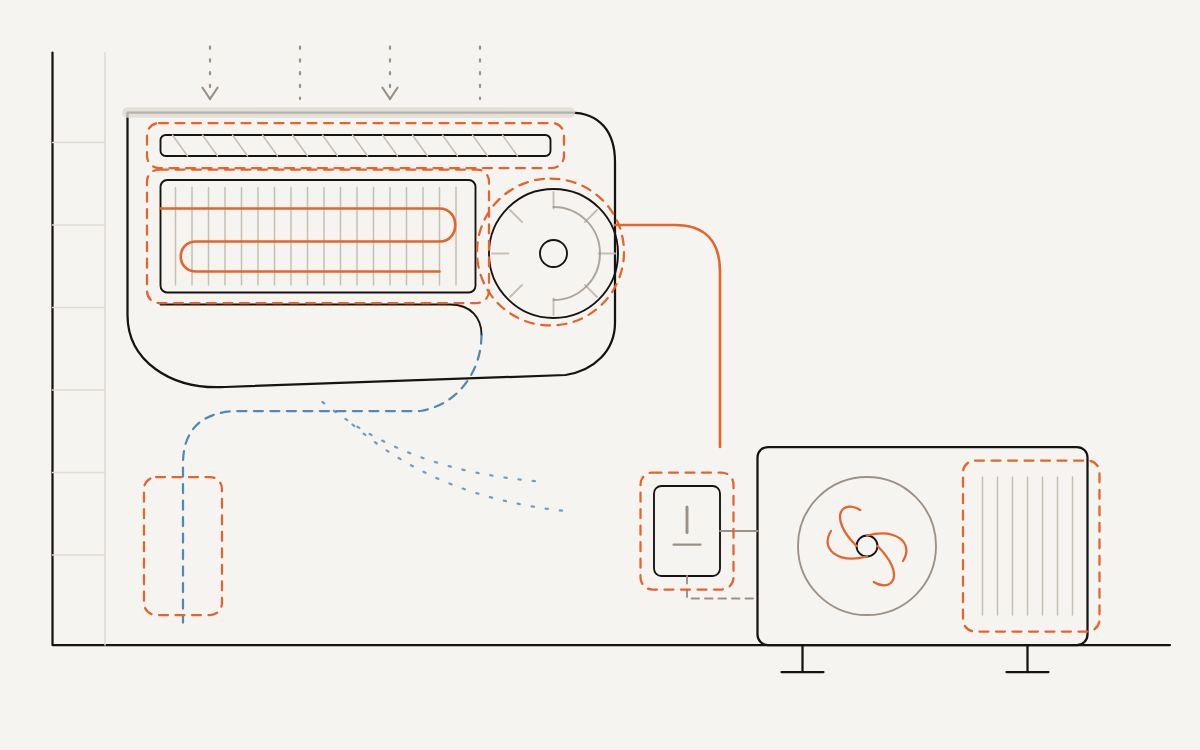
Refrigerant carries heat from inside your home to the outdoor unit and back again. It travels through a sealed loop of copper pipe, a compressor and two heat exchangers.
Because that loop stays sealed, the charge inside should never fall. A healthy Kelvinator system holds the same weight of gas for its entire working life.
So a regas means recharging the circuit after a technician finds and repairs whatever let the gas escape. In short, it is a repair job first and a refill second.
The refrigerant inside your system
Most newer Kelvinator split systems run on R32, while many older units still hold R410A. Ducted and cassette models vary too, so the technician confirms the type from the data plate.
An r32 regas and an r410a regas follow the same broad process. However, the two gases behave differently under pressure, and each one needs its own recovery and charging equipment.
Mixing refrigerant types wrecks a system. For that reason a technician never adds one gas to a circuit that holds another.
Why a top up alone is not a repair
A Kelvinator low on gas has a leak, because nothing else removes refrigerant from a sealed circuit. Even a slow weep at a flare nut counts as a leak.
An air conditioner refrigerant top up without leak repair simply drains away again. Cooling improves for a few weeks or months, then fades in exactly the same manner.
So Kelvinator gas leak repair sits at the heart of this job. Anyone offering a Kelvinator gas refill with no leak testing is selling you the same problem twice.
Refrigerant handling in Australia is licensed work
Australian law treats refrigerant as a controlled substance. Only a technician who holds a refrigerant handling licence may recover, charge or dispose of it.
That rule protects both people and the atmosphere. Refrigerant sits under high pressure, and venting it into the air breaches environmental regulations.
So there is no legal do it yourself version of this task. Every recharge runs through a licensed technician using calibrated equipment.
Why owner top up kits cause damage
Online sellers still push canned refrigerant kits at homeowners. They promise a quick fix, and they skip every step that makes a repair last.
Those kits cannot weigh a charge, so they routinely overfill or underfill the circuit. Either outcome strains the compressor, which is the costliest component in the system.
Many kits also carry sealant additives. Such additives clog metering devices and gauges, and they contaminate the recovery equipment a technician brings.
What a refrigerant licence actually covers
A licence shows the technician has trained in safe handling, recovery and leak testing. It also ties that person to strict record keeping for every gram of gas they move.
Ask to see the licence before any work begins. A technician who holds one shows it without hesitation.
Licensing sits apart from the Kelvinator warranty, which the manufacturer handles. Our own workmanship guarantee applies to the repair we perform, and nothing beyond that.
What happens to the old refrigerant
Recovered gas goes into a dedicated cylinder, never into the open air. That cylinder then travels to a licensed reclaim or destruction facility.
Because the paperwork follows the gas, a technician logs the weight recovered. So the record shows exactly what left your system.
Ask where the recovered charge goes if you are curious. A licensed operator answers that question without hesitation.
Before the visit, the questions we ask
Every regas booking starts with a short conversation about symptoms. Those answers shape the tools, the gas quantity and the time we set aside for your job.
What we ask on the phone
We ask what the unit does now, and how the cooling changed over recent weeks. A gradual fade points towards a leak, while a sudden stop usually points elsewhere.
Then we ask about ice on the indoor coil or on the outdoor pipework. Frost is a classic sign of low charge, although a choked filter causes it as well.
Finally we ask for the model number from the data plate. That one detail tells us the refrigerant type and the factory charge weight.
Why those answers change the visit
A gradual fade across two summers points to a slow weep at a joint. A sudden loss over a few days suggests a crack or a failed valve.
So the answers decide how much gas the van carries and how long we allow. That planning keeps the appointment on schedule.
Guesswork on the phone helps nobody. Clear symptoms, however, let us bring the right detector on the first trip.
What you can safely check first
Owners can safely check two things before booking. Look at the filters, then watch whether the outdoor fan spins while cooling runs.
A blocked filter starves airflow and mimics low refrigerant almost exactly. Our guide to cleaning and sanitisation explains how often filters need attention.
Beyond those two checks, stop there. Gauges, sealed pipework and electrical terminals all sit well outside safe owner territory.
Talk it through with a technician
Tell us the model and what the unit is doing, and we will bring the right parts to the first visit.
The Kelvinator aircon regas process step by step
Every visit follows the same order, because skipping a stage hides the underlying fault. The list below shows how a full job runs from arrival to handover.
The technician confirms the model, the refrigerant type and the factory charge weight from the data plate.
Next comes a performance test, with temperature readings at the return air grille and at the supply vents.
Gauges then go onto the service port so the technician can read the operating pressures.
Low pressure alongside weak cooling confirms a suspected loss of charge.
A leak search follows, using an electronic detector, nitrogen pressure testing or ultraviolet dye.
Once the leak shows itself, the technician recovers whatever refrigerant remains into a recovery cylinder.
Repair work comes next, whether that means a fresh flare, a brazed joint or a replacement coil.
The technician then pulls a deep vacuum, which draws moisture and air out of the circuit.
A vacuum hold test proves the repair, because a rising gauge means the leak survived.
Finally the system takes its full charge by weight, measured on digital scales.
A second performance test confirms that pressures, temperatures and current draw all sit where they should.
Why recovery comes before repair
A circuit still holding gas cannot be opened safely. So the technician draws the remaining charge into a cylinder before touching a joint.
That step also protects the reading that follows. Because the recovered weight is measured, it shows how much refrigerant the system had actually lost.
Owners often find that number revealing. A system holding half its charge tells a very different story from one holding almost none.
How the leak search actually works
Electronic detectors sniff for refrigerant around joints, valves and coil bends. They pick up traces that no human nose or eye would ever catch.
Nitrogen testing takes a different route. The technician pressurises the empty circuit with dry nitrogen, then listens and watches the gauge for any drop.
Ultraviolet dye suits the slowest leaks of all. Because dye needs time to travel, that method sometimes calls for a follow up visit weeks later.
Each approach has strengths, so a technician often combines two of them. Confirming the exact leak point matters more than confirming that a leak exists.
Why the vacuum stage matters so much
Air and moisture are the enemies of a refrigeration circuit. Moisture reacts with the oil inside the compressor and forms acids over time.
So the vacuum stage is not optional padding. It removes contaminants that no amount of extra gas could ever compensate for.
A rushed vacuum leaves damp air inside the pipes. As a result the system may cool well for a season, then fail at the compressor.
Why we charge by weight, never by guesswork
Every Kelvinator model carries a factory charge figure on its data plate. The technician matches that figure using scales, not intuition.
Pressure readings alone shift with outdoor temperature, humidity and airflow. Therefore a charge set by gauge feel usually lands wide of the mark.
An overcharged system floods the compressor and runs hot. Meanwhile an undercharged one ices up and struggles, so accuracy protects the unit either way.
What the technician records on site
Every stage produces a number worth writing down. Pressures, temperatures, vacuum readings and charge weight all belong on the job sheet.
Those figures matter later, because the next technician can compare them against fresh readings. So a fault that returns slowly becomes far easier to spot.
Ask for a copy before the van leaves. If the record stays in the office, you lose the benefit of it.
What happens after the technician leaves
A regas visit does not end when the gauges come off. The final stage protects you if the same symptom returns later.
The paperwork you should receive
Ask for a written record of the refrigerant type and the weight added. That record matters for any future service and for warranty discussions with the manufacturer.
The report should also name the leak location and the repair method. Without that detail, the next technician starts from scratch.
Keep the paperwork with your manual. In addition, photograph the data plate so the model number stays easy to find.
The first week of running
Cooling should feel noticeably stronger within minutes of the recharge. Room temperature then settles closer to the setting on the remote.
Watch the outdoor pipework over the following days. Frost on the thin copper line suggests a charge or airflow problem that still needs attention.
If performance drops again quickly, call us straight back. A repeat fade usually means a second leak somewhere else in the circuit.
Signs the repair is holding
Steady room temperature is the clearest sign of all. When the system reaches the setting and then eases back, the charge is doing its job.
Listen to the outdoor unit as well. A compressor that labours through a mild evening usually still lacks refrigerant.
Keep a short note of how the unit behaves each week. Because memory fades, written notes help enormously if a second visit becomes necessary.
When to book the next check
A repaired circuit deserves a look before the following summer. Filters, coil cleanliness and drainage all drift over a season of heavy use.
So an annual service keeps the repair honest. It also catches corrosion early, while a joint can still be cleaned and protected.
Ask us to note your repair date on file. Then the reminder arrives before the weather turns rather than after.
What can go wrong and how we prevent it
Most regas complaints trace back to a handful of avoidable mistakes. Knowing them helps you judge whether a quote covers the whole job.
A second leak hiding behind the first
Systems that leak once often leak in more than one place. Corrosion and vibration affect the entire circuit, not just a single joint.
So a nitrogen pressure test across the whole system beats a quick sniff at one fitting. The test holds pressure for a set period and exposes anything weeping.
Coastal homes see this pattern most often. Salt attacks the outdoor coil, and pinholes appear across a wide area rather than at one spot.
The wrong charge weight
Long pipe runs need extra refrigerant beyond the factory figure. A technician adds that allowance based on measured pipe length.
Guessing that allowance leads to poor cooling and high running costs. Because the error hides behind normal looking pressures, it often goes unnoticed for months.
Ducted systems hold far more gas than a single wall mounted head. Our page on ducted servicing explains why those jobs take longer.
Damage that already happened
Running a system low on refrigerant starves the compressor of cooling and lubrication. Over a long summer that starvation shortens compressor life considerably.
So a regas sometimes reveals damage rather than curing it. An honest technician tells you when a recharge would only buy a short reprieve.
That conversation is uncomfortable, yet it saves money. Spending on gas for a failing compressor rarely ends well.
Vibration and loose mountings
Loose brackets let the outdoor unit shake against its own pipework. Over years that movement works copper joints loose and starts a slow leak.
So a technician checks the mounting feet, the rubber pads and the bracket bolts. Curing the cause matters as much as sealing the joint.
Vibration also explains why a repaired system can leak again nearby. If nothing damps the movement, the next weak joint simply follows.
How to prepare your home for the visit
A little preparation shortens the appointment and keeps costs contained. None of it involves touching the refrigeration circuit.
Those small steps let the technician start testing immediately. Meanwhile your notes about symptoms narrow the leak search from the outset.
- Clear a working space of about one metre around the outdoor unit.
- Move furniture, plants and stored items away from the indoor head.
- Unlock side gates and secure any dog before the technician arrives.
- Find the model number, the manual and any earlier service reports.
- Note when the cooling first weakened and what you noticed at the time.
- Make sure someone over eighteen can stay home for the whole visit.
Running the unit before we arrive
Switch the system to cooling roughly fifteen minutes before the appointment. A circuit at operating temperature gives far more reliable pressure readings.
If the unit trips a breaker or smells of burning, leave it off instead. Safety outranks convenience, and the technician can still test on arrival.
Close windows and external doors in the room being tested. Otherwise outside air skews the temperature split that measures cooling performance.
What to expect on the day
Expect noise from the vacuum pump and some movement in and out of the house. Neither lasts the whole appointment.
The system stays off for part of the visit while the circuit sits empty. So plan around a warm hour or two if the weather is hot.
Children and pets belong well away from the outdoor unit. Cylinders, hoses and hot pipework all sit at ground level while we work.
What the Regas Price Depends On
We never quote a figure before seeing the system, because the variables matter too much. Still, you deserve to understand what moves the number.
The factors that shape the quote
Refrigerant type sits near the top of the list, since R32 and R410A differ in supply cost. Charge weight matters just as much, and a ducted system holds several times more gas than a small split system.
Leak location drives the rest of the aircon regas cost. A leaking flare nut takes minutes, while a pinholed outdoor coil means a component replacement.
Access affects labour as well. Roof mounted or high wall equipment needs safety gear, so the figure rises with difficulty.
Why the cheapest quote often costs the most
A cheap Kelvinator air conditioner regas online offer that skips leak testing fails within a season. You then pay twice, once for the gas and again for the real repair.
Booking the best Kelvinator air conditioner regas today still means asking for a written breakdown. Diagnosis, repair and recharge belong on separate lines.
Our pricing page explains how we structure quotes and what each stage includes. Ask any competitor for the same clarity before you commit.
Getting an accurate assessment
A trustworthy figure follows an inspection, never a phone guess. Numbers offered sight unseen tend to grow once work starts.
Ask whether leak testing and vacuum time appear in the quoted figure. If they do not, the quote covers a refill rather than a repair.
Also ask what happens when the technician finds a second fault. Clear answers upfront prevent awkward surprises halfway through the afternoon.
Where you can reach a local Kelvinator air conditioner regas technician
Climate changes how quickly a leak shows itself, so demand shifts from region to region. Our team works across the mainland capitals and many regional centres.
Along the east coast
Requests for a Kelvinator air conditioner regas Sydney technician climb once humidity settles over the basin. We cover the greater metropolitan area and the surrounding suburbs.
A regas booking in Melbourne usually follows the first warm stretch after a cool spell. Brisbane runs to a different rhythm, because warm weather lingers far longer there.
So a professional regas team in Brisbane stays busy through most of the calendar. The same applies to a regas job on the Gold Coast, where salt air adds corrosion to the picture.
Further south, a Kelvinator air conditioner regas Newcastle callout often involves that same coastal corrosion. Inland, Kelvinator air conditioner regas Canberra jobs contend with cold winters and dry summers instead.
Southern, western and northern cities
Dry heat changes system behaviour, so a qualified Kelvinator air conditioner regas Perth visit examines outdoor airflow closely. Dust settles on the condenser coil and disguises pressure faults.
An Adelaide booking for a regas follows a similar pattern through the long dry spells. Cooler climates still see failures, and regas requests in Hobart rise every summer.
In the tropics, a Darwin job faces constant humidity and very long run hours. Systems there work harder, so leaks reveal themselves sooner.
Nationally, Kelvinator air conditioner regas Australia wide work follows one consistent standard with us. Anyone who needs help nearby deserves a licensed technician, wherever they happen to live.
A mobile service that comes to you
Recovery cylinders, scales and vacuum pumps all travel in the van. So a mobile Kelvinator air conditioner regas means work done at your home. Nothing needs to leave the property.
Only rare cases need equipment removed for bench work. A damaged indoor coil is one example, since replacement takes longer than a driveway allows.
Regional callouts run on the same process as metropolitan ones. Travel simply becomes part of the scheduling conversation.
How travel affects a regional booking
Distance changes scheduling rather than method. A technician still carries scales, a vacuum pump and a recovery cylinder to every address.
Because a long drive uses part of the day, we group nearby jobs where we can. That approach keeps waiting times sensible in country areas.
Tell us your nearest town when you call. Then we can say honestly how soon somebody can reach you.
Frequently asked questions
How do I know when my Kelvinator is low on gas?
Cooling fades gradually over weeks, and the unit runs longer to reach the set temperature. Frost on the thin copper pipe outside is another strong indicator.
However, a dirty filter produces very similar symptoms. So a technician confirms the charge with gauges and temperature readings before recommending a recharge.
Can I regas my Kelvinator myself?
No. Australian law restricts refrigerant handling to technicians holding a refrigerant handling licence, so owner top up work is illegal as well as unsafe.
Canned kits sold online cannot weigh a charge or repair a leak. As a result they usually damage the compressor and add contamination.
What does a regas usually cost?
We cannot state a figure without inspecting the system, because refrigerant type, charge weight and leak location all change the total. Access difficulty affects labour too.
Instead of quoting blind, we inspect and then break the work into diagnosis, repair and recharge. That way you see exactly what each stage covers.
How long does a regas visit usually take?
A simple flare repair on a small split system can finish inside a single appointment. Leak searching, vacuum time and recharging all add to the clock.
Ducted systems take considerably longer, since the pipe runs and charge weights are larger. Your technician gives a realistic estimate once the leak location is clear.
Can you book a regas same day?
Availability changes with the season and with how many urgent jobs are already running. Ask when you call, and we will tell you the earliest realistic slot.
An emergency regas involving a vulnerable person takes priority. Our emergency repairs page explains how we triage urgent callouts.
Does a regas fix a Kelvinator gas leak for good?
A recharge on its own fixes nothing, because the gas escapes through the same hole again. Only proper Kelvinator gas leak repair makes the fix permanent.
Where corrosion has spread across a coil, a repair may not be viable. In those cases replacing the component or the unit gives better long term value.
What is the difference between an r32 regas and an r410a regas?
The process is broadly the same, though the gases differ in pressure, flammability class and supply cost. Each type needs matched gauges, hoses and recovery equipment.
Your data plate names the correct refrigerant for the system. Because mixing types damages components, a technician never substitutes one gas for another.
Where should I look for Kelvinator air conditioner regas reviews?
Read reviews that describe the actual work, such as leak testing, vacuum time and charge weight. Vague praise tells you very little about technical standards.
Look for comments on how the business handled a return visit. Honest reviews mention problems and how the team resolved them.
Putting the whole job in perspective
A regas is a leak repair with a recharge attached, not a routine refill. Because the circuit is sealed, lost gas always means a fault that deserves finding.
This page covered the licensing rules, the process and the factors behind a quote. In short, insist on leak testing and a charge measured by weight.
The most useful advice here is simple. Keep your filters clean, note early changes in cooling, and act before a long hot stretch arrives.
A good visit leaves you with more than cold air. It leaves a written record, a repaired joint and a charge you can trust through the season.
If cooling has faded, you can book a visit with our team whenever you are ready. Owners who would rather not phone can use our enquiry form instead.
Ask us about a visit if the house has become genuinely uncomfortable. For further reading, browse our related service guides at your own pace.
Refrigerant work rewards patience more than speed. So choose a technician who explains each stage rather than one who promises the fastest visit.
Browse the site
Book a technician
Speak to a qualified technician who works on Kelvinator systems
Call 1300 495 033 and tell us the model and the fault, or book online and we will come back to you.