Services
Kelvinator Air Conditioner Removal Cost, Disposal and Replacement
A Kelvinator split system that has stopped cooling rarely sits harmlessly on the wall. Owners who want local Kelvinator air conditioner removal usually have a second problem brewing behind the first.
Standby power keeps trickling through the wall unit. Meanwhile the drain tray silts up, the bracket corrodes and refrigerant stays under pressure inside pipework nobody checks any more.
Then water finds the plasterboard behind the indoor head. What began as a tidy one morning job now needs patching, sealing and paint before the new system goes anywhere near that wall.
So this page walks through cause and effect. It explains the service, the process, the paperwork and the sort of household that gains most from acting early.
We work on Kelvinator systems as a specialist repair business, not as the manufacturer.
On this page
- How a Kelvinator System Reaches the End of Service Life
- What Breaks That Cycle and Forces the Issue
- The Chain of Effects When an Old Unit Stays in Place
- Your Options Ordered by Severity
- What a Complete Decommission Includes
- How the Job Runs Step by Step
- How to Prepare Your Home Before the Van Arrives
- Kelvinator Air Conditioner Disposal and Where the Old Unit Goes
- Choosing the System That Takes Its Place
- Apartments, Rentals and Shared Walls
- What Shapes the Figure You Are Quoted
- Maintenance That Prevents an Early Changeover
- Where We Handle Kelvinator Air Conditioner Removal Australia Wide
- Questions Owners Ask About Taking a System Out
- Where to Go From Here
How a Kelvinator System Reaches the End of Service Life
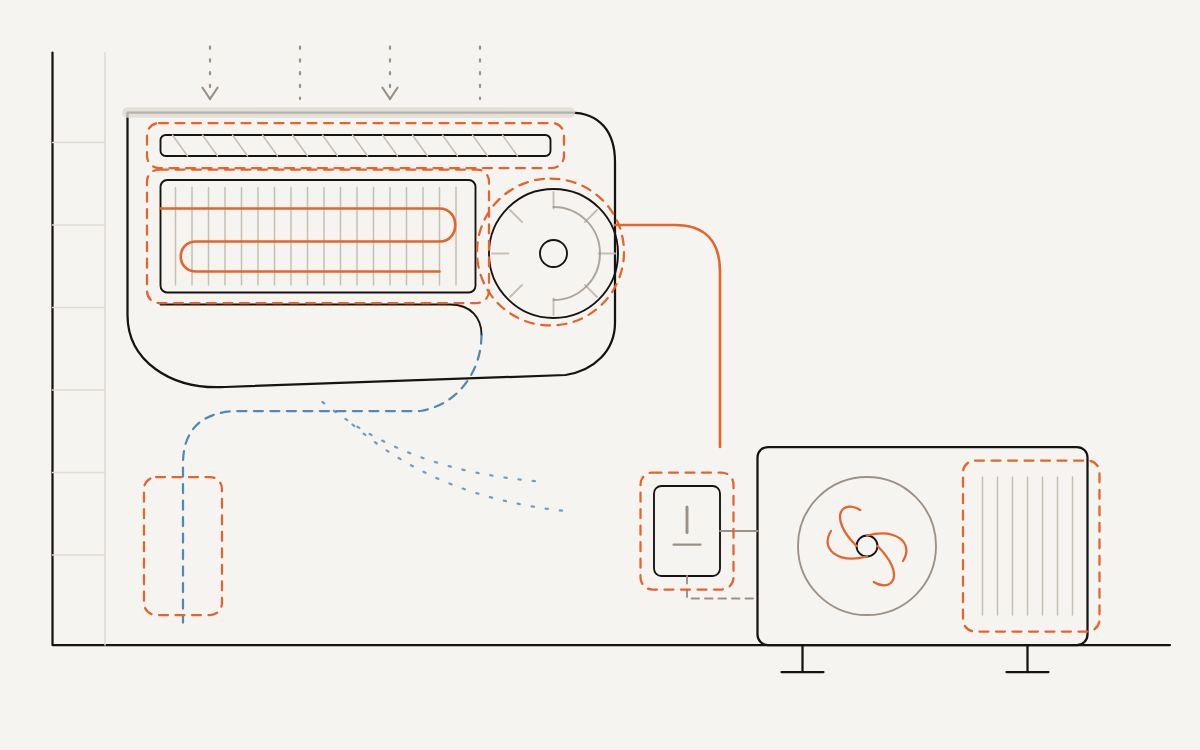
A split system moves heat rather than making it. The outdoor compressor pushes refrigerant around a sealed loop, and the indoor coil trades heat with the air in your room.
Every part of that loop wears at a different rate. Fan bearings dry out, capacitors weaken, coil fins corrode and the compressor slowly loses the tight tolerances it started with.
Because the loop stays sealed, small losses stay invisible for years. Cooling fades gently, so owners turn the thermostat lower instead of asking why the room takes twice as long.
Eventually the numbers stop stacking up. When repair after repair keeps a tired unit limping, a Kelvinator air conditioner replacement usually costs less over the following seasons.
What Breaks That Cycle and Forces the Issue
Some faults end a system outright. A seized compressor, a cracked heat exchanger or a leaking coil buried inside the indoor head all push a unit past sensible repair.
Other reasons have nothing to do with failure at all. Renovations move walls, room use changes and an undersized wall unit simply cannot keep up with a new open plan living area.
Several triggers come up again and again when owners ask us to remove old Kelvinator air conditioner hardware.
Each of those situations points the same way. Instead of chasing parts, most owners get better value from a planned changeover.
- A compressor that hums, draws heavy current and trips the circuit breaker.
- Refrigerant that keeps escaping from corroded pipework or a pinholed coil.
- Discontinued control boards with no supply left in the country.
- Rusted brackets and a cabinet that has weathered badly in coastal air.
- A system sized for a room that no longer exists after building work.
- An older refrigerant type that modern service equipment no longer suits.
The Chain of Effects When an Old Unit Stays in Place
A failed system does not sit still. It starts a chain that spreads well past the appliance itself, and every link adds work to the eventual job.
First comes the running cost. A unit with low refrigerant or a fouled coil runs longer for less cooling, so the power bill climbs while comfort falls.
Then the water problems arrive. Blocked drains overflow into the wall cavity, and damp plasterboard grows mould that outlasts the appliance by a long stretch.
Corrosion follows close behind. Salt air and rain work on the outdoor cabinet until the mounting feet crumble. Then a heavy unit on a failing bracket becomes a safety concern.
Finally there is the refrigerant itself. Left to leak from a dead system, it escapes into the atmosphere rather than going to a recovery cylinder where it belongs.
As a result, a delayed old air conditioner removal rarely stays a simple lift and carry. Wall repairs, electrical tidy up and mould treatment all join the scope.
Your Options Ordered by Severity
Not every ageing system needs to go. Our technicians work through four levels, and we start at the lightest one that genuinely solves the problem.
Level One, Service and Repair the Existing Unit
If the cabinet is sound and parts still exist, repair wins. A clean, a new capacitor or a fan motor can return a mid life unit to full output for another season.
This suits owners whose system cools well when it runs. Where a fault appears suddenly and the unit is otherwise healthy, our emergency repairs team can often restore it the same visit.
Level Two, Recharge and Leak Repair
Low refrigerant on its own does not mean the end. Because a sealed loop should never lose charge, our technician traces the leak first, then repairs it and recharges the system.
A gas refill or re gassing only makes sense when the pipework and coils have life left. Otherwise you are paying to fill a container that keeps emptying.
Level Three, A Kelvinator Changeover on the Same Footprint
Here we keep what still works. A Kelvinator changeover reuses sound pipework, the existing wall penetration and the same electrical circuit wherever inspection shows they meet current standards.
This is the fastest way to swap Kelvinator air conditioner hardware in an apartment or a tight courtyard. Less demolition means less patching, and the room usually returns to normal within a day.
Level Four, Full Replacement of Everything
Sometimes the whole installation has aged out. New pipe runs, a fresh drain, an upgraded circuit and a relocated indoor head all form part of a complete Kelvinator air conditioner replacement.
Owners choose this level when they upgrade Kelvinator air conditioner capacity or move a unit to a better wall. It also suits anyone wanting to replace Kelvinator air conditioner models that predate current pipe sizes.
What a Complete Decommission Includes
Taking a system out is a trade job rather than a lifting job. The refrigerant, the electrical supply and the wall structure each need proper handling before anything comes off the bracket.
Our scope covers the whole decommission, not just the visible hardware.
That combination is what a proper trade service actually buys you. Anyone can pull a box off a wall, though very few can do it lawfully and leave nothing behind.
- Refrigerant recovery. We draw the charge into a recovery cylinder rather than venting it, which the law requires and the environment deserves.
- Electrical isolation. Our technician isolates the circuit, tests it dead and disconnects the supply neatly at both ends.
- Pipework and drain removal. We cut back, cap and withdraw the line set, then deal with the condensate drain and its outlet.
- Bracket and mount removal. Wall brackets, ground feet and vibration mounts all come away, and we make the fixings safe.
- Making good. We seal the wall penetration and leave the surface ready for patching or for the new indoor head.
- Site clean and cart away. The old unit leaves with us, along with the offcuts, packaging and any insulation debris.
Talk it through with a technician
Tell us the model and what the unit is doing, and we will bring the right parts to the first visit.
How the Job Runs Step by Step
The process follows the same order on almost every site. Knowing it in advance makes the day predictable, and it helps you plan around the noise and the access.
Most single head jobs finish inside one visit. However, multi head or ducted work sometimes spreads across two days, and we tell you which applies before we start.
Phone or online assessment. We ask about the model, the mounting position, the storey and the access route before quoting anything.
Site inspection. On arrival our technician checks the pipe condition, the electrical supply, the drain fall and the wall behind the head unit.
Protection of the room. Drop sheets go down, furniture moves clear and we mask the floor under the indoor unit.
Refrigerant recovery. Gauges go on, the charge comes into a cylinder and we log what came out for the disposal paperwork.
Electrical disconnection. We isolate the circuit at the switchboard, prove it dead and free the interconnecting cable.
Outdoor unit lift. Two technicians take the weight, release the mounts and carry the cabinet out along the planned route.
Indoor head lift. The head comes off its plate, the plate comes away and the wall penetration gets a clean edge.
Replacement or make good. Either the new system goes straight in, or we seal the opening and leave the wall ready for trades.
Testing and handover. Where we install, we commission the new unit, run it through both modes and walk you through the controls.
How to Prepare Your Home Before the Van Arrives
A little preparation shortens the visit and protects your belongings. Because our technicians work around furniture, floors and pets, clear space saves everyone time.
Move rugs, artwork and furniture away from the indoor head and the outdoor cabinet. Then check that the path between the two runs clear of toys, bins and garden hoses.
A few other details help more than most owners expect.
Photographs help enormously at the booking stage. So send images of both units, the wall around the indoor head and the access route before the day.
Finally, think about timing. The work makes noise for a stretch, therefore a morning slot usually suits households with young children.
- Find a parking space close to the property, since heavy gear travels by hand.
- Book the lift and tell building management if you live in a tower.
- Keep pets in another room while doors stay open for the carry out.
- Locate the switchboard and clear access to the relevant circuit breaker.
- Gather any paperwork you hold for the existing system, including the model number.
- Decide whether you want the wall patched, or left ready for a painter.
Kelvinator Air Conditioner Disposal and Where the Old Unit Goes
An old split system is not general waste. It holds refrigerant, oil, copper, aluminium and a mix of plastics that all follow different recycling paths.
Responsible Kelvinator air conditioner disposal starts with the recovered gas. Licensed handlers send it for reclaim or destruction, and that step alone keeps a potent greenhouse gas out of the air.
After that the metals matter. Copper line sets, aluminium fins and steel cabinets all carry scrap value, so the carcass goes to a metal recycler rather than to landfill.
We also take the fiddly leftovers away. Foam insulation, mounting hardware, wall plates and drain hose all leave with the truck, because half a job in the garage helps nobody.
Ask any provider where the old hardware ends up. A straight answer about recovery and recycling tells you plenty about how the rest of the work will run.
Choosing the System That Takes Its Place
The moment the old head comes off the wall, a decision opens up. Rooms change over a decade, so copying the old capacity is rarely the smartest move.
Sizing comes first. Our technician measures the room, notes the glazing, the ceiling height and the orientation, then works out the load rather than guessing from the old label.
Undersized equipment runs flat out and never quite arrives. Oversized equipment cycles on and off, which leaves the air clammy and wears the compressor faster than steady running would.
Position matters almost as much. A head that blows straight at a sofa annoys everybody, while one tucked above a doorway spreads air across the whole room.
Then there is the outdoor cabinet. Shade, airflow, neighbour noise and rain shelter all shape where it sits, and a good spot adds years to the equipment.
Finally, think about how you actually live. A bedroom needs quiet operation more than raw output, whereas an open plan living area needs reach and steady airflow.
Apartments, Rentals and Shared Walls
Not every owner controls the wall the unit hangs on. Strata rules, landlord approval and shared services all change the order in which the work happens.
Apartment owners usually need written approval before anything comes off a facade. Building managers want dates, insurance details and a plan for the lift and the common areas.
Landlords and property managers face a different puzzle. Tenants need notice, access has to suit both parties and the paperwork should record what left the property.
Shared walls add noise considerations. Drilling and bracket work carry through brick, so we agree quiet hours with the building before the van arrives.
Our advice is simple. Start the approvals early, because paperwork usually takes longer than the trade work it permits.
What Shapes the Figure You Are Quoted
We never publish a figure, because no two sites match. Instead, here are the factors that move the number up or down on any given day.
Our pricing page explains how we build a figure from those inputs. Because the variables sit in the site rather than the brand, an honest assessment beats a guess over the phone.
- Whether the job is a take out only, or a take out plus a full installation.
- The height and access, since a second storey wall or a roof platform changes the method.
- The number of indoor heads and the length of the pipe runs.
- The condition of the existing circuit and whether the switchboard needs attention.
- Any wall repair, patching or paint preparation you want included.
- Parking, stairs and the distance from the unit to the vehicle.
What Moves a Kelvinator Air Conditioner Removal Price Up or Down
Put every quote on the same scope before you compare. Ask each provider whether recovery, disposal, wall sealing and cart away all sit inside the number, or bolt on later.
A figure that looks unusually low often excludes the finishing work. So check the exclusions first, then compare like against like.
Ask for the whole scope in writing as well. Written wording protects both sides, and it gives you something to hold up if the day runs differently.
What Reviews and Credentials Actually Tell You
When you read customer feedback, ignore the star average and read the detail. Look for comments about tidiness, punctuality and how the tradesperson handled surprises.
Then check the credentials rather than the marketing. Refrigerant work needs a handling licence, and any provider should tell you their licence details without hesitation.
A low number that skips recovery is not a bargain. It is an unlawful shortcut, and the environmental and safety risk lands on your property.
Maintenance That Prevents an Early Changeover
Most systems die before their time for avoidable reasons. Therefore the cheapest replacement is the one you push years further into the future through steady care.
A few habits do the heavy lifting.
Annual servicing also gives you an honest read on remaining life. As a result, you can plan a changeover on your own timetable instead of during the first heatwave.
Keep a simple record of every service and repair. Then, when the question of new equipment arrives, you can weigh real history rather than vague memory.
When the time does come, our installation team sizes the new system for the room rather than copying the old capacity. Rooms change, and so should the equipment.
- Wash the indoor filters every few weeks through the seasons you use the system.
- Keep the outdoor unit clear of leaves, garden growth and stacked garden furniture.
- Book a professional service once a year so faults surface early.
- Watch for water marks below the indoor head, which point to a drain problem.
- Listen for new rattles or grinding, since bearings warn you before they fail.
- Ask about coil cleaning if you live within a few streets of the surf.
Where We Handle Kelvinator Air Conditioner Removal Australia Wide
Our technicians travel widely. The recovery gear, ladders and tooling all arrive with the van, so nothing waits on a second trip to your street.
We work through a network of local trade teams. So the person at your door knows the building stock and the council rules in your area.
The Eastern Capitals and Regional Centres
Apartment towers shape a great deal of our eastern work. Owners there often ask who does the best Kelvinator air conditioner removal. Sydney answers turn on lift bookings, balcony access and strata rules.
Older brick homes call for licensed Kelvinator air conditioner removal. Melbourne pipe runs tend to be long, and wall cavities hide surprises that only appear once the head comes off.
Humidity and corrosion drive the work further north, so we send crews trained for qualified Kelvinator air conditioner removal. Brisbane cabinets often rust at the feet long before the compressor gives up.
Salt air does much the same a little further south. Owners along the water often book a Kelvinator air conditioner removal. Gold Coast mounting hardware corrodes long before the compressor gives up.
Inland the pattern changes again. Cold winters shape every Kelvinator air conditioner removal. Canberra homes carry heavy heating loads, so the sizing conversation shifts towards warmth.
Industrial and coastal air both feature in Hunter region Kelvinator air conditioner removal. Newcastle owners often deal with older housing stock and brackets weathered by several decades.
Southern, Western and Northern Coverage
Hot dry summers call for professional Kelvinator air conditioner removal. Perth systems reach the end of their working life through sheer running hours, and dust in the coils plays its part.
Similar conditions suit mobile Kelvinator air conditioner removal. Adelaide homes across the plains and the hills see long spells of heat that push tired equipment past its limit.
Cooler and damper conditions define island Kelvinator air conditioner removal. Hobart jobs lean on reverse cycle heating, which carries the year rather than a few summer weeks.
Humidity dominates every top end Kelvinator air conditioner removal. Darwin sites corrode faster than anywhere else, so we plan for that from the first inspection.
Questions Owners Ask About Taking a System Out
How long does the work take from start to finish?
A single head usually takes a few hours from arrival to clean up. Adding a full installation stretches the visit across most of a working day.
Ducted and multi head systems need longer. Because there is more pipework and more ceiling access, those jobs sometimes run into a second visit.
Can I take the old unit off the wall myself?
You cannot lawfully release refrigerant, and disconnecting a fixed circuit needs an electrical licence. So the two riskiest steps both sit outside do it yourself territory.
Owners still ask whether they can remove old Kelvinator air conditioner hardware alone. Outdoor cabinets are heavy and awkward, and dropping one from a bracket damages far more than the unit.
Is a Kelvinator changeover cheaper than a full replacement?
A changeover usually involves less labour, because sound pipework, cabling and the existing penetration stay in place. Less demolition also means less patching afterwards.
However, reuse only happens when inspection supports it. Where pipe sizes or insulation fall short, our technician recommends new runs instead of compromising the new system.
What happens to my old unit after it leaves?
It goes with our vehicle on the same visit. Then the recovered refrigerant goes to a licensed handler and the metals go to a recycler.
Nothing goes to kerbside collection. Kelvinator air conditioner disposal follows a documented path, and we can explain that path if you want the detail.
Can you take a system out at short notice?
Often yes, although it depends on the load in your area and the access at your property. You can book Kelvinator air conditioner removal. Same day slots do open in many suburbs.
Ask when you call and we will tell you honestly. If we cannot help quickly, we would rather say so than leave you waiting.
Is there such a thing as an urgent job?
Yes, and it happens more often than people expect. Do not chase a cheap Kelvinator air conditioner removal. Emergency work in particular rewards a licensed operator over a low number.
A cabinet hanging from a failed bracket needs attention straight away. Water pouring through a ceiling counts too, so isolate the power at the switchboard first.
Will the work damage my wall?
A careful job leaves a clean opening and sound plaster around it. Our technician seals the penetration and tidies the edges before leaving the room.
Old installations sometimes hide existing damage behind the head unit. Where we find soft plaster or mould, we show you and explain the repair options.
How do I arrange a visit online?
Use our book a service form with the model details, the mounting position and a few photographs. That gives our team enough to plan the visit properly.
You can also call if photographs are awkward. Either way we confirm the scope in writing before anyone arrives.
Where to Go From Here
An ageing Kelvinator system rarely improves on its own. Cause leads to effect, so a failing compressor becomes a water stain, then a wall repair, then a bigger bill.
Getting ahead of that chain is the whole point. Good work starts with an honest inspection, follows a documented process and ends with a tidy site.
A few practical pointers should give you enough to judge any provider. Ask about licences, recovery, disposal and written scope, and the answers will sort the trades quickly.
If you want a hand thinking it through, our team is happy to talk. Describe the system, the wall and the access, and we will explain the options for your site.
This is not glamorous work. Still, done properly it protects your walls, your power bill and the comfort of every room you rely on.
Browse the site
Book a technician
Speak to a qualified technician who works on Kelvinator systems
Call 1300 495 033 and tell us the model and the fault, or book online and we will come back to you.