Services
Kelvinator Air Conditioner Cleaning Cost, Mould and Sanitisation
A sour musty smell on the first warm afternoon of spring tells you something. Dust and damp have settled inside the indoor unit over months of stillness.
The smell is only the surface of it. Behind the front panel, a film of grime coats the filters, the fins and the fan barrel. Air pushes through that film every time the system runs.
Owners who want local Kelvinator air conditioner cleaning usually notice the odour first. Yet the airflow loss, the drips and the higher power bill all trace back to the same layer of dirt.
This page explains when a hygiene clean matters and what changes inside a dirty system. It also shows where owner care stops and technician work begins.
We are not the manufacturer, so our recommendations answer to you rather than to the brand.
On this page
- The Conditions That Reveal a Dirty System
- Why Timing Matters More Than Owners Expect
- What Changes Inside a Dirty System
- What the Owner Can Safely Do
- What Needs a Technician
- How Hygiene Work Fits Alongside Regular Servicing
- A Seasonal Preparation Checklist
- What Shapes the Figure We Quote
- Where We Handle Kelvinator Air Conditioner Cleaning Australia Wide
- Common Questions About Kelvinator Aircon Cleaning
- Bringing the Season Back Under Control
The Conditions That Reveal a Dirty System
Grime rarely announces itself evenly through the year. Instead it shows up under a few sets of conditions, and each one has a different trigger.
The First Run After a Quiet Season
A system that sits idle for months collects dust on every surface. When you switch it on, the fan lifts that dust into the room. So the first hour of cooling carries a stale odour.
Spring and early autumn produce most of these calls. Owners notice the smell, then check the filters and find them grey. In many cases a filter rinse helps, although the deeper layers stay put.
Humid Nights and a Wet Coil
Cooling works by pulling moisture out of the air. On humid nights the indoor coil stays wet for hours at a time. That damp surface, combined with trapped dust, feeds mould and bacteria.
Coastal humidity in Queensland and the Northern Territory makes this worse. Systems in tropical towns run long hours in sticky weather. As a result the drain tray stays damp well into the night.
Smoke, Dust and Pollen Events
Bushfire smoke, dust storms and heavy pollen loads all end up in the filter. A single smoky week can grey a filter that looked fine before. After such events a hygiene clean matters more than the calendar.
Renovation dust behaves the same way. Sanding, cutting and demolition send fine particles through the whole house. Meanwhile the return air path pulls them straight onto the coil.
Long Runs in a Closed Home
Houses shut tight against heat recycle the same air for hours. Cooking oils, pet hair and skin flakes travel with it. Then the coil collects a sticky mixture that plain dust never forms on its own.
Kitchens near a return air grille load a system fastest. Grease turns dust into a paste, and that paste resists a simple rinse. Because of that, kitchen adjacent units need attention more often.
Why Timing Matters More Than Owners Expect
Timing changes both the result and the wait. A hygiene visit booked in the shoulder season goes smoothly.
By contrast, the same job during a heatwave competes with breakdown calls. Repairs come first because a household with no cooling needs help sooner. So hygiene work slips down the queue.
Ahead of the Season Rather Than Inside It
Late winter suits a cooling season clean. Early autumn suits a heating season clean. Either window gives the system a fresh start before heavy use.
There is a second benefit. A technician who finds a worn bearing or a blocked drain in the quiet season has time to sort it. Meanwhile parts arrive without a wait that leaves you sweltering.
What Delay Actually Costs You
A blocked filter starves the coil of airflow. The system then runs longer for the same comfort, and the compressor works harder. Over time that pattern shortens the life of the unit.
Hygiene has its own timeline. Mould spreads while the coil stays damp and dusty. Left alone, it moves from a smell into a genuine indoor air quality problem.
What Changes Inside a Dirty System
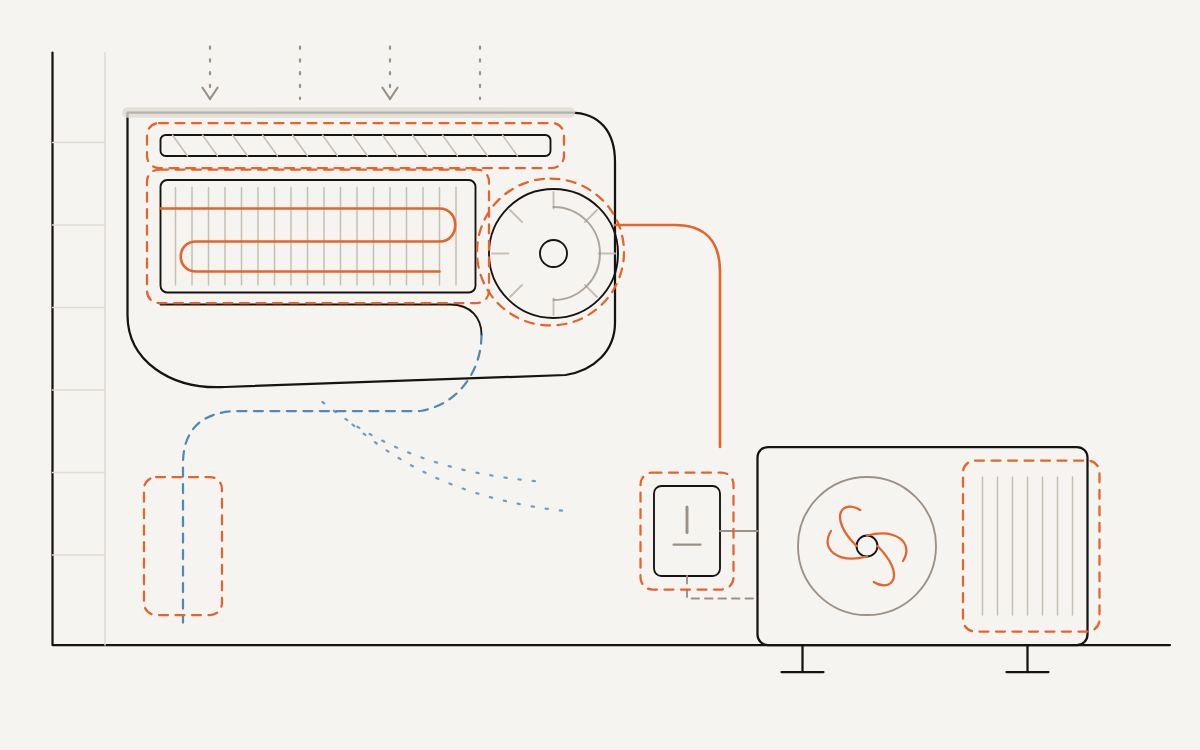
A split system moves a lot of air through a small space. Every part in that path collects something.
Filters, Fins and the Blower Wheel
The filter catches the coarse dust first. What slips past lands on the aluminium fins of the indoor coil, packing the gaps between them. Airflow drops as those gaps close.
The blower wheel sits behind the coil and does the hardest work. It is a barrel with dozens of small blades, and each blade holds a ridge of felted dust. Because the blade shape changes, the wheel moves less air and makes more noise.
A proper air conditioner deep clean reaches all three. Wiping the front cover alone does not. That difference explains why a rinse at home only partly fixes the smell.
Mould, Bacteria and Biofilm
Damp dust turns into biofilm, a slimy layer that clings to metal and plastic. Spores then colonise that layer. Air conditioner mould removal deals with the film, not just the visible spots.
You may see dark speckling on the barrel or the outlet louvres. Sometimes the smell arrives before any visible sign. Either way, air conditioner sanitising after the mechanical work stops regrowth for longer.
Drain Trays and Drain Lines
Condensate collects in a tray under the coil and drains away through a small pipe. Dust and biofilm narrow that pipe until water backs up. Then you get drips on the wall or a puddle on the floor.
Blocked drains cause more callouts than most owners expect. A hygiene visit includes flushing the tray and clearing the line. In practice that single step prevents a lot of water damage.
The Outdoor Unit
Outside, the condenser coil handles leaves, grass clippings and lint. A coil cleaning service brings that surface back so heat can escape properly. Otherwise the system runs hot and loses efficiency.
Refrigerant behaviour changes with a dirty condenser. Pressures climb, and the unit may trip on a fault. Where gas also sits low, a gas refill or re gassing visit belongs in the same appointment.
Talk it through with a technician
Tell us the model and what the unit is doing, and we will bring the right parts to the first visit.
What the Owner Can Safely Do
Plenty of the routine work needs no tools and no licence. Doing it well cuts the frequency of professional visits.
Filter Care Between Visits
Most Kelvinator wall mounted units have two lift out mesh filters behind the front panel. Rinse them in cool water, shake them out and refit them only once dry. Never run the system without filters in place.
A monthly rinse suits most homes. Households with pets, smokers or a busy road nearby need it more often. However, a Kelvinator filter cleaning service goes further, because it treats the coil behind the filter.
A Simple Monthly Routine
The following sequence takes about ten minutes. Follow it with the system switched off at the isolator or the wall socket.
That routine handles surface dust and nothing more. It will not reach the blower wheel or the drain line. So think of it as upkeep between deeper visits.
- Turn the system off at the wall and wait for the fan to stop.
- Open the front panel and lift out both mesh filters.
- Rinse the filters under cool running water from the clean side outward.
- Stand them on a towel and let them dry fully in the shade.
- Wipe the front panel and the outlet louvres with a damp cloth.
- Check the outdoor unit and clear leaves or clippings from the fins.
- Refit the dry filters, close the panel and run the fan for a few minutes.
What to Avoid Doing
Household bleach and strong solvents damage aluminium fins and plastic housings. Pressure washers bend fins flat and drive water into the electronics. Neither approach belongs anywhere near an indoor unit.
Aerosol foam products sold for do it yourself use also carry a risk. They loosen grime that then washes into the tray and blocks the drain. Because the residue stays inside, the smell returns within weeks.
Finally, leave the electrical side alone. Capacitors hold a charge after the power goes off. Any work behind the control cover needs a licensed technician.
What Needs a Technician
Some of this work calls for stripping the unit down. Bagging a head unit and lifting the barrel fan is a job for professional Kelvinator air conditioner cleaning. Perth homes send us that request every spring.
Owners rarely have the tools or the space to strip a head unit safely. Our technicians bring bagging kits, pumps and coil safe chemicals to every job.
A Full Air Conditioner Deep Clean
Our technicians bag the indoor unit, remove the covers and lift out the barrel fan. Then they wash the coil, the wheel, the tray and the louvres separately. Finally they flush the drain and reassemble everything.
A split system cleaning service on a single head takes as long as the coil, the fan and the drain need. Ducted and multi head systems take longer because there is more to reach. In addition, access height and ceiling space change the time on site.
Sanitising and Mould Treatment
Mechanical work removes the food source, and sanitising deals with what remains. Our technicians apply a treatment suited to coil metals and plastics. That step makes an aircon hygiene clean last far longer than a rinse.
Owners with asthma or allergies notice the difference quickly. The stale note fades, and the air feels lighter within a day. However, sanitising alone cannot fix a coil that still holds packed dust.
Ducted and Commercial Systems
Ducted systems hide most of their surfaces above the ceiling. Return air grilles, the filter box and the indoor fan all need attention, and so do the flexible ducts. Our ducted servicing work covers that scope in one visit.
Offices, shops and clinics carry a heavier load again. Occupant numbers, cooking, printing and street dust all add to the grime. Our commercial services team plans this work outside trading hours where possible.
What Technicians Find Along the Way
A hygiene visit doubles as an inspection. While the covers sit off, our technicians see the fan bearings, the sensors and the electrical terminals. Small faults surface early, which keeps them small.
Sometimes the cause of a smell turns out to sit elsewhere. A cracked tray, a lizard nest or a failed drain pump all mimic a hygiene problem. Therefore diagnosis comes before any quote.
How Hygiene Work Fits Alongside Regular Servicing
A hygiene visit and a full service overlap without matching. Knowing the difference stops you paying twice for the same hour.
Where the Two Jobs Differ
A service checks performance. The technician reads temperatures, tests the electricals, measures airflow and looks at refrigerant behaviour. Light filter and coil work often forms part of it.
A deep clean goes the other way. It strips the air path back to bare metal and plastic, then sanitises what remains. So one measures the system and the other resets its hygiene.
Combining Visits to Save Time
Many owners pair the two once a year. The technician arrives with the covers coming off anyway, which makes the extra work efficient. Then a single visit covers both performance and air quality.
Tell us upfront if you want both. Access, unit count and grime level shape the time we allow. Because of that, a combined booking needs a slightly longer window.
A Seasonal Preparation Checklist
Use this list twice a year, once before cooling season and once before heating season. It takes little time and prevents most urgent calls.
Write down the date of each visit somewhere you will find it again. A simple note inside the meter box works well. Then you know when the next one falls due.
Keep the filter rinse on the same day each month if you can. Habits beat reminders, and a dirty filter rarely announces itself. So a fixed date does more good than good intentions.
Rinse the indoor filters and let them dry fully before refitting.
Check the outdoor unit for leaves, nests and grass clippings.
Clear at least half a metre of space around the condenser.
Run the system on fan only for ten minutes and listen for rattles.
Watch the drain outlet during a cooling cycle to confirm steady flow.
Smell the airflow after five minutes and note any musty edge.
Look at the coil fins through the filter opening for grey packing.
Book a deeper visit if airflow or odour has changed since last season.
What Shapes the Figure We Quote
We never name a number before seeing the system. Several factors move the work up or down.
- The type of system, since a single split unit differs from a ducted network.
- Head count, because every indoor unit adds time to the same visit.
- How badly the coil and blower wheel have loaded up with grime.
- Whether mould treatment and drain clearing form part of the job.
- Access, because a high wall or a tight ceiling space slows the work.
- Travel, since a remote address takes longer to reach than a suburban one.
What Moves a Kelvinator Air Conditioner Cleaning Price Up or Down
Ask for the scope in writing before the work starts. A fair quote lists the units, the tasks and any extras. Our pricing guide explains how we structure this work.
Comparing two providers takes care. One may include the outdoor coil while the other stops at the filters. So read the scope, not just the total.
Cheap Work Against Good Work
A very low figure sometimes means a filter rinse and a spray. That leaves the wheel and the tray untouched. Instead of chasing the lowest number, weigh the scope against the result.
Owners often ask who does the best Kelvinator air conditioner cleaning. Sydney answers and country answers look much the same. Ask what comes out of the unit and what stays in it.
Customer feedback helps too, when you read it carefully. Look for comments about tidiness, explanation and whether the smell stayed away. Patterns across many reviews say more than any single glowing note.
Where We Handle Kelvinator Air Conditioner Cleaning Australia Wide
Our technicians travel widely, and the van carries everything the job needs. We work in capital cities and the larger regional centres.
Enquiries climb as soon as humidity returns along the eastern seaboard. Every van on the road is set up for mobile Kelvinator air conditioner cleaning. Adelaide and the southern capitals follow a few weeks later than the north.
In the south the trigger differs. Refrigerant work there still calls for licensed Kelvinator air conditioner cleaning. Melbourne enquiries follow pollen season rather than humidity, so late winter suits those homes best.
Further north the damp lasts longer. Ask any provider whether they offer qualified Kelvinator air conditioner cleaning. Brisbane work centres on mould at the outlet louvres, where the air leaves the head unit.
Along the water the same story repeats. Salt and damp together justify regular Kelvinator air conditioner cleaning. Gold Coast homes load the outdoor coil faster than most.
Dry heat brings a different problem. Fine dust packs the filters hard within a single summer, so the filters need attention long before the coil does.
Cool inland winters change the timing for Kelvinator air conditioner cleaning. Canberra bookings suit late winter, before the cooling season starts and the queue lengthens.
Humid months set the rhythm a little further north. They shape the calendar for Kelvinator air conditioner cleaning. Newcastle work follows them closely, and older housing stock adds access challenges.
Long cool months shift the focus of Kelvinator air conditioner cleaning. Hobart jobs involve heating mode dust and tightly closed windows rather than summer humidity.
The wet season never really pauses in the top end, and neither does Kelvinator air conditioner cleaning. Darwin coils stay damp almost all year.
If you have searched and found little near you, ask about travel. We reach many regional towns, and a short wait for the right person usually pays off.
Licence details are available on request before any work begins. Anyone opening the sealed circuit needs a refrigerant handling licence, so ask to see it.
Common Questions About Kelvinator Aircon Cleaning
These questions come up on almost every job. Answers here cover the usual home setups.
How often does a Kelvinator air conditioner need a deep clean?
Once a year suits most homes, and every second year suits very light users. However, pets, smoking, coastal salt or heavy dust shorten that interval. If airflow drops or a smell appears, book sooner regardless of the calendar.
Can I do the coil work myself?
You can rinse filters and wipe accessible surfaces safely. The coil fins and the blower wheel, though, sit behind panels that need removal and careful refitting. Because water and electronics share that space, leave the deeper work to a technician.
Why does the smell come back after a filter rinse?
A filter rinse removes only the first layer of dust. The mould living on the coil and in the drain tray stays where it sits. Therefore the odour returns as soon as the coil goes damp again.
Does a hygiene visit reduce running costs?
A clean coil and clear filters let the system reach the set temperature sooner. Shorter run times mean less energy for the same comfort. We do not quote savings figures, because every home and every setting differs.
Can you visit at short notice?
Sometimes yes, when a gap opens in the run sheet near you. You can book Kelvinator air conditioner cleaning. Same day slots open in some suburbs during the shoulder seasons.
Can I arrange a visit through the website?
Yes, and our service booking page handles it. Tell us the system type, the number of indoor units and the access details. Then we confirm a window that suits you.
What does air conditioner mould removal actually involve?
Air conditioner mould removal starts with stripping and washing the affected parts. Our technicians then apply a sanitising treatment to the coil, the tray and the fan. Finally they flush the drain so the moisture path stays clear.
Do you clean ducted and multi head systems too?
Yes, and the scope grows with the system. Ducted units need the return grille, the filter box and the indoor fan cleaned. Multi head systems take one head at a time, which adds hours but not complexity.
Bringing the Season Back Under Control
A hygiene visit fixes a specific set of problems. Musty air, weak airflow, drips and a coil packed with grey dust all respond to it.
The best time falls just before the season you rely on. If you have left it late, and a smell or a drip has already arrived, call us.
Water through a ceiling changes the urgency completely. Do not go looking for cheap Kelvinator air conditioner cleaning. Emergency work rewards a licensed technician over a low number every time.
For advice on a system you cannot identify, send a photo of the indoor unit. The model plate sits behind the front panel on most units. That detail speeds up the answer.
Finally, a few habits worth keeping. Rinse filters monthly, keep the outdoor unit clear and run the fan after cooling to dry the coil.
When you are ready, get in touch and describe what you smell or see. Our technicians will say honestly whether a hygiene visit solves it, or whether something else needs repair.
Browse the site
Book a technician
Speak to a qualified technician who works on Kelvinator systems
Call 1300 495 033 and tell us the model and the fault, or book online and we will come back to you.