Services
Air Conditioner Maintenance Plan Cost, Myths and What Actually Works
Most owners hear that a service plan is just a filter wash. That belief quietly costs Australian households money every single year. It is also wrong.
A filter wash is one small task on a much longer list. The rest of the work sits inside the indoor coil, the drain line, the outdoor fan and the electrical terminals.
Because those parts stay out of sight, owners rarely notice trouble until the system stops on a hot afternoon. Anyone looking into a local air conditioner maintenance plan has usually reached that point already.
So this page takes apart the myths that cling to preventative air conditioner maintenance. Then it sets out what a sensible arrangement really contains, how each visit runs and who gains the most.
Everything here applies to Kelvinator air conditioners as well as other brands. We service and repair Kelvinator systems but we are not the manufacturer, and the manufacturer handles its own warranty.
On this page
- Myth One, It Is Only a Filter Clean
- Myth Two, New Systems Do Not Need Servicing
- Myth Three, Yearly Aircon Maintenance Only Matters Before Summer
- Myth Four, Service Agreements Lock You In
- Myth Five, Cheap Arrangements and Good Ones Are Equal
- Myth Six, Preventative Maintenance Cannot Be Measured
- What an Evidence Based Air Conditioner Care Plan Contains
- How Scheduled Air Conditioner Servicing Runs Step by Step
- Who an Annual Air Conditioner Service Contract Suits
- Practical Steps Before Your First Visit
- Coverage for an Air Conditioner Maintenance Plan Australia Wide
- What Drives the Figure You Are Quoted
- Common Questions About Maintenance Plans
- Pulling It Into One View
Myth One, It Is Only a Filter Clean
Filters matter, and a blocked filter does starve a system of airflow. However, filters are the part owners can already reach and rinse themselves. Paying a technician purely for that task would make little sense.
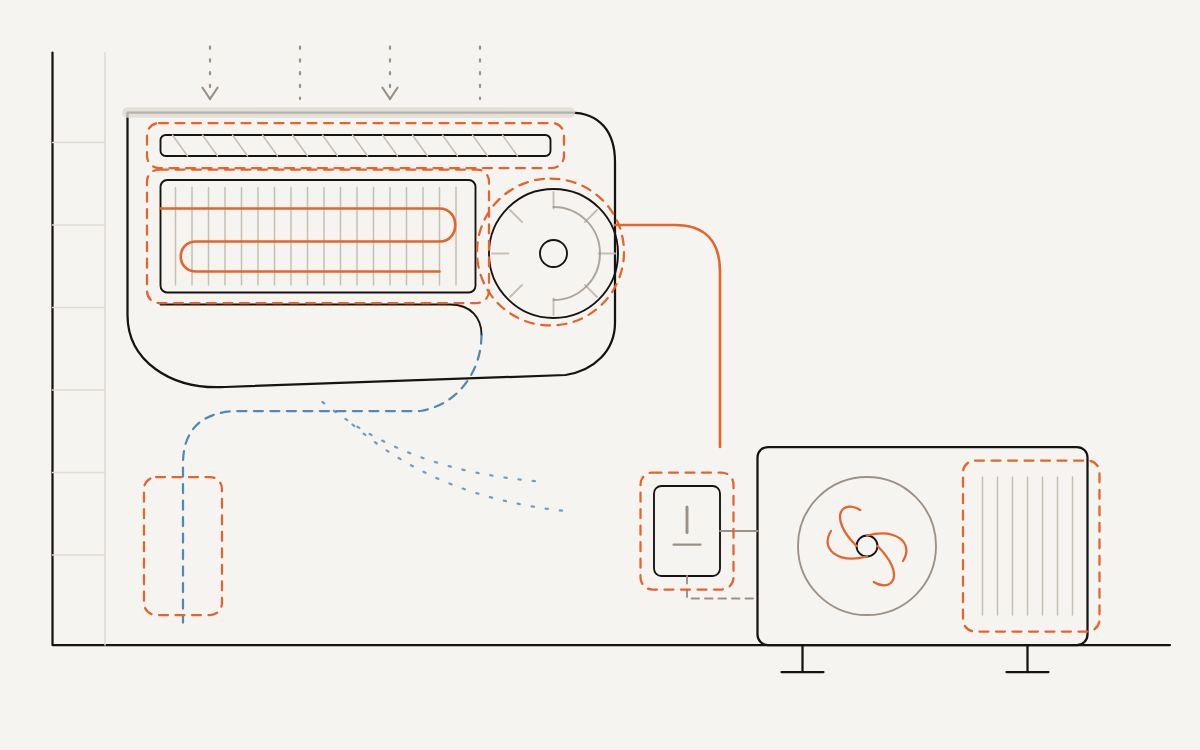
The work that justifies the whole arrangement happens behind panels. A technician measures refrigerant pressures, checks the temperature split across the coil and inspects the electrical contactor for pitting.
Take the condensate drain as an example. Over a season it collects dust, algae and insect debris until water backs up into the tray. As a result, ceilings stain and indoor boards corrode long before anyone notices a cooling problem.
Coil cleaning is another job that sits outside the reach of most owners. Fins bend easily, and the wrong chemical strips the protective coating. Therefore trained hands and proper equipment change the outcome.
In short, the filter is the doorway rather than the room. A proper aircon service plan walks through that doorway and inspects everything on the other side.
Myth Two, New Systems Do Not Need Servicing
New equipment fails less often, so this myth holds a grain of truth. Yet the early years are exactly when small faults are cheapest to correct.
A loose electrical terminal costs almost nothing to tighten and a great deal to repair after it burns. Small attention early keeps the whole system out of trouble later.
Installation faults also show up in the first couple of seasons. Drain falls set slightly wrong, brackets that were never packed level, insulation that slipped during commissioning. Scheduled air conditioner servicing catches those issues while the fix remains simple.
There is a second reason to start early. Manufacturer warranty terms often expect reasonable care and documented servicing, and the manufacturer decides how it applies those terms. Because of that, a maintained record helps if you ever raise a claim.
Our own workmanship guarantee sits separately from the Kelvinator warranty. We stand behind the work our technicians perform, while the brand handles its own coverage directly.
So the honest position is simple. Start early, when the system is healthy, rather than once it starts struggling.
Myth Three, Yearly Aircon Maintenance Only Matters Before Summer
Summer preparation is popular for obvious reasons. Nobody wants a breakdown during a heat wave, and demand for technicians climbs sharply through the hottest weeks.
Still, timing everything around summer misses half the story. Most Australian homes now run reverse cycle systems that heat as well as cool.
Those units work hard through winter, and heating faults behave differently from cooling faults. A unit that heats poorly often points to a defrost issue rather than a refrigerant shortfall.
Autumn and early spring suit servicing better in practice. Technician availability improves, and any part that needs ordering can arrive before the weather turns. Meanwhile the system gets a rest period after months of heavy load.
Coastal properties add another timing factor. Salt spray attacks outdoor coils steadily, so a rinse before the humid months protects the fins. Similarly, homes near paddocks or building sites collect dust that blankets the condenser.
Yearly aircon maintenance therefore works best as a fixed calendar habit. Pick a month, keep it, and stop competing with everybody else for the same week.
Myth Four, Service Agreements Lock You In
Many owners avoid an air conditioning service agreement because they picture an endless contract. In practice the arrangement should be plain, readable and easy to leave. If it is not, that alone is a warning sign.
A fair agreement states the number of visits each year, the tasks included in each visit and what falls outside the scope. It also states how you cancel and how much notice applies.
An air conditioner service subscription follows the same logic. Spreading the cost across the year suits some budgets, while a single yearly payment suits others. Neither approach should trap you.
Watch for wording that bundles unlimited repairs without defining a limit. Unlimited rarely means unlimited, and the exclusions usually appear in the smallest print.
Instead, look for clear wording about what a repair visit involves and how pricing is calculated. Above all, an annual air conditioner service contract should feel like a scheduling tool.
Talk it through with a technician
Tell us the model and what the unit is doing, and we will bring the right parts to the first visit.
Myth Five, Cheap Arrangements and Good Ones Are Equal
Owners often hunt for the lowest figure and judge on that alone. That approach hides the detail that actually matters. Two providers can charge similar amounts and deliver very different work.
The variable is time on site. A thorough visit includes measurement, cleaning, electrical inspection and a written report. A rushed visit swaps the filter, glances at the outdoor unit and leaves.
Ask how long a standard visit takes and what the technician records. If the answer is vague, the visit will be vague too. Therefore the question protects you better than any comparison table.
Also check whether every head on a multi head system is included. Homes with several indoor units sometimes discover that only one was covered.
Similarly, ducted homes need zone motors and return air paths inspected, which takes longer than a single wall unit. Owners often ask who offers the best air conditioner maintenance plan. Sydney apartment owners and rural households get the same honest answer.
The right choice is the one that matches your equipment honestly. Cheap becomes expensive when the same fault returns twice.
Myth Six, Preventative Maintenance Cannot Be Measured
Some owners treat servicing as an act of faith. They assume nothing measurable changes, so they skip the visit and hope. Yet the results of preventative air conditioner maintenance appear in numbers a technician can show you.
Temperature split is the clearest example. A technician measures the air going into the indoor unit and the air coming out, then compares the difference against expected performance.
A shrinking split points to a dirty coil, a refrigerant issue or a fan problem. That single reading often explains a complaint that had puzzled the household for weeks.
Running current is another marker. When a compressor draws more current than it should, something is making it work harder. Because that reading is recorded each visit, a trend becomes visible over several years.
Static pressure matters for ducted homes. Rising pressure suggests crushed flexible duct, blocked returns or filters that need a different specification. Our ducted servicing work leans heavily on those readings.
So the evidence exists. It simply needs someone to write it down and hand it to you.
What an Evidence Based Air Conditioner Care Plan Contains
Once the myths clear, a useful air conditioner care plan takes obvious shape. It combines cleaning, measurement, inspection and a record. Each element supports the others.
Cleaning restores airflow and heat transfer. Measurement proves whether the cleaning worked. Inspection finds the parts that will fail next, and the record lets you compare one year against the last.
A typical visit covers the following areas.
Antibacterial treatment of the coil and tray often follows the clean. That step helps with the musty smell that returns each season in humid regions. Although it is not always needed, many owners value it.
- Indoor filters, barrel fan and evaporator coil surfaces.
- Condensate tray, drain line and any pump fitted to the system.
- Outdoor condenser coil, fan blade and mounting feet.
- Electrical terminals, contactor faces, capacitors and wiring insulation.
- Refrigerant pressures and superheat where the system allows a reading.
- Thermostat operation, sensor accuracy and remote control response.
- Mode testing across cooling, heating and fan only operation.
- Noise and vibration checks on both the indoor and outdoor unit.
How Scheduled Air Conditioner Servicing Runs Step by Step
Owners rarely see the sequence a technician follows, so the visit can feel opaque. In practice the order matters, because each step depends on the one before it.
A single head visit runs long enough to reach every stage listed above. However ducted and multi head systems take longer, because each zone and each head needs its own attention.
The technician confirms the system type, the number of indoor units and any faults you have noticed since the last visit.
Power comes off at the isolator before any panel opens, which keeps the electrical work safe.
Filters come out for washing while the indoor coil and barrel fan get inspected under light.
The drain line is cleared and flushed, then tested with water to confirm it runs freely.
Outdoor work begins with a coil clean, a fan check and removal of leaves or nesting material.
Electrical terminals get tightened and the contactor faces are inspected for burning or pitting.
Power returns and the system runs while the technician takes pressure, current and temperature readings.
Heating mode gets tested on reverse cycle systems, including the defrost cycle where conditions allow.
The technician writes up the readings, notes any parts approaching failure and explains what they found.
Who an Annual Air Conditioner Service Contract Suits
Regular servicing is not equally valuable for everybody, and honest advice matters most. Some situations gain far more than others.
Households with ducted systems benefit strongly. Ducted equipment carries more moving parts, more filtration surface and more places for airflow to fail quietly. As a result, small problems compound faster.
Coastal and rural properties come next. Salt and dust attack outdoor coils continuously, and an annual clean slows that damage considerably. Without it, corrosion shortens the life of the condenser.
Rental properties suit scheduled visits for a different reason. Owners cannot inspect the equipment casually, so regular attention gives them a record and a warning system.
Tenants also raise fewer urgent complaints when the unit stays healthy. That alone saves a managing agent a good deal of time each summer.
Businesses have the strongest case of all. When cooling stops, trading stops with it, and our commercial services team plans visits around quiet trading hours.
Meanwhile a single wall unit in a mild climate may need less frequent attention. We will say so rather than sell you something oversized.
Practical Steps Before Your First Visit
A little preparation makes the first visit far more productive. None of it takes long, and each step helps the technician reach the equipment quickly.
Clear a path to the indoor unit first. Move furniture, plants or shelving that sits underneath, because a drop sheet needs floor space. Then check the outdoor unit for stored items leaning against it.
Write down what you have noticed. A smell in heating mode, a rattle at start up, a room that never quite cools. Because these clues are hard to reproduce on demand, your notes carry real weight.
Find the isolator switch and the circuit breaker if you can. Knowing their location saves searching time, especially in older homes where the switch hides behind a gate or a garden bed.
Finally, keep any paperwork from the installation. Model numbers, indoor unit locations and duct layouts all speed up the work. If a fault turns up, that history also guides air conditioner repairs.
Coverage for an Air Conditioner Maintenance Plan Australia Wide
A search online returns big brands and local operators. Both can do good work, so the label matters less than the licence.
Always confirm the technician holds a refrigerant handling licence and the relevant electrical qualification. Our team travels to the property, which suits ducted and split systems equally, since neither can move.
Coverage spreads across the major population centres. In the south, refrigerant work still calls for a licensed air conditioner maintenance plan. Melbourne homes lean heavily on winter heating performance.
Further north, humidity and drainage lead the list. Ask whether the provider offers a qualified air conditioner maintenance plan. Brisbane households usually need the drain line checked twice a year.
Nearby, salt air adds another task. Regular rinsing belongs in any coastal air conditioner maintenance plan. Gold Coast properties lose condenser fins faster than inland homes do.
In the west, fine dust and long dry spells dominate. Our vans are set up for a professional air conditioner maintenance plan. Perth residents mostly need filters and condenser coils kept clear.
Across the border the heat runs longer. Every van carries the gear for a mobile air conditioner maintenance plan. Adelaide owners use it to prepare systems for extended summers.
Inland winters change the emphasis again. Frosty mornings and heavy heating hours shape the schedule for an air conditioner maintenance plan. Canberra homes benefit from an autumn visit rather than a spring one.
Sea air and older housing stock set the pattern near the Hunter. Both feed into the timing of a service plan. Newcastle owners often book alongside a gutter clean.
Long cool months shift the priority down south. Reliable heating matters more than cooling in any Tasmanian air conditioner maintenance plan. Hobart households want the defrost cycle checked closely.
Up north the system rarely rests at all. Twice yearly attention suits a tropical air conditioner maintenance plan. Darwin properties run their equipment almost continuously.
Staying local also shortens travel, which helps when a fault appears between scheduled visits. So ask where the nearest technician is based before you commit.
What Drives the Figure You Are Quoted
We do not publish numbers here, because the honest answer depends on your equipment. Still, the factors behind the figure are easy to explain.
System type leads the list. A single wall unit takes less time than a ducted system with several zones, and multi head systems fall somewhere between.
Access comes second. A condenser on a roof, a bracket high on a wall or a ceiling cavity with a small hatch all add labour.
What Moves a Service Plan Price Up or Down
Visit frequency matters most after access. Coastal, dusty and commercial sites often need two visits a year rather than one. Therefore the yearly total rises even though each visit stays similar.
Condition plays a part on the first visit. A neglected system needs deeper cleaning before it reaches a maintainable baseline. After that, later visits settle into a routine.
Ask for the scope in writing, with the task list attached. Any reputable provider will hand that over without hesitation.
How to Read Reviews and Judge a Provider
Owners often search for customer feedback and then feel no wiser afterwards. Star ratings compress too much information into one number. Reading the detail works better.
Look for reviews that describe what the technician did on site. Comments about explaining readings, showing photographs or noting a part that was starting to fail signal genuine work.
Pay attention to how a business answers criticism. A calm, specific reply suggests a team that fixes problems, while a defensive reply suggests the opposite.
Ask for the licence number as well. Refrigerant work without a licence is illegal in Australia, so this is not a formality.
Finally, ask whether the same technician returns each year. Continuity means somebody remembers your system, which improves the result over time.
Common Questions About Maintenance Plans
How often should scheduled servicing happen?
Once a year suits most homes with a single split system in a mild climate. Ducted systems, coastal properties and commercial sites usually justify twice a year. Because usage differs so much, a technician can advise after the first inspection.
Can I set one up through the website?
Yes, and a written request is often the fastest route. You describe the system, the property and your preferred timing, then our team confirms a slot. Alternatively you can book a service and discuss the arrangement during that visit.
Does regular servicing cover emergency callouts?
Coverage varies, so read the wording rather than assuming. Never choose a cheap air conditioner maintenance plan. Emergency response and parts usually sit outside the scope, so ask exactly what happens when the system stops between visits.
Can I start straight away or even the same day?
Setting one up takes only a conversation, so most owners can book their visits in a single call. Nothing stops you getting started. Same day attendance still depends on technician availability in your area.
Is an air conditioner service subscription worth it for one small unit?
Sometimes, although not always. A single unit in a spare room that runs occasionally may need less attention than a full schedule provides. However, a hard working unit in a main living area benefits from the same routine as a larger system.
What happens if the technician finds a fault?
The technician explains the fault, shows you the reading or the component and describes the options. Repairs are quoted separately so you keep control of the decision. Nothing proceeds without your approval.
Does regular servicing affect the manufacturer warranty?
The Kelvinator warranty belongs to the manufacturer, and the manufacturer decides how it applies. Keeping a documented service history generally helps, because warranty terms often expect reasonable care. Our workmanship guarantee is separate and covers the work we perform.
Where can I get advice before deciding?
Call and describe your system before signing anything. Our team will tell you honestly whether a schedule suits your situation or whether an occasional service is enough. That conversation costs you nothing.
Pulling It Into One View
The myths around servicing share one root, the belief that nothing important happens out of sight. In reality coils foul, drains block, terminals loosen and pressures drift.
A structured routine finds those changes early. Choose by the task list and the measurements, not by the headline figure.
Ask how long each visit runs, what the technician records and how the record reaches you. Then keep the same month every year so the habit sticks.
Whether you need cover for several sites or a single home visit, the principle stays the same. Consistency beats intensity, and early detection beats emergency repair.
When you are ready, get in touch and describe your system, your location and your options. Our team will talk it through without pressure.
Browse the site
Book a technician
Speak to a qualified technician who works on Kelvinator systems
Call 1300 495 033 and tell us the model and the fault, or book online and we will come back to you.