Error codes
Kelvinator F4 Error Code, Sensor Fault and What the Repair Involves
You want the system cooling again. You also want to know whether F4 means a cheap part or an expensive one. That is the real question behind the Kelvinator F4 error code.
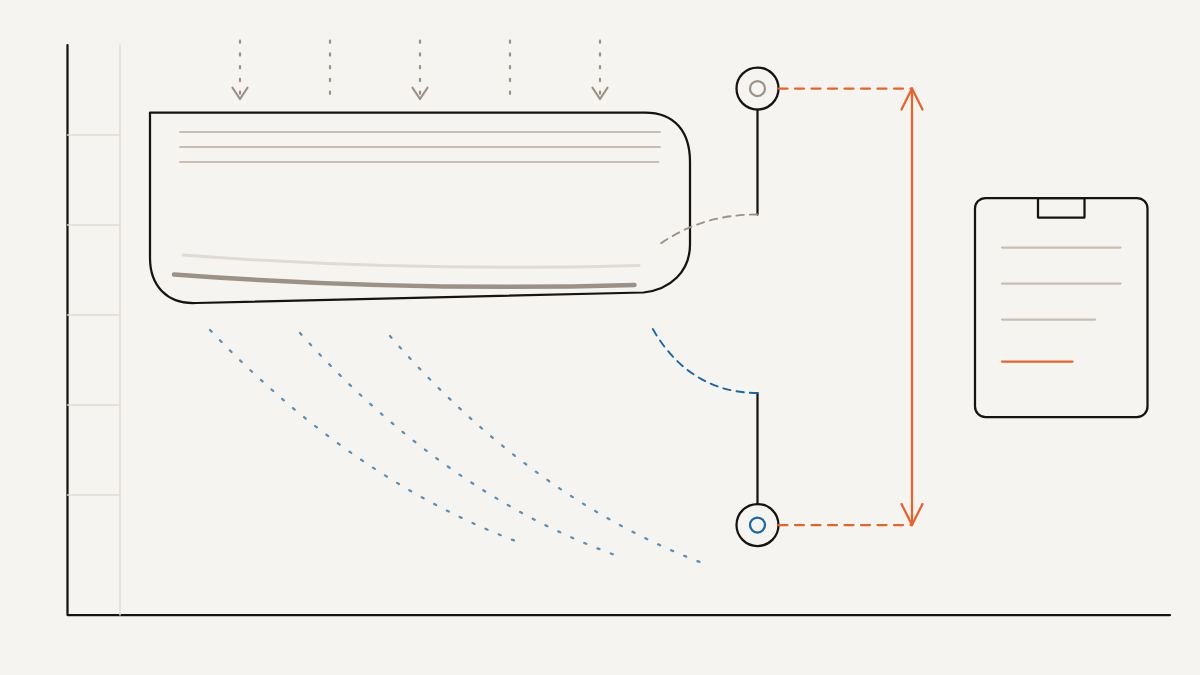
F4 reports a sensor fault. A sensor here means a small temperature probe that feeds readings to the control board so the board can run the compressor safely.
Knowing that much does not tell you what needs replacing. In practice the repair lands on one of three things, the probe itself, the connection carrying its signal, or the board reading it.
So this page follows the decision rather than the theory. It walks through the phone call, the visit and the test that separates those three outcomes. Age matters too, so we cover that as well.
On this page
- What the Kelvinator F4 Error Code Is Telling You
- Why the Sensor Behind the Code Varies Between Model Families
- Does the Type of System Change the Fault?
- What Happens Before a Technician Reaches the Unit
- How a Technician Works Through a Kelvinator F4 Fault Code
- The Repair Decision, Sensor, Connection or Board
- How the Age and Condition of the System Shift the Answer
- What Happens After the Repair Is Finished
- What Can Go Wrong and How We Avoid It
- Safe Checks and How to Prepare for the Visit
- Related Codes and Where This One Sits
- Service Coverage Across Sydney and Beyond
- Questions Owners Ask About This Code
- Bringing It Together
What the Kelvinator F4 Error Code Is Telling You
Kelvinator error code F4 flags a sensor fault. Every probe reports within a sensible band, and the board halts the cycle the moment one of them stops making sense.
That halt is deliberate. Running a compressor on readings the board cannot trust risks far more damage than a stopped unit sitting quietly on a warm afternoon.
So the Kelvinator F4 code meaning is closer to a refusal than a breakdown. The board has decided it cannot see clearly enough to continue.
Symptoms vary, yet the Kelvinator F4 error meaning stays constant. Some owners lose cooling entirely, while others watch the unit run for a while and then stop.
A Kelvinator F4 fault code therefore names a category, not a part. Two identical looking units can show the same characters and need completely different work.
That gap between code and part is where most wasted money happens. Owners buy a probe online, fit it, and find the Kelvinator fault code F4 still sitting on the display.
Why the Sensor Behind the Code Varies Between Model Families
Here is the detail that most online code lists leave out. Kelvinator has used these two characters across several generations of equipment, and the code tables do not always agree.
On one model family, F4 points at a probe reading the indoor coil. On another, the same characters cover a probe watching outdoor pipework or the discharge side of the compressor.
So a Kelvinator KSV F4 error and a Kelvinator KSD F4 error code can lead to two different parts. A Kelvinator HWJ series F4 error may follow a third table again.
The rating label settles the argument. Find the model number printed on the label of the indoor unit, then read the manual written for that exact model.
Neighbouring codes behave the same way. Our guides to the F3 error code and the F5 error code cover the codes that sit either side of this one.
Because of that variation, treat any generic table as a starting point only. Testing on the actual unit is what confirms which probe the board is complaining about.
Does the Type of System Change the Fault?
The style of equipment matters less than the model family, though it does shift the odds a little. Probes live in similar places across most designs.
A Kelvinator inverter F4 error code carries one extra wrinkle. Inverter systems vary compressor speed constantly, so they lean on probe readings far more than older fixed speed equipment does.
That reliance cuts both ways. Inverter boards notice a drifting probe sooner, which means the code often appears before any real damage has occurred.
A Kelvinator reverse cycle F4 error can surface in either mode. Because heating and cooling both depend on the same probes, the fault follows the unit rather than the season.
On a Kelvinator AC F4 error code, ducted and wall units follow the same logic. Access differs, so ceiling mounted equipment simply takes longer to reach.
Owners looking to fix a Kelvinator F4 code often assume their system type decides the answer. In truth the model number decides it, and testing confirms it.
What Happens Before a Technician Reaches the Unit
Good Kelvinator F4 error troubleshooting starts on the phone, not on the ladder. The more the technician knows before arriving, the fewer return trips the job needs.
Three details carry most of the weight. The model number from the rating label, the age of the system, and the exact behaviour before the code appeared.
Behaviour matters because it narrows the field. A Kelvinator F4 error not cooling from the first minute suggests something different from a unit that cools well for half an hour first.
Mention any recent event as well. A storm, a blackout, ceiling work, pest control or a recent service all change where a technician looks first.
Photographs help more than descriptions. A clear shot of the display, the rating label and the outdoor unit gives our team a head start before the van leaves.
With that information gathered, we can bring the likely parts on the first visit. You can share those details when you book a service so nothing gets lost in the retelling.
Talk it through with a technician
Tell us the model and what the unit is doing, and we will bring the right parts to the first visit.
How a Technician Works Through a Kelvinator F4 Fault Code
The visit follows an order, and the order exists to avoid guesswork. Each step either rules something out or points at the next test.
Notice how late the parts decision arrives. Everything before step nine exists to make that call with evidence instead of instinct.
- Confirm the code on the display and note how long the unit runs before it appears.
- Read the model number from the rating label and match it to the code table for that family.
- Isolate power at the switch before opening any panel on the indoor or outdoor unit.
- Inspect the probe leads visually for chafing, moisture, insect damage or a plug sitting loose on the board.
- Check the probe sits properly in its holder, because a probe that has slipped free reads room air instead of the coil.
- Measure the probe with a meter and compare the reading against the value the manual expects at that temperature.
- Repeat the measurement at the board plug so the lead between probe and board gets tested as well.
- Substitute a known good probe where the readings sit close to the limit rather than clearly outside it.
- Decide whether the fault sits in the probe, the wiring or the board input.
- Complete the repair, clear the code and run the system through a full cycle before packing up.
The Repair Decision, Sensor, Connection or Board
Almost every Kelvinator F4 error fix falls into one of three buckets. Understanding them helps you judge whether the quote you receive makes sense.
When the Probe Itself Needs Replacing
This is the outcome owners hope for, and it happens often. Probes drift with age, and a drifting probe eventually reports a value the board rejects.
Replacement is straightforward once the correct part arrives. The technician removes the old probe, fits the new one in the same holder, and reconnects it at the board.
Because the part is small, labour and access usually shape the invoice more than the component does. A high wall unit above a stairwell takes longer than one at head height.
When the Connection Is the Actual Fault
Plenty of sensor codes have nothing wrong with the sensor. The lead, the plug or the terminal carries the blame instead.
Vibration loosens plugs over years of running. Meanwhile moisture creeps into outdoor connections, and rodents occasionally chew leads inside ceiling spaces or wall cavities.
A technician finds these by testing at both ends and by moving the lead gently while watching the reading. Repairs range from reseating a plug to running a new section of cable.
When the Control Board Is the Answer
Sometimes the probe reads correctly and the wiring tests clean, yet the board still rejects the signal. In that case the input circuit on the board has failed.
Board replacement costs considerably more than a probe, so nobody should reach that conclusion quickly. It is the answer that remains after the cheaper options have gone.
Availability becomes the deciding factor here. Boards for current model families arrive readily, while boards for older systems can take longer or stop appearing altogether.
How the Age and Condition of the System Shift the Answer
Age changes the odds in a way that surprises many owners. The same code on a young unit and an old unit points at different repairs.
On a recently installed system, connections lead the field. A plug left half seated at installation, or a lead pinched behind a bracket, produces a Kelvinator air conditioner F4 error early on.
In the middle years, probes dominate. They have been through enough heating and cooling cycles to drift, while the board and the wiring remain sound.
Late in life the picture widens. Corrosion on outdoor terminals, brittle insulation and tired board components all become plausible, so diagnosis takes longer.
Condition matters as much as years. A coastal unit exposed to salt air ages faster than an inland one, and a system that never gets serviced ages faster again.
So when a technician asks how old the system is, the question is not idle. It steers the order of the tests and the honesty of the advice that follows.
What Happens After the Repair Is Finished
Clearing the display is the smallest part of the job. Most systems drop the code once the fault has gone and power cycles, though some hold it until the board sees a clean run.
A proper handover includes a test run. The technician watches the system reach its set temperature, then confirms the code does not return under load.
You should also hear which of the three outcomes applied. A record saying probe replaced, plug repaired or board replaced becomes valuable the next time anything goes wrong.
Keep the paperwork with the manual. If the same fault reappears later, that history saves the next technician a considerable amount of testing time.
Workmanship guarantees and the manufacturer warranty are separate things. The Kelvinator warranty sits with the manufacturer, while our own guarantee covers the work our technicians perform.
Ask which one applies before the work starts. Understanding that difference early avoids an awkward conversation once the invoice arrives.
What Can Go Wrong and How We Avoid It
The most common failure in this repair is not technical. It is a part swapped on assumption, which leaves the owner paying twice for the same fault.
Guessing from a generic code list causes it. Because the table varies between model families, a probe ordered from the wrong table simply will not solve anything.
A second trap involves intermittent faults. Take a lead that only misbehaves once it warms up, which tests perfectly on a cool morning and fails again that afternoon.
Technicians handle those by running the system hard during the visit rather than testing it cold. Heat brings marginal connections and drifting probes into view.
The third trap is stopping at the first thing found. A chewed lead may be genuine and still sit alongside a probe that has already drifted out of range.
Careful work therefore rechecks the whole path after the repair. That final cycle catches the second fault before it turns into a second call out.
Safe Checks and How to Prepare for the Visit
Owners can safely do a small amount here. None of it involves opening the electrical side of the unit, because everything past the filters and the outdoor surrounds belongs to a licensed technician.
Much of the advice on how to fix an F4 error on Kelvinator air conditioner units goes well past that line. Ignore anything that asks you to test wiring.
Here is what genuinely helps before we arrive.
A single reset attempt is reasonable. Owners often ask how to reset Kelvinator air conditioner F4 error messages, and the honest answer is that a reset tests rather than repairs.
Switch the unit off at the remote, then turn the isolator or circuit breaker off. Wait a few minutes, restore power and run the system again. If the code returns, the fault is physical.
People also ask how to clear F4 error Kelvinator systems display after a blackout. The same single attempt applies, and repeated resets simply hide the problem while the compressor keeps starting into trouble.
- First, note the exact time between switching on and the code appearing.
- Then clean or replace the indoor filters, because restricted airflow changes coil temperatures and can trigger protective codes.
- Next, clear leaves, boxes and garden growth away from the outdoor unit so air moves freely through it.
- Also check whether other appliances on that circuit behaved oddly recently.
- Finally, write down the model number from the rating label rather than trusting memory.
Related Codes and Where This One Sits
Sensor codes rarely travel alone on the display of an older system. Knowing the neighbours helps you describe the problem accurately.
Where the code appears matters as well. The Kelvinator air conditioner error code F4 shows on the indoor display or through a flashing light pattern, never on the outdoor unit.
A Kelvinator split system error code F4 usually sits on the small screen behind the front flap. Meanwhile a Kelvinator AC error F4 on a window unit appears on the control panel itself.
If the code changed after a reset, note both characters. A unit that showed one code yesterday and another today usually has more than one condition in play.
Our page on the F6 error code covers a different fault in the same family of displays. Comparing the two helps when the display cycles between codes.
Do not assume a numbered sequence means severity. A higher number does not indicate a worse fault, and the ordering carries no meaning beyond the table itself.
Service Coverage Across Sydney and Beyond
We repair Kelvinator systems right across the Sydney metropolitan area. That includes the inner suburbs, the northern beaches, the west and the south. Coastal and inland homes both see this code, though for slightly different reasons.
A Kelvinator F4 error Sydney households report in summer often follows the first hard run of the season. Salt exposure near the coast adds corrosion to the list of suspects.
A Kelvinator air conditioner F4 error Australia wide follows the same diagnostic logic regardless of climate. Only the likely causes shift with humidity, dust and distance from the ocean.
Our technicians work on split system, ducted, window and wall mounted equipment. A Kelvinator window air conditioner F4 error gets the same structured approach as a large ducted system.
Cost depends on the outcome rather than the code. Kelvinator F4 error repair cost reflects the part, the access, and which of the three outcomes the testing pointed to.
Our pricing page explains the factors that shape a quote. Ask for those factors in writing before any Kelvinator F4 error repair goes ahead.
Questions Owners Ask About This Code
These are the questions our team hears most often once the code appears. Each answer stays within what can honestly be said without seeing the unit.
What does F4 mean on Kelvinator air conditioner models?
It means a sensor fault, so a temperature probe has reported a value the control board will not accept. The board then stops the cycle to protect the compressor. Which probe it refers to depends on the model family, and the manual for that model confirms it.
What is F4 error on Kelvinator split systems in practical terms?
Practically, it is the board refusing to run on information it does not trust. A Kelvinator split system F4 error usually stops cooling while the indoor fan keeps moving air. The repair sits in the probe, the wiring to it, or the board input reading it.
Can a Kelvinator F4 error reset fix the problem on its own?
A reset clears the display, though it does not repair anything physical. If the probe or the lead has genuinely failed, the code returns as soon as the board rechecks it. Treat the reset as a test that tells you whether the fault is permanent.
Why does the same code return within days of a repair?
When a Kelvinator F4 error keeps coming back, the first repair usually addressed a symptom rather than the source. An intermittent lead is the classic culprit, because it tests clean when cool. Ask the technician to run the system hard during the next visit.
Does a Kelvinator F4 error after power outage mean something different?
Not usually, although the timing is a genuine clue. Power interruptions can leave a board mid check, and a marginal probe then fails its first test after supply returns. If the code persists through one clean reset, the fault existed already.
Is it worth repairing an older system showing this code?
That depends on which of the three outcomes applies. A probe on a well maintained older unit is usually worth replacing, while a board on a tired system rarely is. Our technicians give you both figures so the choice stays yours.
Do window and wall units use the same code table?
Not always, and that is worth checking before ordering anything. A Kelvinator wall air conditioner F4 code may map to a different probe than a split system uses. The label on the unit and the matching manual remain the reliable source.
Can I keep running the system while it shows this code?
You can switch it on, but the board will keep stopping the cycle. Repeated restarts put the compressor through unnecessary strain for no cooling benefit. Book a Kelvinator F4 error technician rather than working around the protection.
Bringing It Together
A Kelvinator aircon F4 error names a sensor fault, and nothing more specific than that. The characters alone cannot tell you which probe or which repair the unit needs.
What settles it is the model number, the code table for that family, and measurement on the day. That sequence turns a Kelvinator aircon error code F4 into a defined job.
From there the answer is a probe, a connection or a board, and the age of the system tilts the odds. Owners who understand those three outcomes ask much sharper questions of any quote.
If a Kelvinator air conditioner showing F4 has stopped cooling your home, our team can work through it in order. Reach out whenever you are ready, and bring the model number with you.
A Kelvinator air conditioner displaying F4 code will not clear itself for long. So book a visit, get the evidence, and let the repair follow the test result instead of a guess.
Browse the site
Book a technician
Speak to a qualified technician who works on Kelvinator systems
Call 1300 495 033 and tell us the model and the fault, or book online and we will come back to you.