Seasonal
Air Conditioner Mould, What Grows Inside And Why
Shine a torch through the outlet louvres of a wall unit. Look at the long barrel fan behind them. Grey or black speckling on those blades is air conditioner mould.
Kelvinator wall units behave no differently from any other brand here. Because that fan sits behind a coil that drips water every time the unit cools, it rarely gets a chance to dry. So the same surfaces stay damp, and dust settles onto them cycle after cycle.
This page and our related air conditioner mould guides walk through why growth starts and where it takes hold. They also cover what you can safely wipe, where the line sits, and the health side of the question.
We are not the manufacturer, and we do not speak for the brand.
On this page
- How Cooling Creates The Damp That Mould Needs
- The Early Years, A System That Dries Itself
- The Middle Years, Where Growth Usually Begins
- The Later Years, When Growth Becomes Established
- Aircon Mould Health Risks Worth Taking Seriously
- What You Can Safely Clean Yourself
- Split System Mould Cleaning That Reaches The Real Problem
- How To Prevent Mould In Air Conditioner Cabinets
- When Replacement Makes More Sense Than Another Clean
- What Shapes Air Conditioner Mould Removal Cost
- Where We Help Across Australia
- Air Conditioner Mould FAQ
- Bringing A Damp Cabinet Back Under Control
How Cooling Creates The Damp That Mould Needs
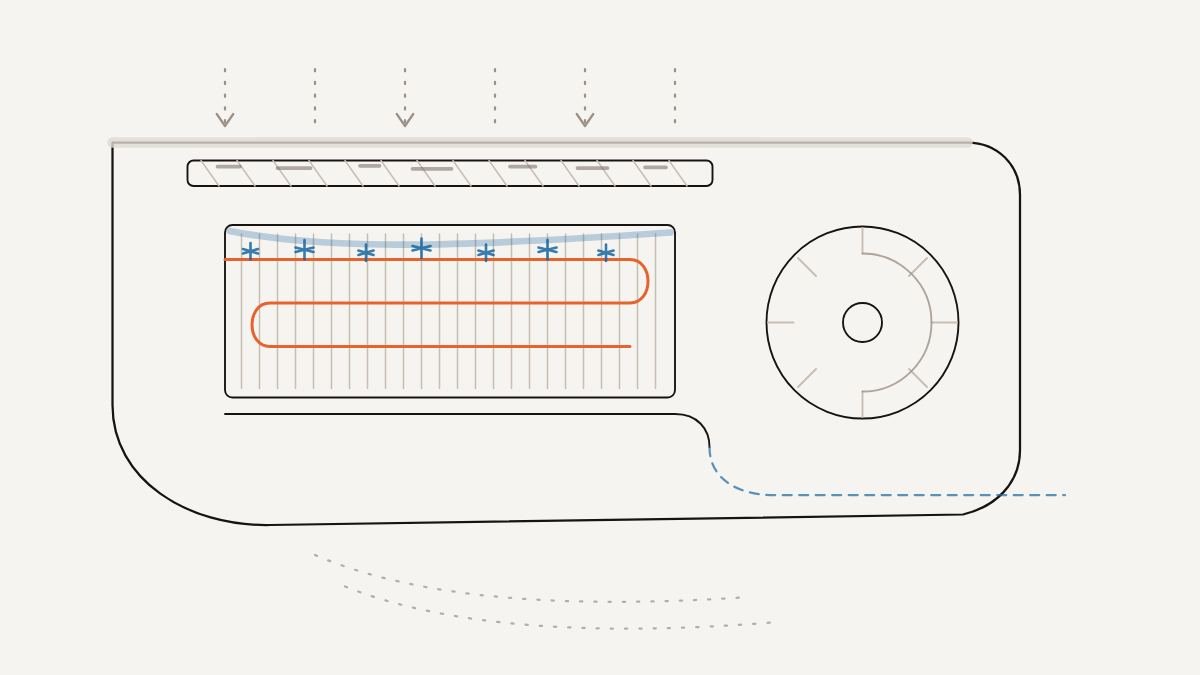
Cooling works by pulling warm room air across a cold coil. Moisture in that air condenses on the metal, then runs down into a tray and out through a drain line. In short, your air conditioner is a dehumidifier that happens to make the room cooler.
Why A Cooling Coil Stays Wet
The coil does not dry the moment you switch off. Water clings between the aluminium fins, and on a humid evening it can sit there for hours. Meanwhile the cabinet stays closed, dark and still.
Those three conditions matter more than anything else. Mould spores drift through every home, so they arrive in the airstream constantly. However, they only settle and multiply where moisture and food both exist.
What Mould Needs To Take Hold
The food source is simply dust. Skin flakes, cooking grease, pet dander and outdoor pollen all pass through the return air, and a portion slips past the filter mesh. Then it sticks to wet metal and plastic.
Add darkness and mild warmth, and growth follows. This is why a smoky kitchen or a home with several pets needs attention sooner than an identical unit down the road.
Where Mould In Air Conditioner Cabinets Actually Sits
Owners tend to check the filters first, which makes sense, although filters are seldom the worst spot. The heavier growth usually hides deeper inside where you cannot reach.
That middle group causes most reports of air conditioner mould. Split system owners rarely reach those parts, because they sit behind the coil where a filter rinse never goes.
- Barrel fan blades, where damp air crosses the same surfaces over and over.
- The lower face of the coil, right where condensation collects before it drains.
- Drain trays beneath the coil, especially if the slope has settled over the years.
- Plastic scroll housing that surrounds the fan and guides air out of the unit.
- Louvre blades and front panel edges, which is the growth you can usually see.
The Early Years, A System That Dries Itself
A new split system starts life with clean fins and a clear drain. Airflow is strong, so the coil sheds its moisture quickly once the compressor stops. As a result, mould has very little chance to establish.
What Good Airflow Does For You
Strong airflow does two useful things at once. It carries damp air away from the coil faster, and it keeps the fins warmer between cycles. Therefore the wet window after each run stays short.
Dust still arrives, but a clean filter catches most of it before it reaches the coil. So in the first years the main job is simply keeping that filter mesh clear.
The Habits Worth Starting Now
Owners who build a rinse routine early rarely deal with heavy growth later. Every few weeks in the cooling season, slide the filters out and rinse them under a tap. Then let them dry fully before they go back.
Another early habit costs nothing. Run the fan only mode for ten or fifteen minutes after a long cooling session. Moving air dries the coil far faster than still air does.
Some systems include a self drying or blow function that does this automatically. If yours has one, switch it on and leave it on. Our guidance on whether running the unit all day makes sense covers how run patterns affect moisture inside the cabinet.
The Middle Years, Where Growth Usually Begins
Somewhere in the middle of a working life, the balance tips. Dust that slipped past the filter has built a thin film on the coil and the fan. Airflow drops slightly, the coil runs colder and wetter, and growth accelerates.
Mould In Aircon Filters And Behind Them
Mould in aircon filters shows up as dark patches or a fuzzy grey bloom on the mesh. Rinsing usually lifts it, though the stain may remain. Since the mesh is only the first defence, finding growth there suggests more sits behind it.
Filters that go back damp make the problem worse. Wet mesh in a warm cabinet is close to ideal for spores, so drying time genuinely matters.
Black Mould In Split System Blower Wheels
Black mould in split system indoor units most often colonises the barrel fan. Each blade holds a shallow pocket where damp dust gathers, and those pockets are almost impossible to reach with a cloth.
Growth on the fan tends to look like fine dark stippling rather than a solid mat. Once it covers the blades, every start up throws a burst of spores and odour into the room.
That burst is the reason the smell hits hardest in the first minute. When an air conditioner smells musty, mould on the fan or coil is usually behind it.
Drain Trays And Slow Drain Lines
Below the coil sits a shallow tray that catches condensation. If the drain line partly blocks with sludge, water lingers instead of leaving. Then the tray becomes a small reservoir feeding growth above it.
A slow drain also raises humidity inside the cabinet, so the coil and fan take longer to dry. In practice, drain problems and mould problems travel together.
The Later Years, When Growth Becomes Established
An older system that has never had a deep clean carries layers rather than patches. Coil fins hold a felted mat of dust and biofilm, while the fan blades lose their profile.
Why Cleaning Stops Holding
At this stage a light clean buys weeks rather than seasons. Growth regrows quickly because roots remain in places a surface wipe cannot reach. Therefore the fix has to go deeper.
Airflow also suffers, which makes the unit run longer for the same result. Longer runs mean more condensation, and more condensation feeds the cycle again.
Older units sometimes develop cracked insulation or a warped tray, and those faults hold water permanently. Our guide to how long these systems generally last explains how condition and care shape the back half of a working life.
Summer And Winter Patterns
Heat and humidity together drive air conditioner mould. Summer growth is fast and obvious, because cooling runs constantly and the coil stays wet. Odour and visible speckling both peak in this stretch.
Cold months do not end air conditioner mould. Winter growth is slower, yet it does not stop altogether. A unit left idle for months keeps whatever moisture and dust it finished the season with.
So the first heating run often releases a stale smell. Reverse cycle heating does not wet the indoor coil the way cooling does. Even so, the outdoor unit sheds water and the indoor cabinet stays dusty.
Talk it through with a technician
Tell us the model and what the unit is doing, and we will bring the right parts to the first visit.
Aircon Mould Health Risks Worth Taking Seriously
Mould exposure affects people differently, and general information is no substitute for advice about your own household. Still, the broad picture is well understood and worth knowing.
Who Tends To Notice It First
People with asthma, hay fever or other allergies usually react earliest. Common complaints include a blocked or runny nose, itchy eyes, throat irritation and coughing that eases after leaving the room.
Young children, older adults and anyone with a weakened immune system may also be more sensitive. Because symptoms overlap with ordinary colds and seasonal allergies, the link to the air conditioner is easy to miss.
One clue helps. If symptoms appear soon after the unit starts and fade when it is off, the indoor cabinet deserves a proper look.
Air Conditioner Mould Sickness And When To Ask A Doctor
Owners who search that phrase are usually worried about someone at home. That worry is reasonable, and we would never try to diagnose it from a service page.
Talk to a doctor or another health professional if symptoms persist, worsen, or affect breathing. They can assess what is actually happening and advise on treatment far better than any guide can.
What we can do is remove the source. Cleaning the unit properly takes one possible contributor out of the picture, which makes any medical conversation clearer.
What You Can Safely Clean Yourself
Plenty of owners handle the outer layer well, and doing so genuinely slows growth. The rule is simple. If you can reach it with the power off and without removing structural covers, it is fair game.
A Numbered Routine For Filters And Surfaces
To clean mould from air conditioner louvres, a soft cloth and warm soapy water do the job. Rinse the cloth often so you lift growth away instead of spreading it across the plastic.
Wear a mask and gloves while you work, and open a window. In addition, wipe down the surrounding wall if dust has settled there.
- Switch the unit off at the wall isolator or the circuit breaker, not just the remote.
- Open the front panel by lifting it at the marked points until it holds.
- Slide out both filter panels slowly so trapped dust does not fall into the room.
- Rinse them under lukewarm running water from the clean side outwards.
- Wipe the visible louvre blades and the front panel with a damp cloth and mild detergent.
- Stand the filters somewhere airy until they are completely dry, never in direct sun.
- Refit the filters, close the panel and restore power at the isolator.
What To Avoid Doing
Some well meant fixes cause damage or make matters worse, so a short list of cautions helps.
Air fresheners are the most common shortcut, and they never work for long. The smell returns because nothing has changed inside the cabinet.
- Do not spray water or aerosol cleaner into the coil or the fan opening, because electronics sit close behind.
- Bleach corrodes aluminium fins, so keep it away from the coil entirely.
- Leave the main cabinet cover alone, since live terminals and refrigerant lines sit underneath.
- Mould bombs and foggers treat the room air, and almost none of it reaches the fan.
- Deodorisers only mask odour, because the source keeps growing behind the scent.
Split System Mould Cleaning That Reaches The Real Problem
Everything behind the coil face needs a technician, proper chemicals and containment. This is where split system mould cleaning differs from a filter rinse in kind rather than degree.
Aircon Mould Treatment Step By Step
A technician isolates power, then fits a catch bag around the indoor unit. Runoff and debris then land in a container rather than on your floor and wall.
Next comes the coil. A purpose made coil cleaner breaks down biofilm between the fins, and a controlled rinse flushes it out. Then the barrel fan gets the same treatment, blade by blade.
Aircon mould treatment finishes with a sanitiser across the coil, tray and housing, followed by a drain line flush. Finally the technician runs the unit and checks that water leaves cleanly.
Our page on what a full service covers sets out how this work sits alongside routine maintenance such as pressure checks and electrical testing.
Ducted And Multi Head Systems
Ducted systems add return air boxes, flexible duct runs and multiple outlets. Growth can sit in the fan coil unit above the ceiling where nobody ever looks, so access and inspection take longer.
Multi head systems repeat the same indoor cabinet several times over one outdoor unit. Each head needs its own clean, because one damp bedroom unit will keep reintroducing odour.
How To Prevent Mould In Air Conditioner Cabinets
Prevention is mostly about drying, not disinfecting. If the coil and fan dry out promptly after each run, growth struggles to establish.
Nothing new has appeared in the science of air conditioner mould. 2026 brings the same simple principle that has always applied, so the habits below still do the work.
An Air Conditioner Mould Checklist
Use this list through the cooling season and again before you shut the system down for winter.
- Rinse and fully dry the filters every few weeks while the unit runs daily.
- Finish long cooling runs with ten minutes of fan only operation.
- Enable any self drying function the unit offers and leave it enabled.
- Avoid setting the thermostat far below the room temperature you actually want.
- Check the outdoor drain outlet during operation to confirm water flows freely.
- Watch for water marks on the wall below the indoor unit.
- Book a deep clean roughly once a year, before the season rather than during it.
Practical Air Conditioner Mould Tips
Sensible habits also cover the room itself. Damp towels, indoor drying racks and unvented bathrooms all raise humidity, which the coil then has to handle.
Ventilate on dry days and use exhaust fans while cooking or showering. Meanwhile, keep furniture clear of the indoor unit so air returns to it freely.
If you are dealing with growth right now, begin with the filters and a torch inspection. That tells you quickly whether the problem is surface level or something deeper.
When Replacement Makes More Sense Than Another Clean
Cleaning is almost always the better first answer. A well built unit responds to it for many years. However, some systems reach a point where the return on cleaning drops away.
Consider replacement when growth returns within weeks of a professional clean. The same applies when the drain tray has cracked or warped, or when cabinet insulation holds water permanently.
Age matters too. If the system already needs a compressor or a major refrigerant repair, spending again on mould remediation rarely adds up.
A technician should walk you through both options honestly. The best air conditioner mould advice weighs condition, running cost and how long you plan to stay in the home.
What Shapes Air Conditioner Mould Removal Cost
Questions about what the work costs come up early, and that is fair enough. We do not publish figures here, because homes vary too much. Instead, here are the factors that move the final number.
Ask for a written scope before work starts. A quote that itemises coil, fan, tray, drain and sanitiser beats air conditioner mould prices quoted with no detail. Our pricing information explains how we structure that.
- System type, since a wall unit, a ducted system and a multi head setup demand different labour.
- How many indoor units need treatment on the same visit.
- Access, because a high wall mount or a ceiling cavity slows the job.
- Severity, as established growth needs longer chemical contact time.
- Whether the drain line needs clearing or repair alongside the clean.
- Timing, since a general service on the same visit saves a separate call out.
Where We Help Across Australia
Climate changes what owners see, though the mechanism stays identical. Humid coastal nights explain most reports of air conditioner mould. Sydney households notice it because the coil never fully dries between runs.
Further north the season simply stretches for air conditioner mould. Brisbane systems tend to show it earlier in the year.
Owners further along the coast describe the same air conditioner mould. Gold Coast units follow that curve almost exactly, because humidity there stays high for longer.
Further south the pattern shifts again for air conditioner mould. Melbourne homes usually see it after a short humid burst rather than a long one.
Inland the driver changes once more. Long idle stretches between seasons are what feed air conditioner mould. Canberra systems suffer most from exactly that.
Drier air helps less than owners expect. Lower humidity does slow air conditioner mould. Adelaide systems still carry heavier dust loading, and dust feeds growth all the same.
The west tells a similar story about air conditioner mould. Perth units meet that same heavy dust, and since dust feeds growth, it still arrives by a slower route.
Clearing air conditioner mould helps every household that reacts to it. We take enquiries from owners right across the country about air conditioner mould. Australia wide, those calls follow much the same seasonal rhythm.
Owners who spot air conditioner mould generally want one thing. An inspection that finds the source beats any amount of guesswork.
Air conditioner mould quotes come by phone, or through our enquiry form at any hour. To arrange an inspection, visit our service booking page and tell us what you can see and smell.
Air Conditioner Mould FAQ
Is aircon mould dangerous?
For most healthy people, brief exposure causes irritation rather than lasting harm. However, people with asthma, allergies or reduced immunity can react more strongly. Because reactions vary so much, anyone with ongoing symptoms should speak to a health professional.
Why does my air conditioner smell musty as soon as it starts?
The fan pushes a first burst of air across surfaces that have sat damp since the last run. That burst carries odour and spores into the room. Then it fades, which is why the smell seems to disappear.
Can I clean mould from air conditioner fan blades myself?
We do not recommend it. Reaching the barrel fan means removing covers that sit beside live electrical parts, and household cleaners can damage the coil. A technician cleans it with containment so debris does not end up in the room.
What causes black mould in split system indoor units?
Condensation on the coil combines with dust that slipped past the filters. Darkness and mild warmth do the rest. Since the fan and lower coil stay damp longest, growth concentrates there first.
Can mould in air conditioner units make someone unwell?
It can contribute to respiratory irritation and allergy symptoms in sensitive people. That said, many other things cause similar symptoms. If someone in your home feels unwell, ask a doctor rather than relying on general guidance.
How often should a split system have a deep clean?
Once a year suits most homes, ideally before the cooling season begins. Homes with pets, smokers or heavy year round use often benefit from more frequent attention. Your technician can suggest an interval after seeing the condition inside.
Will a mould bomb or a stronger cleaner fix it?
No, because those products treat the room rather than the sealed cabinet. Airborne fog barely reaches the fan blades where growth actually lives. Stronger chemicals also risk corroding aluminium fins and plastic housings.
Does running the fan after cooling really prevent mould in air conditioner cabinets?
Yes, and it is the single easiest habit to adopt. Moving air dries the coil and fan far faster than still air. As a result, the wet window shrinks and growth has less opportunity to settle.
Bringing A Damp Cabinet Back Under Control
Growth inside the cabinet is a moisture problem before it is a hygiene problem. Condensation, dust and darkness combine behind a closed panel, and the fan and coil take the worst of it.
You can safely rinse filters, wipe louvres and dry the coil with a fan only run. Anything behind the coil face belongs to a technician with the right chemicals and containment.
If the smell keeps returning, have the inside inspected properly. Where someone at home reacts when the unit runs, speak to a health professional about the symptoms. We are happy to take a look whenever you are ready.
Browse the site
Book a technician
Speak to a qualified technician who works on Kelvinator systems
Call 1300 495 033 and tell us the model and the fault, or book online and we will come back to you.