How to and owner guides
How Often To Service Kelvinator Air Conditioner
The last technician visit is a blur, the filters looked clean in autumn, and now you are simply guessing. Ending that guesswork is the whole point of this how often to service Kelvinator air conditioner guide.
For a normal Australian household, once a year is the sensible baseline. However, the honest answer bends around climate, run hours and how much dust the system breathes in.
So this page gives you the number first. Then it works through the conditions that pull the interval shorter, and the handful that let it stretch a little.
You will also find an owner routine, a clear line where a technician has to take over, and the warning signs that mean you have already waited too long.
On this page
- The Short Answer On Service Intervals
- How Run Hours Change The Interval
- How Owners Phrase The Same Question
- What Pulls The Interval Shorter
- Servicing After Renovation Or Nearby Building Work
- Smoke Seasons And Air Quality Events
- Why Two Units In One House Need Different Intervals
- Split Systems, Window Cabinets And Inverters
- Does The Model Or Its Age Matter?
- Model Codes And What They Do Not Tell You
- Second Hand Units And Relocated Systems
- What To Do If You Cannot Recall The Last Visit
- Servicing A Ducted Or Cassette System
- Return Air Filters On A Ducted System
- Servicing Before A Long Absence
- What Changes After A Repair
- What A Professional Visit Actually Covers
- When A Six Monthly Visit Is Overkill
- What A Quiet Winter Does To A Cooling System
- What Happens If You Skip A Year
- Warning Signs You Have Waited Too Long
- When A Service Turns Into A Repair
- A Simple Owner Routine Between Visits
- Keeping The Drain Clear Between Visits
- Pets, Allergies And Indoor Air
- What Owners Get Wrong About Filters
- Where The Owner Line Stops
- Units In Sheds, Garages And Workshops
- When The Outdoor Unit Sits Under Trees
- Choosing A Technician You Will Book Again
- What Shapes The Cost Of A Service Visit
- What To Ask When You Book The Visit
- Getting The System Ready Before The Technician Arrives
- Choosing The Right Month To Book
- Signs The Last Service Was Not Thorough
- Reading The Indoor Display Between Services
- Keeping A Service Record
- Building A Twelve Month Rhythm You Can Keep
- Holiday Rentals And Short Stay Properties
- Booking Two Systems On One Visit
- How Renters And Landlords Should Handle It
- Taking On A System That Came With The House
- When A Warranty Or A Policy Sets The Pace
- Service Frequency Across Australian Climates
- How To Tell Your Interval Is Right
- Frequently Asked Questions
- The Short Version Worth Remembering
The Short Answer On Service Intervals
Book a professional visit once every twelve months for an ordinary household system. Schedule it ahead of the season you lean on hardest, which for most homes means late winter or early spring.
Move to twice a year when the unit works through both seasons, heating in winter and cooling through summer. In addition, six monthly attention suits homes near the surf, beside a busy road or out on dusty ground.
Between those visits, clean the indoor filters yourself every few weeks during heavy use. That single habit does more for airflow than anything else an owner can manage without tools.
Therefore the rule of thumb reads simply. One professional service each year, filters rinsed by you every month or so in peak season, and an extra visit where conditions are harsh.
A system that sits idle for months still deserves the yearly rhythm. Dust settles on coils whether the fan turns or not, and mould does not wait politely for you to switch the unit on.
Holiday homes are the classic example. Because they run in bursts and then sit shut up for weeks, they often arrive at summer with a musty smell and a sluggish drain.
How Run Hours Change The Interval
Hours matter more than calendar months. A unit running eight hours a day through a long summer ages faster than one used for a fortnight.
So count the seasons the system actually works rather than the years it has hung there. A reverse cycle unit covering both winter and summer effectively does double duty.
Therefore treat twelve months as a default rather than a law. Heavy use pulls the visit forward, while a spare room unit holds the yearly rhythm comfortably.
How Owners Phrase The Same Question
Wording varies enormously, although the intent behind it almost never does. Everyone wants a reasonable interval and reassurance that they have not left the job too late.
Plenty of people simply ask how often should aircon be serviced. Guide pages usually answer with a single number, while the truthful reply depends on the house it sits in.
Others want a written air conditioner service frequency guide they can keep on the fridge. Because a schedule is easier to follow than a rule, that instinct is a good one.
The phrase air conditioner service frequency also turns up on its own from owners comparing brands. Frequency barely changes between makes, since dust and moisture treat every coil the same way.
Some readers arrive looking for an annual air conditioner service guide before they ring anyone. The word annual is already doing the work there, so what they really want is confirmation.
An annual air conditioner service is exactly what most homes need. Still, the word annual hides the second question, which is when in the year that visit should land.
What Pulls The Interval Shorter
Certain conditions age a system faster, and they are easy to spot once somebody points them out. If two or more describe your home, move to a six monthly rhythm.
Coastal homes deserve a special mention. Salt does not need a storm to cause harm, because a steady sea breeze carries it inland on ordinary days.
Dust behaves differently again. Fine grit does not merely block airflow, it also works like sandpaper inside the fan assembly across many seasons.
Pet hair is the quiet one. Owners rarely notice the felt building on the fan barrel until the airflow has already dropped by a noticeable margin.
- Salt air from a coastal position, which eats into the outdoor coil and cabinet
- Heavy dust from unsealed roads, paddocks, renovation work or nearby building sites
- Pets that shed, because fur mats into filters and fan barrels within weeks
- Smokers indoors, since residue coats the coil and holds a stale odour
- Year round running for both heating and cooling with very little rest
- A unit serving a home office or any room occupied all day
- Hay fever or asthma in the household, where indoor air quality matters more
- An outdoor unit sitting under trees that drop leaves, sap and seed
Servicing After Renovation Or Nearby Building Work
Building dust behaves nothing like household dust. Plaster, brick and timber particles are fine, abrasive and produced in enormous quantity over a short period.
So book a service after any renovation, even a modest one. A fortnight of sanding can load a filter more heavily than an entire summer of ordinary use.
The same applies when a neighbour builds. Because outdoor units pull air across the coil constantly, site dust reaches them whether your windows stay shut or not.
Talk it through with a technician
Tell us the model and what the unit is doing, and we will bring the right parts to the first visit.
Smoke Seasons And Air Quality Events
Bushfire smoke leaves a fine residue on filters and coils. It also carries an odour that lingers in the fan barrel long after the outside air clears.
So rinse the filters once the smoke passes rather than waiting for the yearly visit. That single step removes most of the smell owners complain about afterwards.
Heavy or repeated smoke events justify bringing the professional visit forward. A technician can clean the coil properly, which no owner routine ever reaches.
Why Two Units In One House Need Different Intervals
Households often assume every head follows one schedule. In practice the lounge unit works far harder than a guest room unit that runs twice a year.
Position matters as much as use. A head above a kitchen bench collects cooking grease, while a bedroom head on the shaded side stays comparatively clean.
So stagger the attention rather than the booking. One visit can cover the whole house, although the busy heads deserve the deeper clean.
Split Systems, Window Cabinets And Inverters
A wall mounted head and a window cabinet share the same yearly baseline. However, they collect grime in different ways and at different speeds.
The indoor head of a split system holds a long fan barrel that gathers a fine felt of dust. As that layer thickens, airflow drops quietly and the room takes longer to reach the temperature you set.
So the practical answer for how often to service Kelvinator air conditioner split system owners is straightforward. Once a year normally, twice when the room runs hot and the unit rarely rests.
A window cabinet draws indoor and outdoor air through one box. Because everything shares a single housing, grit reaches the coil faster in exposed spots such as a street facing wall.
The question of how often a window unit needs servicing deserves the same honest reply. Yearly is fine unless the position is dusty, salty or in constant sun.
Multi head systems are worth one extra thought. Since several indoor heads share one outdoor unit, a fault showing in one room can point at a shared component rather than that head alone.
An inverter system varies compressor speed instead of switching hard on and off. As a result it often runs for long gentle stretches rather than short bursts.
Longer run time means more air crosses the filters and coils. Therefore the servicing interval for inverter models is the same yearly answer, sometimes sooner.
Inverter electronics add one more reason to stay on schedule. Because the boards work harder, loose connections and heat stressed components are worth catching while they remain cheap to correct.
Does The Model Or Its Age Matter?
Age matters far more than the letters on the label. A tidy older unit in a clean house can outlast a newer one hidden behind a hedge and never touched.
Model codes still shape how people think about this. Owners find a prefix on the indoor head and assume the schedule changes with the series printed there.
It does not. Wall mounted inverter heads, ducted fan coils and older fixed speed cabinets all run on the same yearly rhythm, adjusted for the conditions around them.
Older equipment does reward closer attention. Fans, capacitors and contactors give warning signs as they age, and a technician can catch those signs long before a failure.
Owners still put the question directly. How often older model heads need servicing is the same yearly answer, adjusted for condition rather than age.
The reverse question arrives just as often. The servicing interval new model owners should plan for is yearly too, starting from the first summer.
Newer equipment benefits from the habit starting early. A service history also helps if you ever raise a claim under the Kelvinator warranty, which the manufacturer handles separately from our own workmanship guarantee.
When an ageing system needs repairs between services, the sums change. Our guide on weighing a repair against a replacement walks through that decision without pressure.
Model Codes And What They Do Not Tell You
The letters on a sticker describe a series rather than a maintenance need. For KSV model heads the servicing interval is the ordinary yearly answer.
The other common prefix behaves identically. How often KSD model cabinets need servicing follows the same rhythm, shortened only by a harsh position.
So note the code for parts and manuals instead. It helps a technician order the right filter, although it will never set your interval for you.
Second Hand Units And Relocated Systems
A unit bought used or moved to a new wall starts with an unknown history. Treat the first service as a baseline rather than a routine visit.
Relocation also disturbs pipework and electrical connections. A check soon after the move catches a weeping flare nut while the loss is still small.
Then return to the ordinary rhythm once the system proves itself. One thorough visit early saves several puzzled ones later.
What To Do If You Cannot Recall The Last Visit
Many people arrive at this page precisely because the date has gone. Look for a sticker on the indoor head or the outdoor cabinet first.
Technicians often leave a dated label near the isolator. Failing that, search your email and your bank records for the trade name you used.
If nothing turns up, assume the interval has lapsed and book. Starting the record again is far cheaper than guessing for another summer.
Servicing A Ducted Or Cassette System
Ducted equipment follows the same yearly rule, although the work looks rather different. The fan coil usually sits in a roof space or under the floor, well away from daily attention.
Return air filters are the part an owner can reach. They sit behind a grille in a hallway ceiling or wall, and they load up faster than most people expect.
Because the ductwork itself gathers dust, airflow at the furthest outlet fades first. So a room that used to cool nicely and now lags is often a duct issue rather than a unit issue.
Zone motors add another item to the yearly list. A zone barrel stuck half open sends air where nobody wants it, and the symptom looks exactly like lost capacity.
Access shapes the visit more than anything else. A roof space in midsummer is genuinely punishing, so booking outside the hottest weeks helps the technician work carefully.
Ceiling cassettes sit somewhere between the two. They draw air through a central grille, which means the filter is easy to reach once you know how the frame drops down.
Return Air Filters On A Ducted System
A ducted return air grille hides the largest filter in the house. Because it sits in a ceiling or a hallway wall, most owners forget it exists.
Check it every couple of months during heavy use. A loaded return filter starves the entire system, so every room suffers at once.
Handle the grille carefully when it drops down. Support it while you release the catches, since a hinged frame can swing hard against a ceiling.
Keep a spare filter with the manual as well. Swapping one in while the other dries keeps the system running through a busy week.
Servicing Before A Long Absence
A house left empty for months benefits from attention before you go. A clean drain and a clear coil mean nothing festers while nobody watches.
Switch the system off at the isolator once the service is done. Standby power serves no purpose in an empty house, and storms cause fewer surprises.
Then run the unit briefly on your return. Ten minutes tells you whether the machine survived the break before you truly need it.
What Changes After A Repair
A repair resets nothing about the service clock. Replacing a fan motor does not clean a coil, and the yearly rhythm still applies afterwards.
Still, ask whether the repair visit included any cleaning. Some jobs open the unit anyway, which is a sensible moment to do both.
Then note the repair date in the same record. A history of small fixes on one unit becomes useful evidence when replacement comes up.
What A Professional Visit Actually Covers
A proper service is not a filter rinse with a clipboard. The technician follows the airflow path, then the electrical side, then the refrigeration side in one pass.
Expect attention to the indoor coil, the drain line, the fan barrel, the outdoor coil and every electrical connection. Because these parts age at different rates, the aim is early wear rather than obvious failure.
Measurements matter as much as cleaning. Technicians compare running current, airflow and temperature split against what the system should be doing on that day.
We keep the full detail on our servicing pages instead of repeating it here. If you want the complete run through, our booking page explains what a visit involves before you commit to anything.
Many households prefer a maintenance plan so the timing is handled for them. A plan simply books the visit at the right point in the year and keeps the history in one place.
The value of a plan is not mysterious. Instead, it removes the most common failure point, which is a busy family forgetting the unit until it misbehaves.
When A Six Monthly Visit Is Overkill
Shortening the interval is not always the right answer. A lightly used inland unit in a sealed house rarely needs attention twice a year.
Look at the evidence from the last visit instead. Light dust, a clear drain and steady readings all suggest the yearly rhythm is holding comfortably.
Money spent on unnecessary visits buys nothing. Put it towards a deeper clean at the yearly appointment, or towards a fault you already suspect.
What A Quiet Winter Does To A Cooling System
A cooling only unit resting through winter is not really resting. Dust settles on a still coil, and the drain tray dries into a crust.
Spiders and insects also treat an idle outdoor unit as shelter. Nests inside the cabinet cause more spring callouts than most owners would believe.
So run the system for ten minutes on a mild winter day. That short run keeps things moving and tells you early whether spring holds a surprise.
What Happens If You Skip A Year
Nothing dramatic happens on the first skipped year. Dust simply thickens, the drain narrows, and the system starts working slightly harder for the same result.
Skip two or three and the picture changes. Airflow falls far enough that the coil runs colder than intended, which invites ice and puts strain on the compressor.
Moisture is the other slow problem. A damp coil coated in dust becomes a comfortable home for mould, and that shows up first as a smell rather than a fault.
Electrical wear compounds quietly as well. Terminals loosen with heat cycling, and a loose terminal creates heat of its own until something finally gives up.
None of this makes a skipped year a disaster. It simply means the next visit takes longer, costs more and occasionally uncovers damage that regular attention would have prevented.
Warning Signs You Have Waited Too Long
A system usually complains before it fails outright. Once you recognise the signals, the timing of the next booking stops being a guess.
Those signs point to a diagnosis rather than a schedule. Because a fault is already in progress, waiting for the yearly slot only lets the damage spread.
Timing matters most with water. A blocked drain caught early is a quick clear, while the same blockage ignored can stain a wall and ruin plaster.
Noise deserves the same urgency. A rattle is often a loose panel, yet a grinding note usually means a bearing or a fan blade needs attention now.
- Weaker airflow from the vents even on the highest fan speed
- A musty or sour smell during the first minutes of cooling
- Water dripping from the indoor head onto the wall or the floor
- The room taking noticeably longer to reach the temperature you set
- New rattles, ticking or a grinding note from either unit
- Ice forming on the pipework or across the indoor coil face
- The system stopping and restarting far more often than it used to
- An error code showing on the indoor display or the remote screen
When A Service Turns Into A Repair
Sometimes a routine visit uncovers something that needs fixing. That is a good outcome, since the alternative is finding it during a heatwave.
Questions about servicing a system that is not working usually arrive too late. Once the system has stopped, the answer is a diagnosis rather than a schedule.
The same applies to servicing questions about problems that have already started. Book a repair visit instead of waiting for the yearly slot to come around.
Technicians should always tell you before extra work begins. A service covers cleaning, checking and measuring, while a worn contactor or a failed capacitor is a separate job.
Refrigerant is the clearest example. If pressures read low, the honest response is a leak search rather than a quiet top up that hides the fault for one more season.
Ask for the reasoning in plain language. A technician who explains what was measured, and why it matters, is one worth keeping for the next visit.
A Simple Owner Routine Between Visits
Here is the routine we suggest between professional visits. These maintenance instructions need no special tools, only a spare half hour of your time.
Button names differ between remotes and models, so treat the labels below as a guide rather than exact wording. The list works through the routine step by step.
Print that list if it helps. Owners who want a servicing checklist up on the wall somewhere tend to keep the habit far longer.
Those few maintenance steps take about half an hour once you have done them twice. Meanwhile the payoff shows up over time as steadier airflow.
Frequency beats thoroughness here. A quick monthly filter rinse in summer beats one heroic clean in March, because dust never arrives all at once.
Some owners would rather watch somebody demonstrate these checks. Video guides help with panel catches and drain outlets, so pick one matching your model family.
- Switch the system off at the remote, then isolate it at the wall switch or the circuit breaker before touching anything internal.
- Open the front flap of the indoor head, which usually hinges upward with light pressure at the side clips.
- Slide the filters out gently, noting which way around they sit so they return the same way.
- Wash the filters in cool water with a little mild detergent, then dry them fully in shade before refitting.
- Wipe the visible face of the indoor unit with a damp cloth, avoiding the fine aluminium fins behind the filters.
- Check the outdoor drain outlet for a steady drip during cooling, since a dry pipe on a humid day suggests a blockage.
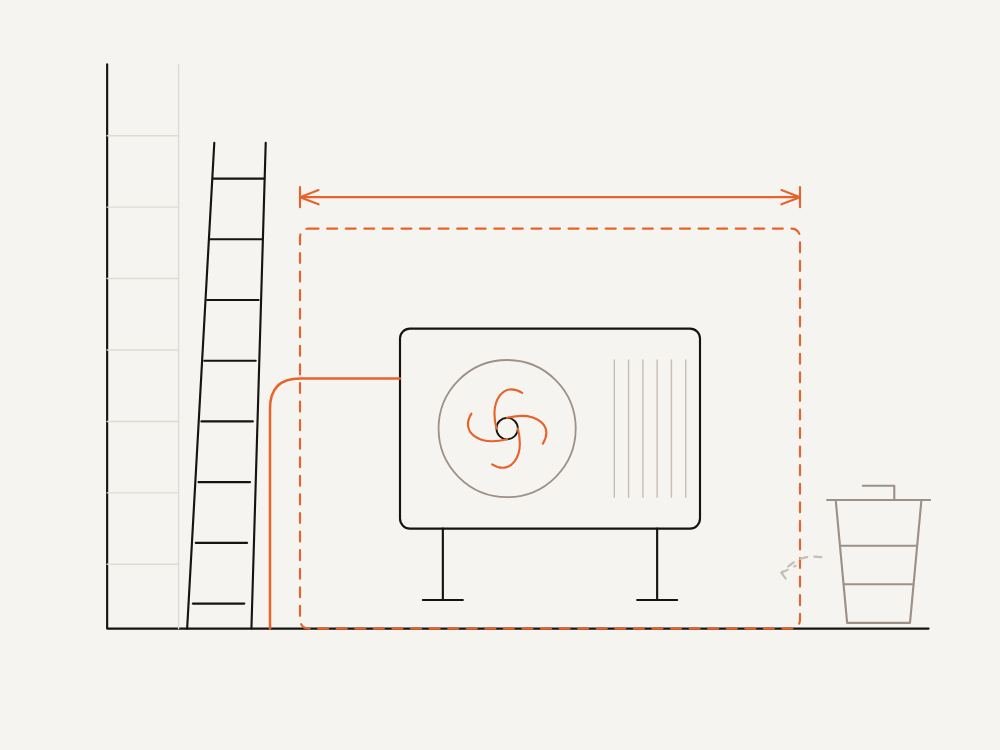
- Clear leaves, clippings and stored items away from the outdoor unit so air moves freely around every side.
- Rinse the outdoor coil lightly with a garden hose on low pressure, never a pressure washer, and only with power isolated.
- Restore power, run cooling for ten minutes, then feel the air and listen for any new rattle or hum.
- Note the date somewhere simple, because a written record makes the yearly booking far easier to keep.
Keeping The Drain Clear Between Visits
The condensate drain causes more callouts than any other neglected part. It stays damp all summer, which suits algae and settled dust equally well.
Watch for a steady drip at the outdoor end during cooling. A dry outlet on a humid afternoon usually means water is banking up inside the tray.
Never push wire into the drain line. A gentle flush at the outdoor end is fine, while anything firmer risks splitting the pipe behind the wall.
Pets, Allergies And Indoor Air
Homes with pets load filters faster than any other ordinary household. Fur mats into the mesh, then works its way onto the fan barrel behind it.
Allergy and asthma households have a second reason to shorten the interval. A clean filter and a clean coil hold less dust and mould for the fan to circulate.
Therefore treat six monthly servicing as the starting point in both cases. Keep the monthly rinse going as well through the seasons of heaviest use.
What Owners Get Wrong About Filters
Filters cause more confusion than any other part of the system. Many owners assume a yearly service removes the need to touch them, which is not how the timing works.
A professional visit cleans the filters on the day. However, they begin loading again immediately, and by midsummer they can sit halfway blocked once more.
Others scrub the mesh until it distorts. Gentle rinsing in cool water is plenty, because the dust sits on the surface rather than deep inside the weave.
Drying gets rushed as well. A damp filter pushed back into a warm head gives mould a head start, so shade drying is worth the extra hour.
Then there is the replacement question. Mesh filters last for years when handled gently, although a torn frame or a crushed corner means the filter no longer seals against its housing.
Photograph the filter each time you clean it. Comparing those images across one summer tells you honestly whether your cleaning interval matches the house.
Where The Owner Line Stops
The split between owner work and technician work is clear once somebody draws it. Cleaning, clearing and observing sit firmly on your side.
Refrigerant does not. Handling it requires a licence in Australia, so topping up, leak repair and system pump down all belong to a qualified technician.
Deep coil cleaning also sits outside a sensible diy routine at home. A proper chemical clean needs drip trays, coil safe products and a way to catch run off without soaking the wall.
Electrical testing is the third exclusion. Capacitors hold charge after the power is off, and a meter in untrained hands turns a small check into a real hazard.
So the honest split looks like this. You can judge the timing yourself without technician help, while the inspection itself stays with somebody licensed.
Owners can also manage their half of how often to service Kelvinator air conditioner safely. Isolate the power every single time, and never remove the indoor casing.
Never poke anything into the fan opening while the unit still has power. That rule holds even when the remote shows the system as switched off.
Units In Sheds, Garages And Workshops
A unit in a workshop lives a harder life than one in a lounge. Sawdust, welding fume and grinding grit all reach the filter within days.
Six monthly attention is the sensible baseline out there. Some workshops need quarterly filter cleaning through a busy period, whatever the calendar says.
Position the outdoor unit away from the dustiest doorway where you can. Otherwise the coil packs with fine material and the system loses capacity quietly.
When The Outdoor Unit Sits Under Trees
Trees change the schedule more than owners expect. Leaves, sap, seed and bird mess all land on the outdoor coil through the year.
Clear the top and the fan grille every few months. A blocked coil rejects heat poorly, and the compressor pays for that in extra run time.
Prune back to leave generous clearance on every side. Air has to reach the coil and then leave, which a hedge pressed against the cabinet prevents.
Choosing A Technician You Will Book Again
The right technician turns a yearly chore into a short predictable appointment. Look for a licence number, a clear scope and a written quote before work starts.
Ask how faults get reported back to you afterwards. Somebody who explains a measurement in plain language is worth keeping for the next decade.
Consistency helps as much as skill. A person who saw the system last year notices the change that a stranger would read as normal.
What Shapes The Cost Of A Service Visit
Several practical factors move the figure, and none of them are mysterious. System type, access, condition and the number of indoor heads all play a part.
A single wall mounted head at chest height is quick work. By contrast, a ducted fan coil in a ceiling space takes longer to reach and longer to inspect properly.
Condition matters just as much as layout. A unit left several years without attention needs a deeper clean than one kept on a steady yearly rhythm.
Owners weighing up the cost of a visit against the risk of a breakdown usually decide it is worth it. Our page on what shapes a quote explains those factors properly.
Questions about the price of a service sit in exactly the same place. We give a figure once we know the system type and how it was installed, never before.
Running costs belong in the same conversation, since a clean system does not fight for airflow. Our notes on what your system costs to run cover the settings side of that.
What To Ask When You Book The Visit
A short conversation at booking time prevents most disappointment. Ask what the visit covers, how long it takes and whether the figure changes with system type.
Then check whether coil cleaning sits inside the visit or gets quoted separately. That single question explains most of the gap between two very different sounding offers.
Ask for a written record as well. A one page summary of what was measured turns the next booking into a decision rather than a guess.
Getting The System Ready Before The Technician Arrives
A little preparation makes the visit faster and smoother. Clear furniture away from the indoor head so the panel opens without anybody shifting a wardrobe.
Unlock the side gate and clear the outdoor unit as well. Pots, bikes and stored timber all cost time that a technician would rather spend on the machine.
Then write down the symptoms you have noticed. A note about a smell in October beats trying to recall it while somebody waits with a torch.
Choosing The Right Month To Book
Aim for the shoulder seasons, which in practice means autumn or early spring. Technicians have more availability then, and any fault surfaces before you truly depend on the system.
A cooling heavy household is best served by a spring booking. Our guide on getting a system ready for summer covers the small jobs that pair well with that visit.
Flip the timing if you rely on the system for winter heating. A late autumn visit means reverse cycle mode gets tested before the first genuinely cold night arrives.
Households leaning on both modes can split the difference. One visit in early spring and one in early autumn keeps both seasons covered without any guesswork.
Avoid booking during the first heatwave. Every technician in the city is already stretched then, and a routine service waits behind genuine breakdowns.
Signs The Last Service Was Not Thorough
A quick wipe over is not a service, although it can look like one. Check the filters and the visible coil face soon after the technician leaves.
Clean filters and a genuinely clean coil face are the obvious markers. Ask what the temperature split measured, because a real visit produces numbers rather than opinions.
A written record settles it either way. If nothing was measured and nothing was noted, the next visit deserves a different technician.
Reading The Indoor Display Between Services
Modern heads report faults on the display long before the room suffers. A flashing timer light or a two character code both deserve a note in your record.
Write down the code and the conditions at the time. Because intermittent faults hide during a visit, that note often saves an hour of hunting.
Then mention it when you book. A technician who knows the code in advance arrives with the right part more often than not.
Keeping A Service Record
A record turns a vague memory into a decision you can defend. Write down the date, the technician trade licence and anything replaced during the visit.
That page becomes useful in three situations. Warranty questions, insurance claims and the sale of the house all go smoother with evidence of care.
Photographs help as well. A picture of the filters before and after cleaning tells you honestly whether your interval is right for the house.
Keep the record where the system lives. A note taped inside the meter box or a shared calendar entry beats a receipt lost in a drawer.
Building A Twelve Month Rhythm You Can Keep
A schedule only works when somebody remembers it. So tie the yearly booking to a fixed marker such as the end of the school holidays.
Then set two or three filter reminders in the same calendar. Monthly during heavy use and quarterly the rest of the year suits most homes well.
Keep those reminders on a shared calendar rather than one phone. Because households change, a shared entry survives a new job, a move or a busy summer.
Holiday Rentals And Short Stay Properties
A short stay property runs in bursts with nobody watching the machine. Guests set 16 degrees, leave doors open, and never mention a smell to the owner.
So treat a rental as a heavy use system rather than a spare room one. Six monthly servicing and a filter clean between busy periods keeps complaints down.
Ask the cleaner to check the indoor head at each turnover. A quick look at the filters costs minutes and prevents most reviews about poor cooling.
Booking Two Systems On One Visit
Homes with more than one system save time by booking them together. Travel and setup happen once, and the technician carries everything needed for both.
Keep the records separate even so. Two units on one invoice still age differently, and a shared note hides which head needed the deeper clean.
Then align the intervals where the usage matches. Where it does not, book the hard working system twice and leave the quiet one annual.
How Renters And Landlords Should Handle It
Responsibility for servicing normally sits with the owner of the property. Still, the tenant is the person who notices weak airflow or a new noise first.
So the practical arrangement is simple enough. Tenants report symptoms promptly and keep the filters clean, while the landlord books the yearly professional visit.
Written requests help both sides. A dated message about a smell or a drip creates a record that protects the tenant and helps the owner plan the work.
Agents often hold a maintenance history for the property. Asking for it before summer tells you whether the system has been looked after or quietly ignored.
Apartment buildings add one wrinkle. Outdoor units on a shared balcony or roof may need building access, so booking further ahead avoids a wasted visit.
Taking On A System That Came With The House
A new owner rarely inherits a service history. So assume the worst until a technician says otherwise, because the previous owner may never have booked a visit.
Book an inspection in the first season rather than waiting for a fault. That visit sets a baseline and tells you what condition you actually bought.
Then ask the technician for an interval suited to the house. Position, age and condition together decide whether yearly or six monthly makes better sense.
When A Warranty Or A Policy Sets The Pace
Some manufacturer warranties expect evidence of regular maintenance. We are not the manufacturer, so read the wording that came with your own unit.
Insurance can raise the same question after water damage. A dated record of servicing makes that conversation shorter and considerably less stressful.
Keep receipts with the manual rather than loose in a drawer. A folder near the meter box survives house moves better than a memory does.
Service Frequency Across Australian Climates
Our technicians work on Kelvinator equipment as specialists, and we are not the manufacturer. That means we service, repair and maintain the gear while Kelvinator remains the brand on the badge.
Climate changes the answer more than anything else. So the same yearly baseline stretches or shortens noticeably as you move around the country.
Consider how often Sydney homes really need a visit. Coastal salt in the east and heavy summer heat in the west both argue for six monthly attention.
Think about the interval Melbourne households should aim for. Because both heating and cooling get used hard there, a twice yearly rhythm often suits better than a single visit.
Humidity drives the servicing rhythm Brisbane owners should plan for. Drains block faster and mould grows more readily, so drain checks carry extra weight in that climate.
Dry heat and fine dust shape the enquiries we get from Perth. Filters load up quickly there, which makes owner cleaning between visits especially worthwhile.
Owners with a servicing question want a qualified local technician. Look for a licensed operator who explains the work, quotes before starting and leaves a written record behind.
How To Tell Your Interval Is Right
The proof arrives at the next visit rather than in a rule book. If the technician finds light dust and a clear drain, your timing is working.
Heavy build up tells the opposite story. Thick felt on the fan barrel or a coil packed with grit means the gap between visits is simply too long.
Your own senses give an earlier reading. Steady airflow, a neutral smell and a quiet start each morning all suggest the system is keeping up.
Energy use offers a slower clue. A system fighting a blocked coil runs longer for the same comfort, so a creeping bill can point back at maintenance.
Adjust one step at a time. Move from twelve months to nine before jumping to six, because most homes land somewhere sensible in between.
Frequently Asked Questions
How often should aircon be serviced in a normal home?
Once a year suits most households, booked ahead of the season you use most. Move to twice a year if the system runs constantly or sits somewhere dusty or coastal. Between visits, clean the filters yourself during heavy use.
Is an annual air conditioner service really necessary?
Yes, because dust and moisture build up whether the system runs or not. A yearly visit keeps airflow strong and catches small faults while they are still small. It also gives you a maintenance record if a warranty question ever arises.
What service frequency suits a coastal home?
Twice a year is the safer rhythm near the water. Salt corrodes the outdoor coil and cabinet steadily, so more frequent inspection pays for itself. Rinsing the outdoor unit with fresh water between visits helps as well.
Can I service a Kelvinator air conditioner myself?
You can handle the routine part, which means filter cleaning, clearing the outdoor unit and watching the drain. However, refrigerant work, electrical testing and deep coil cleaning need a licensed technician. Keeping the owner tasks current makes the professional visit quicker.
Does a lightly used system still need a yearly visit?
Keep the yearly interval even when the unit barely runs. Dust still settles on coils, and drain lines still collect debris during long idle spells. A quick annual check also confirms the system starts when you finally need it.
Will regular servicing stop the unit breaking down completely?
No schedule can promise that, and we will not pretend otherwise. What servicing does is catch wear early, keep airflow clear and reduce the chance of an avoidable failure. Some components simply reach the end of their working life.
How long does a routine service visit take?
A single wall mounted head is usually a short appointment. Ducted systems, multi head setups and units in awkward positions take longer, especially when the coil needs a deeper clean. We give a realistic time estimate when you book.
Should I book before summer or after summer?
Before is better when cooling is your priority, since faults surface while help is easy to arrange. If you rely on heating instead, book in late autumn. Either way, avoid the first heatwave, when every technician is already stretched.
The Short Version Worth Remembering
Once a year is the baseline for a household system, and twice a year fits harsh conditions. Salt, dust, pets, smoke and constant running are the signals to shorten the interval.
Your own contribution is simple and it genuinely matters. Clean filters, a clear outdoor unit and a working drain do most of the day to day work.
Leave refrigerant, electrics and deep cleaning to a licensed technician. Furthermore, book in a shoulder season so any fault appears before you truly need the system.
If you are due, or you simply cannot recall the last visit, our team is happy to talk it through. Read one of the related guides above, or arrange a service visit when the timing suits you.
Browse the site
Book a technician
Speak to a qualified technician who works on Kelvinator systems
Call 1300 495 033 and tell us the model and the fault, or book online and we will come back to you.