No display diagnostics
Kelvinator Air Conditioner Lights Flashing on the Indoor Unit
Kelvinator air conditioner lights flashing are a message, not a random glitch. The message sits in the pattern, so the pattern deserves a careful look before you press anything.
What the pattern means depends on the model family and on the age of the system. A light that means filter reminder on one wall mounted unit means something quite different on another.
Because of that, this page does not hand you a flash count table. Instead it teaches you to read the pattern properly, record it and hand it to someone who can act on it.
On this page
- Which Lights Sit on a Kelvinator Indoor Unit
- Normal Indicator or Fault Signal, How to Tell Them Apart
- How to Read the Flash Pattern Accurately
- No Single Flash Count Table Covers Every Model
- The Early Years, Flashing That Usually Is Not a Fault
- The Middle Years, When Flashing Starts to Report Wear
- The Later Years, Flashing on an Older Kelvinator
- What Changes at Each Stage of the Life of the Unit
- Common Flashing Situations Owners Describe
- When the Lights Flash but Nothing Shows a Code
- Flashing Lights Across Different Kelvinator Formats
- Safe Checks Before You Call a Technician
- Resets, What They Fix and What They Hide
- How a Technician Diagnoses Flashing Lights
- Getting the Longest Life From the Unit
- When Replacement Makes More Sense Than Repair
- Kelvinator Air Conditioner Lights Flashing Cost
- Where to Get Help With Flashing Indicator Lights
- Frequently Asked Questions
- The Short Version and Your Next Step
Which Lights Sit on a Kelvinator Indoor Unit
Most wall mounted Kelvinator systems carry a small row of indicator lights behind the front panel. They usually sit near the right hand end. Window and wall box units place them beside the controls instead.
The exact set varies by model, so treat the list below as the common shapes rather than a fixed standard. Your unit may carry fewer of them, and some models combine two functions into one light.
Kelvinator indoor unit lights flashing in any of these positions can mean a setting, a reminder or a fault. Therefore the position alone never gives you the answer.
- An operation or run light, which shows the unit has power and a command to work.
- A timer light, which shows a start or stop time sits in memory.
- The standby or power light, glowing quietly while the unit waits for a command.
- On reverse cycle models, a heating or defrost indicator that reports what the outdoor coil is doing.
- Some model families add a cooling indicator, often sharing the same lens as the heating one.
- A filter or clean light, which counts running hours and asks for a filter clean.
- Connected models add a wifi or network light, which reports the link to the home network.
Normal Indicator or Fault Signal, How to Tell Them Apart
A steady light almost always reports a state. For example a solid timer light means a timer is set, and a solid operation light means the unit is running as you asked.
Flashing changes the meaning. A slow, even blink that stops once the unit settles usually belongs to a normal process. Examples include a start delay, a defrost cycle or a wifi handshake.
A blink that carries on after the unit has stopped is different. When Kelvinator air conditioner blinking lights continue while nothing else happens, the control board has stopped and is reporting why.
Speed matters too. Slow pulses often mean waiting, while rapid pulses more often mean a protection cut out. However these habits vary, so never treat speed alone as proof.
The strongest clue is grouping. If the light flashes a set number of times, pauses, then repeats the same number, the board is counting something out to you deliberately.
How to Read the Flash Pattern Accurately
Counting flashes sounds simple until you try it in a noisy room with a fan running. So slow the process down and use a method rather than a glance.
That record is worth more than any guess. A technician who knows the model and the verified count can look up the correct table for that board before arriving.
- Stand square to the unit where you can see every indicator at once, not at an angle.
- Leave the remote alone for a full minute and let the pattern repeat on its own.
- Count the flashes in one burst, then note the length of the pause before the next burst.
- Repeat the count three times and check that all three agree.
- Note which light flashes, what colour it shows and whether any other light flashes with it.
- Film ten seconds on a phone, because video settles any argument about the count.
- Write down what the rest of the unit does at the same moment, such as fan running, fan stopped or beeping.
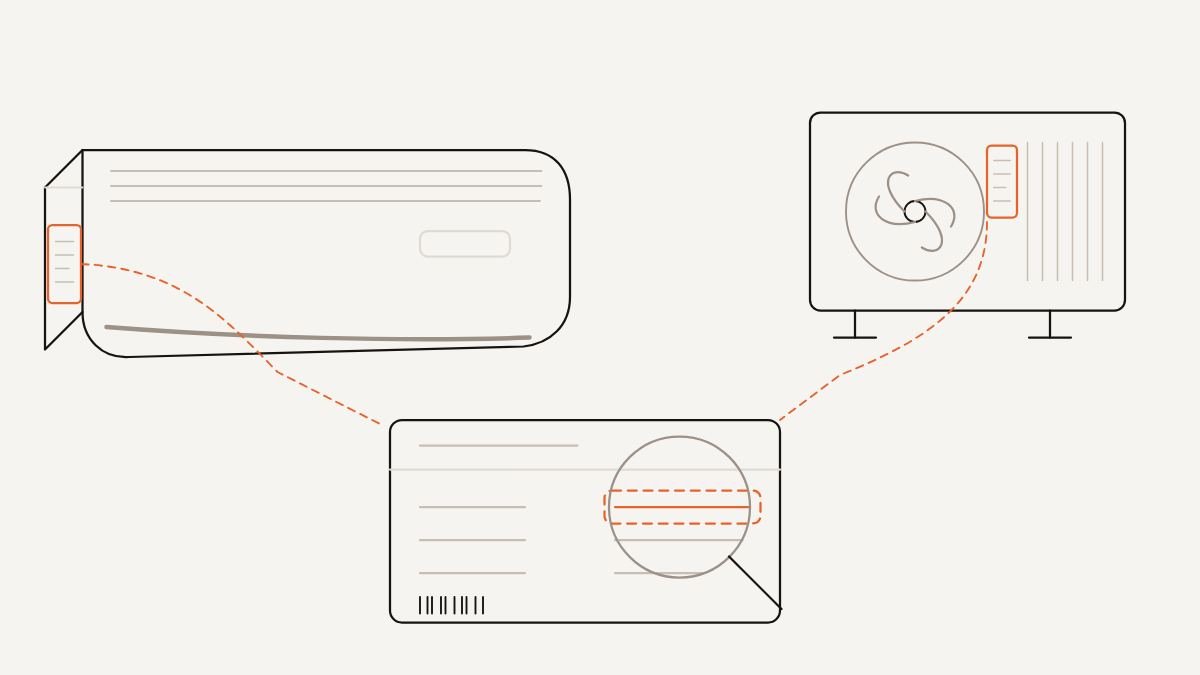
- Copy the model number from the plate on the side or under the front panel.
No Single Flash Count Table Covers Every Model
Owners often search for Kelvinator air conditioner light flashing 2 times, hoping for one universal chart. We will not publish one, because an honest answer does not exist in that form.
Flash counts map to faults inside a particular control board, and different Kelvinator model families use different boards. As a result the same count can point to a sensor on one unit and a protection trip on another.
Confident looking lists exist for a Kelvinator air conditioner light flashing 3 times. So do lists for a Kelvinator air conditioner light flashing 5 times. Following the wrong list leads to the wrong part and a bill for nothing.
The same caution applies to Kelvinator air conditioner light flashing 6 times and Kelvinator air conditioner light flashing 8 times. Record the count accurately, then match it against documentation for your exact model.
This is also why Kelvinator aircon flashing lights meaning searches feel so unsatisfying. The meaning is real and specific, but it lives in model documentation rather than in a single public chart.
The Early Years, Flashing That Usually Is Not a Fault
In the first seasons after installation, most flashing has an innocent cause. The board is healthy and the parts are new, so settings and reminders account for the majority of what owners notice.
A Kelvinator wifi light flashing during this period nearly always means the unit is looking for the home network. It flashes while pairing, and it flashes again if the router changes name or password.
A Kelvinator filter light flashing is a running hours reminder rather than a warning about damage. Clean the filters, then clear the reminder using the method in the manual for your model.
A Kelvinator timer light flashing in these years often points to a timer that someone set and forgot. Meanwhile the same light may pulse briefly at start up while the unit runs a short self check.
Kelvinator air conditioner flashing after power outage also belongs here. Many systems blink while they restore settings and wait out a compressor delay, then return to normal without help.
Talk it through with a technician
Tell us the model and what the unit is doing, and we will bring the right parts to the first visit.
The Middle Years, When Flashing Starts to Report Wear
Once a system has several summers behind it, the balance shifts. Parts have aged, dust has built up and small faults begin to appear under load rather than at rest.
At this stage a Kelvinator cooling light flashing or a Kelvinator heating light flashing often arrives only in certain conditions. It shows up on the hottest afternoon, or on the coldest morning, then clears when the weather eases.
That timing is a strong clue. Protection devices trip near the limits of the operating range. So faults that appear only at extremes usually involve airflow, refrigerant charge or the outdoor coil.
A Kelvinator run light flashing during a middle life fault often coincides with the unit starting, running briefly, then stopping. The board tries, watches a reading it does not like and shuts down to protect the compressor.
Kelvinator operation light flashing in the same period sometimes pairs with weak output. In that case the system still runs, yet the board has flagged a reading outside its comfort zone.
The Later Years, Flashing on an Older Kelvinator
Older systems flash for a wider range of reasons, and the reasons overlap. Corrosion, tired capacitors, dry solder joints and aged sensors all produce readings that a control board dislikes.
Kelvinator old model flashing lights also sit behind a documentation problem. Manuals for early model families are harder to find, so matching a count to a fault takes more research and sometimes a service manual request.
Intermittent behaviour becomes more common too. A pattern that appears for two days, vanishes for a week and returns often means a connection that moves with heat or vibration.
In addition, some older boards flash a generic fault pattern rather than a specific one. That is one reason Kelvinator lights flashing no error code turns up so often in searches from owners of long serving units.
None of that makes an older unit unrepairable. It simply means diagnosis takes longer, and the parts question needs an answer before anyone commits to a repair.
What Changes at Each Stage of the Life of the Unit
The flashing itself does not change as a unit ages. What changes is the probability behind it, and that shifts the sensible first response.
Early on, check settings, filters and the network before assuming a fault. In the middle years, check maintenance items first, then treat a repeating pattern as a genuine report from the board.
So the same three flashes deserve a shrug in year one and a phone call in year twelve. Context is part of the diagnosis, not a footnote to it.
Common Flashing Situations Owners Describe
Some patterns come up again and again in calls. While none of them names a specific part, each one narrows the search considerably.
Each of these still needs the count and the model. Nevertheless the combination tells a technician which part of the system to test first.
- Kelvinator air conditioner all lights flashing at once, which often points to a board level or supply level problem rather than one component.
- Some report Kelvinator indoor unit blinking and beeping together, where the beep confirms the board wants attention now.
- Others describe Kelvinator air conditioner flashing and not turning on, where the unit takes the remote signal yet never starts.
- Kelvinator heating and cooling lights flashing together often signals a mode conflict, or a fault the board cannot place in one category.
- A Kelvinator standby light flashing while the unit sits idle can mean a waiting state or a stored fault.
- Watch also for Kelvinator timer light blinking with no timer set, which suggests the board now uses that light for fault reporting.
When the Lights Flash but Nothing Shows a Code
Plenty of Kelvinator indoor units carry no digital display at all. On those models the lights are the only fault reporting channel, so a code never appears anywhere.
Other systems show codes on the wall controller or on the handset. If yours does, cross check the lights against the screen, since the two together give a clearer picture than either alone.
Our guide to remote display symbols explained covers the icons that appear on Kelvinator handsets and what they normally represent. That helps when a symbol and a flashing light seem to disagree.
When Kelvinator lights flashing no error code describes your situation exactly, the flash count becomes the whole of the evidence. Therefore recording it accurately matters even more than usual.
Flashing Lights Across Different Kelvinator Formats
Format changes where the lights sit and how many of them exist. It does not change the basic method of reading them.
Kelvinator split system flashing lights usually appear on the indoor head, while the outdoor unit reports separately through a board mounted light. Our guide to outdoor unit light flashing covers that side in detail, so use it alongside this page.
Kelvinator window air conditioner lights flashing and Kelvinator wall unit flashing lights tend to use a smaller indicator set. Because everything sits in one cabinet, a single light often has to carry several meanings.
Kelvinator reverse cycle lights flashing may relate to defrost rather than a fault, especially in winter. The outdoor coil ices up, the system reverses briefly to clear it and an indicator reports the change.
Kelvinator inverter flashing lights often relate to the drive electronics that vary compressor speed. Inverter boards monitor current and temperature closely, so they stop and report sooner than older fixed speed designs.
Safe Checks Before You Call a Technician
A short list of checks will resolve a useful share of flashing complaints. All of them stay outside the electrical enclosure, and none of them needs a tool beyond a screwdriver for the filter panel.
If the pattern survives all of that, stop there. Anything past this point involves live electrical testing and belongs with a licensed technician.
- Open the front panel, remove the filters and check them against a light source. Blocked filters starve airflow and trigger protection.
- Check that supply air grilles and return air paths sit clear of curtains, furniture and stored items.
- Look at the outdoor unit and clear leaves, cobwebs and clutter from the coil face and the fan discharge.
- Fit fresh batteries in the remote, because a weak handset sends partial commands that confuse the receiver.
- Confirm the circuit breaker for the system sits fully on rather than half tripped.
- Confirm the set temperature makes sense for the mode, since an unreachable target keeps the system straining.
Resets, What They Fix and What They Hide
A Kelvinator flashing lights reset means isolating power, waiting several minutes, then restoring it. Use the wall switch or the circuit breaker. The board clears its volatile memory and starts fresh.
This genuinely fixes some faults. Communication hiccups, momentary voltage dips and confused start sequences often clear and never return.
However a reset never repairs a physical problem. If a sensor has drifted or the charge has dropped, the pattern returns as soon as the board takes the same reading again.
So treat one reset as a fair test and a second reset as information. When flashing comes back quickly, the reset has told you the fault is real rather than transient.
Repeated resetting carries a cost. Each restart puts the compressor through another start cycle, and starting under a fault condition wears it faster than normal running does.
How a Technician Diagnoses Flashing Lights
A visit for Kelvinator flashing lights repair starts with the same evidence you gathered. The technician confirms the count, notes the model and pulls the documentation for that board.
From there the work moves to measurement. Sensor resistance, supply voltage, board output voltages, running current and refrigerant pressures all give numbers that either match the expected range or do not.
That order matters, because the flash count narrows the field while the measurements name the part. Skipping straight to a part swap on the strength of a count alone is how the wrong component ends up replaced.
Our approach to air conditioner repairs follows that sequence on every call. We test before we quote, and we explain what the reading showed in plain terms.
A good Kelvinator flashing lights technician will also tell you when the answer is uncertain. Intermittent faults sometimes need a return visit with the system under the conditions that trigger them.
Getting the Longest Life From the Unit
Most flashing that reports a genuine fault has a maintenance story behind it. Airflow, cleanliness and electrical health cover a large share of what boards complain about.
Clean or wash the filters monthly through heavy use, and give them a look every couple of months the rest of the year. This one habit prevents a surprising number of protection trips.
Book a service once a year, ideally before the season you rely on most. A technician clears the drain, cleans the coils, checks the charge and tightens electrical connections that vibration has loosened.
In addition, act on the first repeating pattern rather than the fifth. Early flashing often reports a condition that is still cheap to correct, while ignoring it lets the condition damage something expensive.
When Replacement Makes More Sense Than Repair
Sometimes the honest answer after diagnosis is that repair no longer stacks up. A flashing light does not decide that on its own, yet the fault behind it sometimes does.
Control boards for older model families can become hard to source, and a board is one of the more significant parts in the system. When the part carries a long lead time, the wait alone changes the decision.
Compressor failure sits in the same category. Because the compressor is the single largest component, a failure on a long serving unit usually points toward replacement rather than repair.
Our technicians will set out both options with the reasoning behind each. The choice stays with you, and we do not push replacement where a sound repair will serve for years.
Kelvinator Air Conditioner Lights Flashing Cost
Owners searching Kelvinator air conditioner lights flashing cost want a number. A number before diagnosis would be a guess. What we can do is explain what moves it.
Diagnosis time comes first. A pattern that repeats reliably takes far less time to pin down than one that appears twice a week without warning.
The part matters next. A sensor, a capacitor, a fan motor and a control board sit at very different levels. So the same flashing pattern can lead to very different outcomes.
Access affects the figure as well. A wall mounted head at head height works out differently from a high wall installation or a ducted indoor unit in a roof space.
Timing plays a part too, since urgent attendance costs more than a scheduled visit. Anyone quoting a price sight unseen is quoting a range at best. Our pricing information explains how we structure that.
Where to Get Help With Flashing Indicator Lights
Our team works across Australian homes and small commercial sites. We cover metropolitan areas and the suburbs around them. Kelvinator air conditioner lights flashing Australia wide follows the same diagnostic method regardless of climate.
By the time you want local help with flashing lights, the pattern has usually outlasted a filter clean and a reset. At that point local attendance beats more reading.
We are qualified technicians who service and repair Kelvinator systems alongside other brands. We hold no manufacturer relationship, so if your unit sits inside the Kelvinator warranty period, contact the manufacturer first.
When the warranty has ended or the fault falls outside it, we can help directly. You can book a service online and include the flash count in the notes.
Frequently Asked Questions
Why Is My Kelvinator Air Conditioner Flashing?
A flashing light means the control board is reporting a state, a reminder or a fault. Settings such as timers, filter reminders and network pairing account for many cases, especially on newer systems. A pattern that repeats in groups with a pause between them usually reports a fault instead.
What Do Flashing Lights Mean on Kelvinator Air Conditioner Models?
The meaning depends entirely on the model family and the board inside it. Different Kelvinator ranges use different flash count tables, so the same count carries different meanings across models. Record which light flashes and how many times, then match it against documentation for your specific unit.
How to Stop Kelvinator Air Conditioner Flashing?
Start with the simple items, meaning clean filters, clear airflow paths, fresh remote batteries and a sensible set temperature. Then isolate power for several minutes and restore it, which clears transient faults. If the pattern returns, the flashing is reporting something physical that needs a technician.
Does a Kelvinator Timer Light Flashing Always Mean a Fault?
No, and this catches many owners out. On many models the timer light simply confirms a start or stop time sits in memory, and a brief pulse at start up is normal. A timer light that flashes in a repeating group with no timer set is a different matter and deserves investigation.
Will a Kelvinator Flashing Lights Reset Fix the Problem?
Sometimes, and it is always worth one attempt. Communication glitches and momentary supply problems often clear completely after a power isolation of several minutes. However a reset cannot repair a failed sensor, a blocked coil or a low charge, so a quick return means the fault is real.
What Should I Do About Kelvinator Air Conditioner All Lights Flashing?
Switch the system off at the isolator or breaker and leave it off. When every indicator flashes together, the problem usually sits at board level or in the supply rather than in one component. Running the unit in that state risks further damage, so book attendance rather than experimenting.
Is Kelvinator Indoor Unit Blinking and Beeping Urgent?
Treat it as urgent enough to stop using the system until someone looks at it. A beep alongside flashing usually means the board wants immediate attention rather than a routine reminder. Note the beep pattern as well as the flash count, because both together narrow the diagnosis.
Who Should I Call for Kelvinator Flashing Lights Repair?
Call a licensed air conditioning technician who works on Kelvinator systems and can access model documentation. If the unit sits inside the manufacturer warranty period, contact Kelvinator first, since warranty work runs through the manufacturer. Outside that period, any qualified independent technician can diagnose and repair the fault.
The Short Version and Your Next Step
Flashing lights on a Kelvinator indoor unit are information rather than noise. The value sits in reading them accurately, so count the flashes, note the pause and identify which light is doing the work.
Resist any table that promises a universal meaning for a count. Model families differ, and acting on the wrong table costs money and time.
Match the pattern to the age of the system as well. Early flashing usually means a setting, mid life flashing usually means maintenance and late flashing usually means wear.
If the pattern survives a filter clean and one reset, it is telling you something real. Get in touch with your model number and flash count, or read our outdoor unit guide first if the outside unit is flashing as well.
Browse the site
Book a technician
Speak to a qualified technician who works on Kelvinator systems
Call 1300 495 033 and tell us the model and the fault, or book online and we will come back to you.