Product types
Kelvinator Split System Servicing, Repairs and Installs
A Kelvinator split system not working on a hot afternoon gives you one clear signal. Something in the refrigeration cycle or the airflow path has stopped doing its job. So the fix starts with working out which one.
Most owners arrive here with a single question already typed. Perhaps the indoor head flashes a code, or the outdoor fan sits still while the remote insists the unit runs. Either way, you want a plain answer before you book anything.
This page answers the questions we hear most about wall mounted Kelvinator units. We are a team of technicians who work on them every week. Kelvinator makes the equipment, and we repair it.
On this page
- How does a split system actually work?
- Why is a Kelvinator split system not cooling?
- Why is a Kelvinator split system not heating?
- What do Kelvinator split system error codes mean?
- What does a Kelvinator split system service include?
- When does the system need a regas?
- What drives Kelvinator split system cost?
- What sizes suit different rooms?
- How does Kelvinator split system installation work?
- Parts, warranty and who should touch the system
- Reliability and lifespan, what to expect
- A troubleshooting checklist before you call
- Places we attend
- Questions owners ask most
- The useful conclusion
How does a split system actually work?
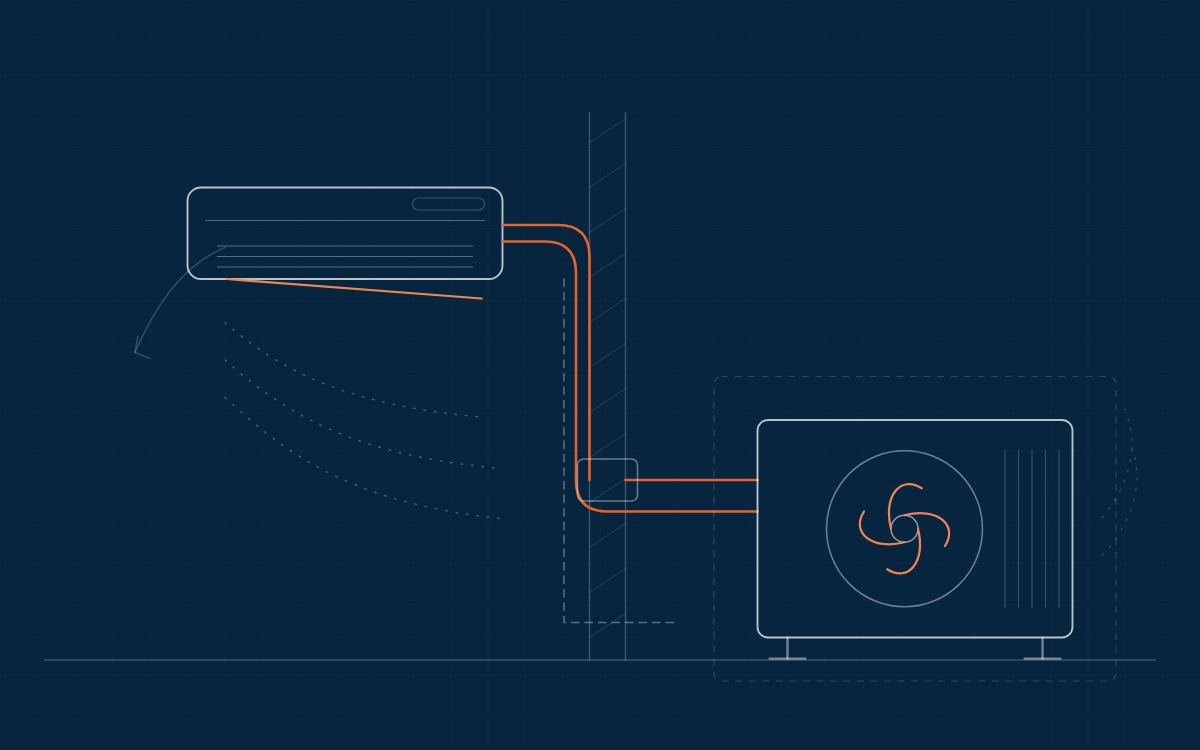
A split system splits the job across two boxes. One indoor head sits on your wall, and one outdoor condenser sits on a slab or a bracket. Copper pipes and a control cable join them together.
Refrigerant carries heat between those two boxes. In cooling mode the indoor coil pulls heat out of your room air, and the outdoor coil dumps that heat outside. In heating mode the cycle simply runs the other way.
Because the noisy parts live outdoors, the room stays quiet. That design also explains most faults. If either coil cannot breathe, or the refrigerant charge drops, the whole cycle loses capacity.
The parts that matter when something goes wrong
Four components carry most of the load. The compressor pumps refrigerant, the reversing valve chooses heating or cooling, the expansion device meters the flow, and two fans move air across the coils.
Sensors and a control board watch that whole process. When a reading drifts outside its expected window, the board stops the unit and shows a code. So a code reports a symptom rather than naming a cause.
What an inverter changes
An inverter model varies compressor speed instead of switching between full power and nothing. Therefore it holds a steadier room temperature and draws less power once the room settles.
Older non inverter units start hard and stop hard. That pattern feels less comfortable, and it puts more strain on the starting components over the years.
Why is a Kelvinator split system not cooling?
The cause almost always falls into one of three groups. Airflow, refrigerant charge and electrical control cover nearly every case. Start with airflow, because it costs nothing to check.
Filters clog with dust, pet hair and cooking grease. Once a filter blocks, the indoor coil ices over and airflow collapses. Then the unit runs for hours while the room never drops.
Refrigerant loss forms the second group. A slow leak at a flare joint or a corroded coil bleeds charge away over months. As a result the system cools weakly at first, then barely at all.
Control faults make up the third group. A failed capacitor stops the outdoor fan or the compressor, while a stuck contactor leaves the condenser silent. Therefore the indoor head blows air that never gets cold.
Quick checks you can make safely
If all five checks look normal and the room still will not cool, stop there. Gauges and electrical testing belong with a licensed technician. Handling refrigerant without a licence breaks the law in Australia.
- Set the remote to cool and choose a temperature well below the room reading.
- Open the front panel and check whether the filters look grey rather than white.
- Walk outside and confirm the outdoor fan spins while the indoor head runs.
- Feel the two copper pipes at the outdoor unit, since one should feel cold and sweaty.
- Look at the switchboard for a tripped breaker before you assume the worst.
Why is a Kelvinator split system not heating?
Heating faults look different, because reverse cycle operation adds two more variables. The reversing valve must switch, and the outdoor coil must shed ice in cold weather. So a heating complaint frequently points outdoors.
A stuck reversing valve leaves the system in cooling mode while the remote shows heat. You feel cool air inside, and the outdoor unit blows warm. That single clue tells a technician where to look first.
Defrost trouble supplies the other common story. During cold damp mornings the outdoor coil frosts up, and the system pauses to melt it. However, a faulty defrost sensor can leave that coil buried in ice.
Short cycling also robs heat output. When the unit starts and stops every few minutes, look for a blocked return, a dirty coil or an oversized head in a small room.
What the outdoor unit tells you in winter
Steam rising off the outdoor coil during a defrost cycle looks alarming, yet it shows normal operation. The system melts frost, then returns to heating. Meanwhile the indoor fan pauses so it does not push cool air at you.
Solid ice across the whole coil tells a different story. That pattern points to a drainage blockage, a sensor fault or a refrigerant problem. Then a technician needs to measure rather than guess.
What do Kelvinator split system error codes mean?
Codes appear as a flashing light pattern or a short code on the indoor display. Each one maps to a sensor, a communication link or a protection trip. The service literature lists those meanings model by model.
Many owners look up fault codes hoping to find one universal table. Unfortunately the codes differ between model families and production runs. Therefore the code on your wall unit may mean something else on a neighbouring model.
The safest approach stays simple. Write down the exact code, the model number from the indoor unit label, and what the system did just before it stopped. That trio lets a technician arrive prepared.
Reading the manual and testing the remote
Your Kelvinator split system manual lists the basic code set for your model, along with filter reset steps. If the paperwork vanished years ago, the model number usually unlocks a copy through manufacturer support pages.
A Kelvinator split system remote can also mislead you badly. Flat batteries, a locked child mode or a stray timer setting all look like a dead unit. So test the handset before you assume a board failure.
Point a phone camera at the emitter and press a button. Most phone cameras show that infrared light as a faint purple flash. When nothing flashes, change the batteries first.
What does a Kelvinator split system service include?
A proper visit has two halves. One half restores airflow and hygiene, while the other half checks the refrigeration and electrical side. Both halves matter, because a spotless unit with a weak capacitor still fails.
Our technicians start indoors. We wash the filters, inspect the barrel fan, clear the drain line and check the coil for mould and dust build up. Then the work moves outside.
Outdoors the visit covers the condenser coil, the fan blade, the electrical terminals and the operating pressures. Finally we run the system in both modes and record the temperature drop across the indoor coil.
You get the readings in writing at the end. Those numbers matter next year, because a change in performance shows up long before a breakdown does.
Why Kelvinator split system cleaning matters more than owners expect
Dust on an indoor coil acts like a blanket. Heat cannot move through it, so the system runs longer for the same result. In addition, damp dust grows mould that pushes stale odours into the room.
Regular attention protects the drain path too. Slime in the drain pan backs water up, and that water eventually drips down your wall. Therefore an annual clean costs far less than plaster repairs.
Most homes suit one visit each year, usually before summer. Coastal properties and homes with pets benefit from twice yearly attention.
Talk it through with a technician
Tell us the model and what the unit is doing, and we will bring the right parts to the first visit.
When does the system need a regas?
A sealed system does not consume refrigerant. So a Kelvinator split system regas only makes sense once somebody finds and fixes the leak. Otherwise the fresh charge escapes the same way as the old one.
Honest technicians treat low charge as evidence rather than as a service item. We pressure test, trace the leak with electronic detection or dye, and quote the repair. Then we recharge by weight.
Common leak points include flare connections at the indoor head, rubbing pipe work inside a wall cavity, and corrosion on the outdoor coil in salty air. Each one needs a different fix.
Be cautious when somebody offers a regas without a leak search. That approach buys one season at best. Meanwhile the refrigerant vents into the atmosphere.
What drives Kelvinator split system cost?
Readers ask about the money side far more than any other question. We cannot publish a figure honestly, because every job differs. However, we can name the factors that move it.
Access sits near the top of that list. A ground floor head on an open wall takes far less time than a second storey head above a stairwell. Height, ladders and roof access all add labour.
Part availability matters next. A common capacitor arrives quickly, while a control board for an older model family may take longer. Lead time changes the shape of the whole job.
How the figure varies between jobs
A straightforward clean and check bears little relation to a compressor replacement. Repair depth drives that difference. Diagnosis comes first, then a decision.
Pipe length and core drilling change installation figures too. A back to back install through a single brick wall goes quickly, while a long run across a roof space does not.
You can compare quotes fairly by asking every trade person the same questions. Ask what the visit includes, what happens when a part must come in, and whether the workmanship guarantee arrives in writing. Our guide to what shapes a quote covers the same ground in more detail.
What sizes suit different rooms?
Kelvinator split system sizes describe capacity in kilowatts, not physical dimensions. Capacity must match the room, the glazing, the ceiling height and the orientation. Guessing here leads to years of poor comfort.
An undersized head runs flat out and never satisfies. An oversized head cools fast, then shuts down before it removes humidity, which leaves a clammy room. So sizing sits at the heart of any good install.
Treat those pairings as a starting point only. A west facing room with wide glass needs more capacity than the floor area alone suggests. Therefore a proper calculation beats a rule of thumb.
Ceiling height changes the answer as well. A raked ceiling adds volume that never appears in a floor plan, so measure it before you settle on a model.
- A Kelvinator split system 2.5kw model generally suits a small bedroom or a study.
- Larger bedrooms and modest lounges usually call for a Kelvinator split system 3.5kw model.
- Open living areas with average glazing tend to need a Kelvinator split system 5kw model.
- Big open plan spaces with high ceilings point towards a Kelvinator split system 7kw model.
Is there a Kelvinator split system best model?
There is no single answer, because the right choice depends on your room and your budget. Inverter models suit rooms in constant use. Simpler models suit occasional use.
Look for features you will actually reach for. Wireless control, a washable filter and a quiet night mode all earn their keep. Exotic extras rarely change day to day comfort.
If you are weighing a wall mounted head against other formats, our page on window and wall mounted units explains where those suit better.
How does Kelvinator split system installation work?
The work follows a set order, and skipping a step causes trouble later. A licensed installer plans the pipe route before drilling anything. So the site visit matters more than the price list.
An install that skips the vacuum stage will fail early. Moisture inside the pipe work turns acidic and attacks the compressor windings. Therefore evacuation never counts as an optional extra.
Ask any installer for the electrical certificate and the compliance paperwork. Those documents protect your insurance position. In addition, the manufacturer expects a compliant install before it considers any claim.
Drainage deserves the same attention as the pipe work. A drain that falls the whole way keeps water moving, while a lazy run leaves a puddle waiting for the first humid week.
- First we assess the room, the wall structure, the switchboard and the outdoor location.
- Together we agree the head position for good air throw and easy filter access.
- Next comes the back plate, the core drill through the wall and a level base outside.
- The copper pipe, the drain and the interconnecting cable then run in one tidy path.
- Our technician flares the joints and pressure tests the pipe work with dry nitrogen.
- A vacuum pump pulls moisture and air out of the pipe run before charging.
- Once the charge releases, the system runs through a full heating and cooling test.
- Finally we hand over the remote, explain filter care and complete the compliance paperwork.
Parts, warranty and who should touch the system
Kelvinator split system parts fall into two camps. Consumables such as filters and remote batteries suit any owner. Sealed system and electrical components belong with a qualified trade person.
Kelvinator split system spare parts for current models usually arrive within days. Older model families take longer, and some components reach the end of supply. That reality shapes the repair or replace decision.
How the Kelvinator split system warranty works
Warranty cover sits between you and the manufacturer. We are not the manufacturer, so we do not administer it. However, we can tell you when a fault looks like a warranty matter.
Australian Consumer Law also gives you rights that sit alongside any written warranty. Those rights reflect the price and the reasonable expected life of the goods. So keep your invoice and your installation paperwork together.
Our own workmanship guarantee stands separate. It covers the labour and the parts we supply, and we explain the terms before we start.
Choosing a Kelvinator split system technician
A good one holds a refrigerant handling licence plus the right electrical licence for the work. Ask to see both. Any legitimate trade person expects that question.
A specialist should also explain the fault in plain words. When the explanation stays vague, ask for the readings. Numbers on a page beat confident talk every time.
Reading a Kelvinator split system review before you buy helps, provided you read it carefully. Look for reviews that mention your model and a similar climate. One angry post about a bad install says little about the equipment.
Reliability and lifespan, what to expect
Kelvinator split system reliability depends heavily on installation quality and servicing history. A well installed unit with an annual clean outlasts a neglected one by years. Habits matter more than badges.
Kelvinator split system lifespan sits in the same range as most residential wall mounted systems. Coastal salt, constant heavy use and skipped services all shorten it. Meanwhile shade over the outdoor unit extends it.
When a major component fails on an ageing system, do the arithmetic. Weigh the repair against the remaining life and the running cost of a modern inverter. Sometimes replacement simply wins.
Kelvinator split system vs Daikin and other brands
Many owners frame the choice that way. Both brands sell inverter wall mounted systems across similar capacity bands. The real differences show up in features, parts support and market positioning.
From a repair bench, the badge matters less than three other things. Install quality, service history, and how quickly the owner reacts to the first symptom. Those three predict trouble far better.
If you want to compare formats rather than brands, read our guides to reverse cycle systems and cooling only systems alongside this page.
A troubleshooting checklist before you call
Kelvinator split system troubleshooting works best in a fixed order. Work from the simple and free towards the technical. So start at the wall and finish at the switchboard.
Most searches about a unit that has stopped end at one of those eight items. When they do not, the fault sits inside the sealed system or the control board. Then a visit makes sense.
Recurring faults deserve a different response. If the same problem returns twice in one season, ask for a root cause report rather than another quick fix.
Keep a short note of what you tried and when. A technician reads that history in seconds, and it often saves a whole diagnostic step on the day.
Confirm the remote batteries work and the display shows the mode you expect.
Set the temperature at least a few degrees away from the current room reading.
Wash both filters in cool water and let them dry fully before refitting.
Clear leaves, boxes and garden growth from around the outdoor unit.
Check that the drain outlet drips during cooling rather than running dry.
Listen for the compressor starting a minute or two after the indoor fan.
Note any code, any flashing light pattern and the exact time it appeared.
Reset the breaker once, and only once, then watch what happens next.
Places we attend
With a Kelvinator split system you need two things. A technician who can genuinely reach you, and one who knows this brand well. Both matter equally.
Search interest in Kelvinator split system Australia climbs every summer, because these units sit in homes across the country. Climate shapes what fails. Coastal corrosion dominates in some regions, while fine dust dominates in others.
A Kelvinator split system Sydney call in high summer usually involves cooling loss, salt affected coils or blocked drains in humid weather. Harbourside and eastern suburb homes tend to see corrosion earlier than inland ones.
A Kelvinator split system Melbourne call skews the other way. Winter heating complaints, reversing valve faults and defrost issues fill the diary once the cold sets in. So we plan around both seasons.
Wherever you sit, book the annual visit before the season turns. Availability tightens once the first heatwave lands. Therefore early autumn and early spring suit most households.
Questions owners ask most
How often should a service happen?
Once a year suits most homes, and the best timing falls just before the season of heaviest use. Homes near the coast, near busy roads or with pets do better on a six monthly cycle. Between visits, wash the filters yourself every few weeks.
Can I clean the indoor unit myself?
You can safely wash the filters and wipe the outer casing with a damp cloth. Beyond that, the barrel fan, the coil and the drain pan need proper chemicals and a drip tray. So leave the deep clean to a technician with the right kit.
Why does my split system smell musty when it starts?
That smell usually comes from mould growing on a damp indoor coil or in the drain pan. Filters alone will not clear it, because the growth sits deeper inside the head. A full indoor clean removes the source rather than masking it.
How long does an installation take?
A straightforward back to back install on a single storey home often finishes within a few hours. Longer pipe runs, upstairs positions and switchboard upgrades stretch that considerably. Your installer should tell you the expected duration before the day.
Does the system need a regas every few years?
No, because refrigerant does not wear out or get used up. If the charge drops, a leak exists somewhere in the sealed circuit. Therefore the correct response is a leak search and a repair, then a measured recharge.
What should I do when the outdoor unit runs but the room stays warm?
Check the mode and setpoint on the remote first, then look at the filters. When both look fine, the fault usually involves refrigerant charge, the reversing valve or a compressor that will not load. Those all need gauges, so book a technician.
Can you repair an older unit?
Often yes, especially where the fault involves capacitors, fans, sensors, contactors or drainage. Parts supply becomes the limiting factor on very old model families. We check availability before recommending a repair over a replacement.
Is repairing or replacing an ageing system the better choice?
Compare the repair against the years the unit has left and its running cost. A cheap fix on a unit with plenty of life left makes obvious sense. However, a major sealed system repair on a tired unit rarely does.
The useful conclusion
Repairs succeed when diagnosis comes before parts. Airflow, refrigerant and electrical control explain nearly every fault, and the checklist above separates the easy causes from the technical ones. So start simple, then escalate.
Servicing protects the rest. An annual clean, clear space around the outdoor unit and a quick look at any code keep small issues small. In short, attention now costs less than a breakdown in February.
If you would rather hand the job over, our team works on these systems every week and explains the findings in plain language. You can arrange a visit whenever it suits you, or keep reading our other guides first.
Browse the site
Book a technician
Speak to a qualified technician who works on Kelvinator systems
Call 1300 495 033 and tell us the model and the fault, or book online and we will come back to you.