Product types
Kelvinator Cooling Only Air Conditioner Compared With Reverse Cycle
Two wall units can look identical and behave completely differently in winter. The cooling only design lowers the room temperature and nothing more, while a reverse cycle model also heats.
So the difference matters before you buy, and it matters again when a fault appears. Owners who do not know which type hangs on their wall often misread what the machine is doing.
This guide sets the two designs beside each other. Then it moves on to what goes wrong with the cooling only version, and how our technicians service and repair one.
On this page
- What a cooling only system actually does
- What reverse cycle adds to the same box
- Where a cooling only unit suits the home
- Where reverse cycle earns its keep
- The trade offs weighed side by side
- Deciding which type fits your situation
- Adding heating later without replacing the unit
- How to tell which system you already own
- Matching capacity to the room
- Choosing between a bigger unit and a second one
- Multi head systems that only cool
- Kelvinator cooling only air conditioner problems that show up first
- Getting the most out of the system through summer
- Where the air goes once it leaves the unit
- Cooling a room you work in all day
- Dry mode, humidity and sticky nights
- Timers, sleep mode and overnight cooling
- The first hot week and what it exposes
- Sounds the system makes and what they mean
- What the temperature split tells a technician
- Power supply, isolators and safe switching
- Keeping the air inside the unit clean
- Pets, dust and what lands on the filter
- Reading the model number on the plate
- Living with a cooling only system in winter
- Symptoms that mean stop rather than watch
- Error codes and what the display tries to tell you
- Servicing that keeps a cooling only system honest
- The room matters as much as the machine
- Apartments, balconies and tight outdoor spaces
- Repairs, parts and the manufacturer warranty
- Installation choices that decide the next decade
- Ducted cooling only systems in the roof
- Replacing an old cooling only unit
- What a technician for Kelvinator systems would advise
- What shapes the cost of the work
- Where our technicians cover
- Frequently asked questions
- Bringing the comparison together
- What we ask when you book
What a cooling only system actually does
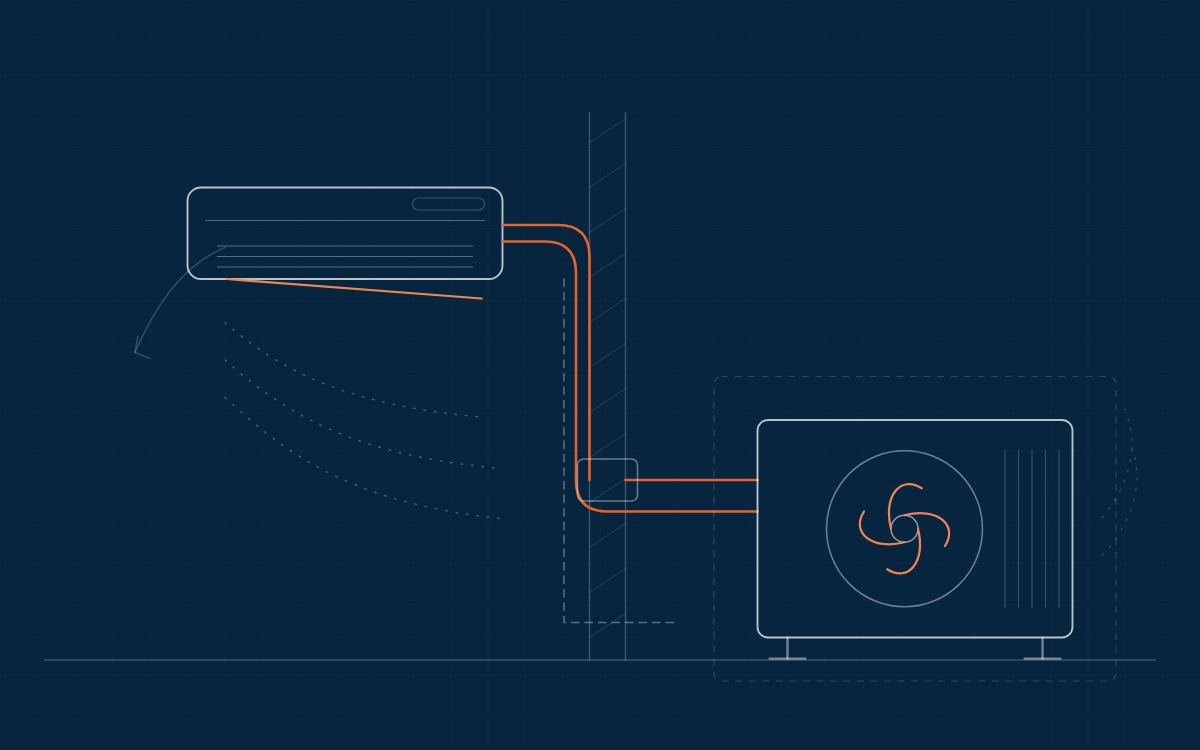
A cooling only system moves heat in a single direction. It draws warmth out of the indoor air, carries that warmth through refrigerant pipes and dumps it outside.
Inside the wall unit sit a coil, a fan and a filter. The coil turns cold whenever the outdoor compressor runs, so the fan pushes chilled air across the room.
Outside, a second fan blows the collected heat into the open. Therefore the outdoor box always feels warm to the hand while the system works hard on a hot afternoon.
Nothing in that circuit ever turns around. As a result the unit can drop a temperature, yet it can never lift one.
What reverse cycle adds to the same box
A reverse cycle unit carries the same major parts plus one extra valve. That valve flips the direction of refrigerant flow, so the indoor coil turns warm rather than cold.
In heating mode the outdoor unit becomes the cold end. It gathers warmth from the outside air, even on a frosty morning, and moves that warmth indoors.
Our guide to reverse cycle systems walks through the changeover in more depth. However the short version stays simple, because one valve separates the two families of unit.
Everything else looks familiar. Both types share compressors, fans, filters, drains and control boards, so both need similar care once installed.
Where a cooling only unit suits the home
Some homes already have heating and only lack summer relief. A ducted gas system, a wood heater or hydronic panels can cover winter, so the new appliance only needs to handle heat.
Warm northern regions push the same way. Where winter stays mild, the heating function may sit unused for years while adding parts that can fail.
Bedrooms with a separate heater fall into the same group. In addition, a simpler machine gives fewer components a chance to misbehave over a long service life.
Renters and short stay properties sometimes choose portable cooling units instead. Although portables cost less to move around, a fixed wall unit cools far more effectively.
Where reverse cycle earns its keep
Homes without any existing heating gain the most from reverse cycle. One appliance then covers both seasons, and the household avoids buying a second machine later.
Cold climate zones make the case stronger again. Because heat pump heating moves warmth rather than burning fuel, it usually costs less to run than a plug in electric heater.
Whole home comfort also favours reverse cycle. Where several rooms need year round control, matched systems keep the setup consistent and simpler to service.
Even so, reverse cycle carries more parts. Its reversing valve, defrost sensors and extra control logic all add points where something can eventually fail.
The trade offs weighed side by side
Neither design wins outright. Instead each one suits a different household, and the honest comparison comes down to a handful of practical points.
Notice that running comfort barely differs in summer. A well sized cooling only machine chills a room just as effectively as its reverse cycle sibling.
- Simplicity. A cooling only unit has fewer components, so fewer things can break.
- Seasonal coverage. Reverse cycle handles winter, while cooling only leaves that job to something else.
- Existing heating. A working heater removes much of the argument for reverse cycle.
- Installation footprint. Both types need the same pipework, drainage and outdoor space.
- Resale appeal. Buyers often expect year round comfort from a fixed system.
- Servicing. Both need annual attention, although reverse cycle adds a few extra checks.
Talk it through with a technician
Tell us the model and what the unit is doing, and we will bring the right parts to the first visit.
Deciding which type fits your situation
Work through the question in a fixed order, because one answer usually settles it. Start with heating, then move to climate, then to how long you plan to stay.
Ask whether the room already has reliable warmth in winter. Where the answer is yes, and that heater has years of life left, cooling only covers the gap neatly.
Then think about the local winter itself. In a mild zone the heating function may sit idle, while in a cold zone it quickly becomes the reason you switch the unit on.
Consider how long you will stay in the property. Because a fixed system lasts many years, a short stay changes the sums compared with a long term family home.
Finally, count the rooms. One bedroom with an existing heater points one way, while a whole house without heating points firmly toward reverse cycle.
Adding heating later without replacing the unit
Plenty of owners buy a cooling only system and change their mind two winters on. The good news is that options exist short of a full changeover.
The simplest path keeps the existing machine for summer. A separate heater then covers winter, which suits a single room and a mild climate.
Panel heaters, gas heaters and hydronic panels all fill that gap differently. Running cost, safety around children and the size of the room decide between them.
A second wall unit is the other route. Where one room needs both, a reverse cycle head can join the house while the cooling only unit stays where it is.
Nothing on the market converts a cooling only system into a heat pump. The reversing valve, the sensors and the control logic all sit beyond what a retrofit can reach.
So plan the winter answer before you settle the summer one. That single conversation saves a good deal of regret in July.
How to tell which system you already own
Start with the handset, because it gives the answer in seconds. A Kelvinator cooling only air conditioner remote usually offers cool, dry, fan and auto, and shows no sun symbol for heating.
Next check the paperwork. The manual lists the available operating modes on an early page, well before the fault code section.
The model plate settles any remaining doubt. It sits on the side or underside of the indoor unit, and the model number tells a technician exactly which family the unit belongs to.
Failing all that, try heat mode on a cool day. If the fan runs while the air stays cool, the unit almost certainly cools only.
Matching capacity to the room
Capacity matters far more than brand loyalty. Questions about sizing usually come down to room volume, window area, insulation and ceiling height.
Buyers commonly weigh a 2.5kw model against the next size up for a bedroom. Those numbers describe cooling capacity rather than the physical size of the box.
Glass shifts that answer more than floor area does. A bedroom with west facing windows often needs 3.5kw where a shaded room manages on less.
Open plan living areas move the conversation upward. Shoppers then look at a 5kw unit or larger for the same space.
Ceiling height counts as well. A room with raked ceilings can push the sum toward a 7kw unit at quite a modest floor area.
Still, guesswork causes real trouble. An oversized unit short cycles and leaves the air clammy, while an undersized one runs constantly and never quite catches up.
Therefore a technician measures the room before recommending anything. Window orientation, roof insulation and the number of people using the space all change the answer.
Choosing between a bigger unit and a second one
Open plan homes reach a point where one head cannot cover the space. Then the choice becomes a larger machine or a second unit.
A single large head cools the room it sits in. It struggles to push air around corners, so distant corners stay warm however hard it works.
Two smaller heads share the load and give each area its own control. That flexibility costs more in pipework and in servicing.
Ceiling height and doorways usually decide it. Where a wide opening joins two rooms, one machine may cope, while a hallway rules it out.
Ask for the load calculation on both options. Seeing the two side by side settles the decision faster than any rule of thumb.
Multi head systems that only cool
One outdoor unit can feed several indoor heads on a shared circuit. Cooling only versions of that arrangement suit houses with heating already in place.
Each head runs from its own handset, so rooms hold different set points. The outdoor unit then matches its output to whatever the heads together ask for.
Faults behave differently on these systems. A problem in the shared circuit shows up in every room, while a blocked filter shows up in one.
Diagnosis therefore takes longer than it does on a single split. A technician has to prove which head, which line and which sensor sits behind the complaint.
Servicing takes more time as well, because every head needs its own clean. So book the whole system at once rather than one room at a time.
Kelvinator cooling only air conditioner problems that show up first
Owners usually describe one of a short list of symptoms. The pattern of that symptom points toward the likely cause.
A unit not working at all points to power first. Check the isolator switch beside the outdoor unit and the circuit breaker in the switchboard before anything else.
By contrast, a unit that is not cooling while the fan still spins points somewhere deeper. Dirty filters, a choked outdoor coil or a low refrigerant charge all produce that lukewarm breeze.
Then comes the question about why it never heats, which has a very short answer. The unit never heated, because the design simply leaves out the reversing valve.
Safe troubleshooting at home stops at the obvious items. Filters, remote batteries, vents and breakers sit within reach, while sealed refrigerant circuits and live terminals do not.
- Weak airflow from the indoor unit, which often means a blocked filter.
- Air that never turns cold, which suggests refrigerant or compressor trouble.
- Water dripping down the wall, which usually means a blocked condensate drain.
- A rattle or hum from the outdoor unit, which can signal fan or mounting problems.
- Short cycling, where the system starts, runs briefly and stops on a flashing light.
Getting the most out of the system through summer
A cooling machine can only work with the room it is given. Closing blinds on the sunny side removes heat before the unit has to fight it.
Pick a set point you can live with and leave it there. Because the compressor works hardest at the extremes, one or two degrees changes the effort a great deal.
Start it before the house gets hot rather than after. Pulling a stored heat load out of the walls takes far longer than holding a cool room steady.
Let the ceiling fan help. Moving air feels cooler on the skin, so the same comfort arrives at a milder setting.
Shut the doors of rooms nobody uses. In short, ask the machine to cool less space and it will reach the target sooner.
Finally, do not park furniture in front of the indoor unit. The return air path matters as much as the outlet does.
Where the air goes once it leaves the unit
A cooling only head throws air in a fixed pattern, and the room decides what happens next. Furniture, doors and curtains all redirect that flow.
Aim the louvres level or slightly upward while cooling. Cold air falls on its own, so pointing it at the floor leaves the ceiling warm.
Keep the return path clear as well. A tall wardrobe under the indoor unit starves it of the air it needs to work with.
Doorways leak more comfort than anything else in the room. Closing a single door often does more than a degree on the remote.
Watch where the air actually lands on a hot day. A room that cools unevenly usually has an obstruction rather than a fault.
Cooling a room you work in all day
Working from home turns a spare bedroom into a space that needs cooling from nine until five. That changes both the load and the routine.
Computers, screens and a printer all add heat to a small room. A closed study can gain more warmth from equipment than from the window.
Point the airflow away from the desk. Constant moving air across one spot causes more complaints than the temperature ever does.
Noise matters more in a work room as well. A low fan speed and a slightly earlier start beat running the unit hard during a call.
Then clean the filters more often than the rest of the house needs. A room used all day loads them faster than one used only at night.
Dry mode, humidity and sticky nights
Cooling and drying are not the same job. In cool mode the unit chases a temperature, whereas dry mode aims at moisture in the air.
Dry mode runs the fan slowly so more moisture condenses on the coil. As a result the room feels less clammy without getting much colder.
That setting suits humid coastal nights. However it cools slowly, so it is a poor choice for a hot afternoon.
Watch the drain when you use it often. More condensate means more water through the pipe, and a marginal drain will show itself quickly.
If the air still feels heavy, the unit may be oversized for the room. A machine that reaches its target too fast never runs long enough to dry the air.
Timers, sleep mode and overnight cooling
Bedrooms ask different questions of a cooling system than living rooms do. Comfort at midnight matters more than speed at midday.
Sleep mode drifts the target gently upward across several hours. Because bodies cool overnight anyway, most people never notice the change.
A timer that starts the unit before bedtime beats one that starts at bedtime. The room and the mattress both hold heat that takes a while to shed.
Set the fan low at night and point the louvres away from the bed. A cold draught wakes people more often than a warm room does.
Watch for a timer somebody set months ago. A unit that stops at eleven every night is usually following an instruction rather than failing.
The first hot week and what it exposes
Faults hide all winter and appear together on the first hot day. That is when a tired capacitor or a blocked drain finally shows itself.
Run the system for an hour in early spring while nothing depends on it. Then listen, feel the vent and look under the indoor unit for drips.
Check the outdoor unit at the same time. Winter leaves, spider webs and a season of dust all sit on the coil waiting to trap heat.
Test the remote before you need it. Flat batteries and a forgotten timer setting account for a surprising share of first day calls.
Book early if anything looks doubtful. Once the heat arrives, every diary in the trade fills within a day or two.
Sounds the system makes and what they mean
A healthy unit hums, ticks occasionally and moves air steadily. Anything sharper than that deserves a closer look.
Rattles usually come from loose panels, a fan guard or a bracket that has worked its way free. They sound expensive and rarely are.
A gurgle or trickle from the indoor unit points at the drain. Water backing up in the tray makes exactly that noise before it spills.
A hum with no fan movement suggests a capacitor or a seized motor. Because repeated attempts can damage the compressor, switch it off and book help.
Clicking every few minutes points at short cycling instead. Something is stopping the unit early, and the cause sits in the controls, the airflow or the charge.
What the temperature split tells a technician
One measurement separates a healthy cooling system from a struggling one. It compares the air entering the indoor unit with the air leaving it.
A healthy split falls inside a fairly narrow band. Too little difference points at airflow or charge, while too much often means air moving far too slowly.
Humidity moves the number, so the reading only means something beside the conditions on the day. That is why a technician notes both together.
You can take a rough version yourself with two thermometers. Hold one at the return grille and one at the outlet after the system has run for fifteen minutes.
Do not read too much into a single figure. The split guides the next test rather than naming the fault on its own.
Power supply, isolators and safe switching
Every fixed system has an isolator switch near the outdoor unit. Knowing where it sits saves time in an emergency and during a service.
Use the remote for daily control rather than the isolator. Cutting power at the switch wipes settings on some systems and interrupts the compressor mid cycle.
A breaker that trips once can be a coincidence. A breaker that trips twice is a message, so leave it off and book a visit.
Label the circuit at the switchboard while you think of it. Everyone in the house then knows which switch to use when something goes wrong.
Never run an extension lead to a fixed unit. That wiring belongs to a licensed electrician, and the load belongs on its own circuit.
Keeping the air inside the unit clean
Anything that cools also collects moisture, so the indoor coil stays damp for hours. That damp surface is where smells begin.
Run the fan for a while after cooling finishes. Drying the coil is the simplest way to keep mould from settling in.
Wash the filters monthly through heavy use. A rinse under a cold tap and a shake dry takes minutes and protects the coil behind them.
Watch for a musty note when the unit starts. That smell means growth on the coil or in the drain tray rather than a mechanical fault.
When a smell persists, ask for a deep clean rather than an air freshener. Our cleaning guide explains what that work involves.
Pets, dust and what lands on the filter
Households with animals load a filter faster than anybody expects. Hair, dander and dust all collect on the same mesh.
Check the filters fortnightly where a dog or a cat lives indoors. A monthly rhythm suits most other homes comfortably.
Hair also finds its way past the filter and onto the coil. Once it settles there, only a proper coil clean lifts it off again.
Keep the outdoor unit clear of fur and garden debris as well. A coil at ground level collects whatever the wind and the dog send its way.
Then watch for a change in smell rather than in airflow. Pet households often notice the coil before the filter tells them anything.
Reading the model number on the plate
The model number is the single most useful thing you can give us. It identifies the family, the capacity and roughly the age of the machine.
Look under the front flap of the indoor unit first. Lift the panel gently and the plate usually sits along one edge inside.
The outdoor unit carries its own plate on the side or the rear. Where the two do not match as a pair, somebody has replaced one of them.
Photograph both plates and keep the images somewhere safe. Roof spaces, tight side passages and high walls all make that job harder later.
Then quote the number when you call rather than describing the unit. A description narrows nothing, while a model number narrows everything.
Living with a cooling only system in winter
Once the weather turns, the unit simply sits idle. Nothing is wrong with it, so resist the urge to test heat mode every cold morning.
Keep the outdoor unit clear through the quiet months. Leaves pile up against the coil in autumn and stay there until somebody moves them.
Cover it only if the manufacturer says so. A wrapped unit traps moisture, and trapped moisture rusts the base pan from the inside.
Run the fan for a few minutes every month or so. That short run keeps the drain clear and stops the fan bearings drying out in one position.
Then service it in spring rather than in January. Booking before the rush is the cheapest comfort you will ever buy.
Symptoms that mean stop rather than watch
A few symptoms call for switching off instead of waiting. Learning them protects the compressor and the house around it.
Switch off at once if you smell burning or notice scorch marks near the terminals. Then leave the circuit off until somebody qualified looks at it.
Water reaching a power point or a light fitting belongs in the same group. Electricity and condensate make a poor combination in a ceiling.
Ice on the pipework also means stop. Running a system in that state loads the compressor, while the ice quietly hides the real fault.
Everything else can usually wait for a normal appointment. Weak cooling, a noisy fan or a small drip all deserve attention without panic.
Error codes and what the display tries to tell you
Modern units flash a code instead of a plain message. Owners then hunt for error codes online, hoping for a straight translation.
The letters and numbers vary between model families. Therefore a code list written for one series can mislead you badly on another, and the model plate matters more than the search result.
Even so, the code still helps enormously. It narrows the hunt to a sensor, a communication line, a fan motor or a pressure problem.
Clearing a code without fixing the cause achieves nothing. The board reports the same fault again as soon as the compressor tries to run under load.
So write the code down before you switch the power off. That single note often saves a technician a long stretch of diagnostic time.
Photograph the display as well, if the code flashes in a sequence. A short video captures the pattern of blinks that a written note can easily miss.
Servicing that keeps a cooling only system honest
Book a visit once a year and the unit repays the effort. Airflow stays strong, and the compressor works less hard for the same room temperature.
Our technicians follow a consistent order on every visit. The sequence below shows what a thorough visit actually covers.
Regular maintenance protects components you never see. A clean coil lowers head pressure, which in turn eases the load on the compressor.
Annual servicing suits most households comfortably. However dusty sites, coastal streets and homes with pets often need two visits a year instead.
Deep cleaning goes well beyond a filter rinse. It reaches the blower wheel and the coil fins, where mould and dust cause smells and weak airflow.
A regas only makes sense after a leak repair. Refrigerant does not wear out, so a system short of gas has lost some through a fault somewhere.
- Wash or replace the indoor filters and inspect the filter frames.
- Clean the indoor coil and the blower wheel, where dust builds quietly.
- Flush the condensate drain and confirm the water runs away freely.
- Clear leaves and grime from the outdoor coil and check the fan blade.
- Tighten and inspect electrical connections, then measure the running current.
- Read operating pressures and compare the temperature split across the coil.
- Run the system, listen for noise and report anything that needs attention.
The room matters as much as the machine
Half of every cooling complaint belongs to the building rather than the unit. Heat pours in through glass, a dark roof and gaps around doors.
External blinds and awnings beat curtains, because they stop the heat before it reaches the glass. Even so, a heavy curtain still helps a west facing window.
Ceiling insulation changes the result more than any setting on the remote. A hot roof space radiates downward all evening, long after the sun has gone.
Draught sealing finishes the job. Where hot air leaks in around a door, the machine simply cools the outside a little.
So look at the room before you blame the box. A unit that struggles in a hot room may be perfectly healthy.
Apartments, balconies and tight outdoor spaces
Apartments put the outdoor unit somewhere awkward almost every time. Balconies, light wells and service cupboards all limit how freely the coil can breathe.
Heat needs somewhere to go. When the outdoor unit sits in a sealed cupboard, it swallows its own exhaust and loses capacity on hot days.
Noise rules add another layer in strata buildings. Body corporate approval usually covers where a unit sits and how it attaches to the wall.
Drainage often runs to a shared pipe or a balcony outlet. Because those routes block easily, a slow drip on the floor is a common first symptom.
Ask us to look at clearances during a service. Small changes to what surrounds the unit sometimes deliver more than a repair would.
Repairs, parts and the manufacturer warranty
Most repairs fall into three groups. There are electrical faults, airflow faults and refrigerant faults, and each needs a different approach.
Electrical work covers capacitors, contactors, sensors and control boards. Airflow work covers filters, fans, drains and coil cleaning, while refrigerant work covers leaks, pressure and charge.
Availability of parts varies with the age of the unit. Newer model families usually source quickly, although older series can take longer to track down.
Spare parts for a discontinued model sometimes prove impossible to source. In that case we explain the options honestly rather than leaving a system half repaired.
The warranty sits with the manufacturer, not with us. We are not the manufacturer, so we sit alongside that cover rather than running it.
Our own workmanship guarantee is a separate thing entirely. It covers the labour and the parts we supply, and we explain the difference before any work starts.
Installation choices that decide the next decade
A careful installation shapes how the system behaves for years. Pipe length, drainage fall and outdoor clearance all influence efficiency and reliability.
Placement inside the room matters just as much. A unit blowing straight into a wall or a curtain never distributes air properly, no matter how good the machine is.
Anyone planning to install a replacement should also check the existing pipework. Old pipe runs can hold contamination or the wrong refrigerant residue, which harms a new compressor.
Where efficiency ranks highly, our page on inverter split systems explains how variable speed compressors differ. Inverter control smooths the temperature and reduces the harsh start stop cycling of older designs.
Ducted cooling only systems in the roof
Not every cooling only system hangs on a wall. A single fan coil in the roof space can feed the whole house through ducts and ceiling outlets.
Everything then sits out of sight, which is the main practical difference. Filters, drains and the coil all live above the ceiling where nobody looks.
Zoning turns that layout into an advantage. Closing the zones nobody uses lets the system cool a fraction of the floor area.
Leave at least one zone open at all times though. A fan with nowhere to push air raises pressure and can ice the coil.
Roof access also changes how we book the work. On hot days we start early, since a roof space turns dangerous by the middle of the day.
Replacing an old cooling only unit
A replacement is a chance to fix the choices made last time. Position, capacity and the pipe route all come back onto the table.
Start with the room rather than the old model number. Renovations, new glazing or a removed wall may have changed the load since the first install.
Ask whether the existing pipework suits the new machine. Old runs can hold residue from a different refrigerant, which shortens the life of a fresh compressor.
Check the drain fall while the wall sits open. A line that always dripped will keep dripping behind a brand new unit.
Then settle the heating question one more time. A replacement is the cheapest moment to move from cooling only to reverse cycle if winter has become a problem.
What a technician for Kelvinator systems would advise
Ask any experienced technician which type to fit, and the reply begins with questions. Which appliance heats the room now, how long will you stay, and which rooms matter most.
A good installer looks at your existing heating before anything else. If that heater works well and has life left, a cooling only machine makes clear sense.
Questions about reliability come up constantly. Reliability follows installation quality and servicing habits far more closely than it follows the badge on the front cover.
Lifespan follows the same rule. A clean, correctly charged and properly sized unit outlasts a neglected one by a wide margin.
There is no single Kelvinator cooling only air conditioner best model either. The right choice depends on the room, the orientation and the way the household actually lives.
Buyers often raise a comparison with Daikin, or with another familiar name. However a well installed unit of any brand beats a badly installed premium one every time.
A review helps, provided you read it for patterns. Look for repeated comments about noise, airflow or parts supply rather than counting stars.
What shapes the cost of the work
We cannot name a cost before we know the fault. Diagnosis comes first, because the same symptom can have a cheap cause or an expensive one.
What a repair ends up costing moves with several factors. Part availability, roof or ladder access, time on site and the age of the unit all play a part.
Installation work follows similar logic. Pipe run length, wall construction, outdoor mounting and electrical supply all change what the job involves.
Ask what the diagnostic stage covers before anyone starts. A clear answer there prevents most of the arguments that follow a repair.
Ask about the return visit as well. Parts often arrive a few days later, and that second trip belongs in the original scope.
So the price follows the inspection rather than the phone call. Ask what the figure covers before anybody starts work.
Our guide to what affects pricing breaks those factors down further. In short, an accurate figure follows an inspection, and any quote given sight unseen deserves suspicion.
Where our technicians cover
Owners want a technician the moment a room stops cooling. That moment usually lands on the hottest afternoon of the week, which is exactly when it hurts.
Interest climbs across the country as soon as the first hot spell lands. So we book jobs Australia wide, subject to travel time and the diary.
Our team works through metropolitan areas and the surrounding suburbs. Regional trips take a little more planning, although they still happen every week.
A Sydney callout often involves salt corrosion on outdoor coils. Coastal air eats aluminium fins, so units near the water need more frequent cleaning.
By contrast, a Melbourne visit frequently follows a long idle winter. Systems that sit unused for months often need the drain flushed and the coil cleaned before summer.
Regional homes face their own challenges. Dust, bushfire ash and long distances all shape how often a system needs attention out of town.
Apartments add another wrinkle again. Outdoor units on balconies or in service cupboards often sit close to walls, so airflow around the coil becomes the limiting factor.
Travel time shapes availability more than anything else out of town. So we group regional bookings where we can, which shortens the wait for everybody on the list.
Wherever the unit lives, the diagnostic process stays the same. A specialist checks airflow, electrics and refrigerant in a set order, then explains the findings in plain language.
Frequently asked questions
Why is the room not getting cold?
Start with the filters, because restricted airflow causes weak cooling more often than anything else. Then check the outdoor unit for leaves, grass clippings or rubbish blocking the coil. If both look clear, the system may have lost refrigerant, which needs a technician and leak testing.
Can a cooling only unit ever heat a room?
No, and no setting on the remote will change that. The design leaves out the reversing valve, so refrigerant can only flow one way. Adding heating means replacing the system with a reverse cycle model rather than modifying the existing one.
How often should one of these systems have a service?
Once a year suits most homes, ideally in spring before the first heatwave. Dusty properties, coastal locations and homes with shedding pets often benefit from two visits. Regular servicing also keeps small faults from turning into compressor damage.
What do the error codes on the display mean?
Each code points to a category of fault rather than a specific broken part. Sensor faults, communication faults and pressure faults all have their own indicators. Because codes differ between model families, write down both the code and the model number before calling.
Does a regas fix a system that cools poorly?
Only when a leak has actually occurred, and only after that leak has a proper repair. Refrigerant sits in a sealed circuit, so it does not gradually deplete like fuel. Topping up without leak testing simply wastes gas and delays the real fix.
How long does a cooling only system usually last?
Service history and installation quality matter more than any headline figure. Well maintained units in sheltered positions run for many years without major work. Neglected units in harsh coastal air often fail far sooner, usually at the compressor.
Can I still get parts for an older unit?
Often yes, although availability drops as a model family ages. Common items such as capacitors, fan motors and sensors remain easier to source than model specific control boards. When a part has become unavailable, we say so and discuss replacement instead.
Is cooling only cheaper to run than reverse cycle?
In cooling mode the two behave almost identically, so running costs match closely. The real difference appears in winter, when a reverse cycle unit heats and a cooling only unit does not. Therefore the fair comparison includes whatever heater you use during the cold months.
Bringing the comparison together
The choice between the two designs comes down to your existing heating and your climate. Where a good heater already covers winter, a cooling only system does the remaining job with fewer parts.
Once the unit is on the wall, the priorities change. Annual servicing, clean filters and prompt attention to odd noises protect the compressor and stretch the working life.
If a system has stopped cooling, or if you are weighing a replacement, our team is happy to talk it through. You can book a service visit whenever it suits you.
Bring the model number and any fault code to that conversation. With those two details in hand, we can point you toward the right fix rather than a guess.
What we ask when you book
A booking call is a short diagnosis in its own right. The answers decide which parts travel on the van.
We ask what the unit does now and what it did last week. A fault that arrived overnight suggests something different from one that crept in across a season.
We ask for the model number from the sticker under the front flap. That number tells us the family, the age and the likely parts.
We ask about codes, noises, smells and water. Each of those four points at a different part of the system.
Lastly we ask about access. A unit on a second storey wall or above a stairwell changes the equipment we bring.
Browse the site
Book a technician
Speak to a qualified technician who works on Kelvinator systems
Call 1300 495 033 and tell us the model and the fault, or book online and we will come back to you.