Model series
Kelvinator KSV25HWJ and the KSV HWJ Wall Mounted Inverter Family
A Kelvinator KSV25HWJ that takes all afternoon to pull a bedroom down is not merely underperforming. It is reporting that something in the airflow path or the refrigerant circuit has already shifted.
Owners wait, because air still comes out and the lights still glow. Meanwhile the compressor runs longer against higher pressures, and a cheap fault quietly grows into a costly one.
This page follows that progression from the first faint symptom through to the failure nobody wants. Along the way you will learn to read your own model string, interpret the fault display and judge when repair still stacks up.
On this page
- Your rating label decides everything that follows
- What the KSV HWJ family sets out to do
- The four systems that fail first
- How one small fault spreads
- Kelvinator KSV25HWJ error codes and what sits behind them
- Repair choices ranked by severity
- The routine that stops the chain starting
- Manuals, documents and numbers people quote wrongly
- Reading reviews of this family without being misled
- Where our technicians work on these systems
- Questions owners ask about the KSV HWJ family
- What to take away from all this
Your rating label decides everything that follows
Before anything else, find the label. Almost every wrong answer about this family starts with an owner working from a model number they half remember.
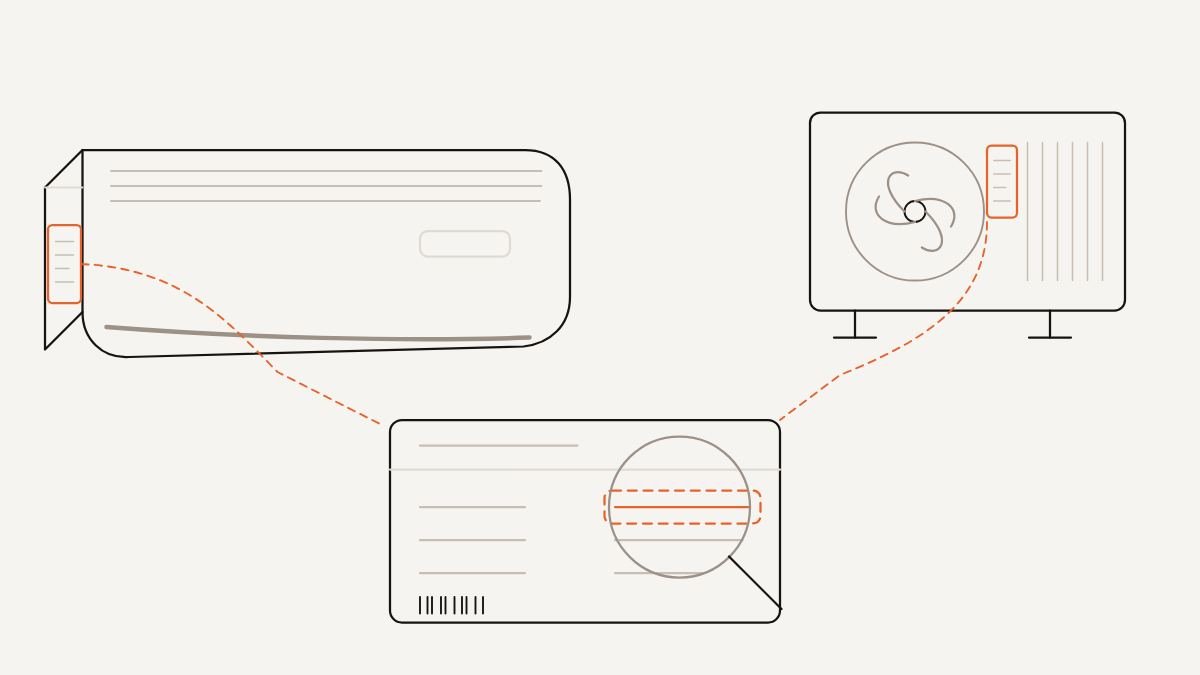
Where the two labels sit
The indoor label usually hides behind the hinged front panel, along the right hand side of the chassis. Lift the panel gently and look past the filters.
The outdoor unit carries its own label on the side or rear casing, near the pipe connections. That second label matters, because indoor and outdoor units can differ in build revision.
Photograph both labels while you have them open. Then the model and serial travel with you on your phone instead of living on a ladder.
How to read the model string
Read the string left to right. The opening letters name the unit family, the digits sit in the middle, and the trailing letters mark the series revision.
In this family the trailing HWJ identifies the series. Kelvinator KSV25HWJ, Kelvinator KSV35HWJ, Kelvinator KSV50HWJ, Kelvinator KSV71HWJ and Kelvinator KSV90HWJ all carry that same suffix.
The digits in the middle generally track the capacity band the maker assigned to that size. However, treat them as a family marker rather than a specification you can quote.
Why the label beats anything you found online
Anyone repeating Kelvinator KSV25HWJ specs from a forum thread is working from guesswork. Builds change across production runs, so the plate on your wall carries the authority.
Electrical figures matter most here. Supply voltage, running current and the maximum fuse rating all come from the label, and a technician sizes protection from those numbers.
We are qualified technicians who repair Kelvinator equipment, and we hold no manufacturer relationship. Therefore we always work from the plate in front of us rather than from a generic table.
What the KSV HWJ family sets out to do
The series designation tells you the broad intent of the equipment. It marks a wall mounted split system with variable speed control, sold across several size steps.
What variable speed operation looks like when healthy
An inverter driven compressor varies its speed rather than snapping between full output and nothing. So a sound unit settles into a low steady hum once the room stabilises.
You should hear one long gentle run, not a series of hard starts. When the machine begins surging up and down, treat that as information.
Variable speed control also means more electronics live in the outdoor unit. As a result, faults in this family usually announce themselves as a code rather than as total silence.
What the indoor unit is actually measuring
Small temperature sensors called thermistors sit in the return air stream and clipped to the indoor coil. The control board weighs those readings against the set point you chose.
Drifting or contradictory readings lead to poor decisions. So an inexpensive sensor fault can imitate a serious refrigerant fault almost perfectly.
Your handset only transmits mode, fan speed and set point. Therefore a suspected Kelvinator KSV25HWJ remote problem often turns out to be a receiver or display fault instead.
The four systems that fail first
Most Kelvinator KSV50HWJ problems, and problems across the whole family, trace back to a short list. Four areas account for the overwhelming majority of call outs.
- Airflow through the indoor unit
- Heat rejection at the outdoor coil
- The sealed refrigerant circuit
- Sensors, boards and the link between them
Airflow through the indoor unit
Dust settles on the return air filters first, then migrates onto the fins behind them. Once airflow falls, the coil runs colder than the design ever intended.
Owners register weaker air before they register anything else. In addition, the fan often sounds busier while shifting far less air.
Routine Kelvinator KSV25HWJ filter cleaning removes the single most common trigger. Even so, a loaded coil needs a chemical clean rather than a quick pass with a vacuum.
Heat rejection at the outdoor coil
Whatever the indoor unit collects, the outdoor coil has to dump. Shrubs, new fencing and stored garden gear all interfere with that job.
Where heat cannot escape, discharge pressure climbs steadily. Consequently the machine defends itself, trims output or stops altogether.
Lint, grass clippings and coastal salt gather on the fins as well. Because the change happens over years, almost nobody notices it happening.
The sealed refrigerant circuit
Refrigerant never gets consumed during normal running. If the charge drops, a leak exists somewhere in the pipe runs, the flare joints or the coils themselves.
A shortfall starves the indoor coil. Then coil temperature falls, ice forms across the fins, and airflow drops even further.
Complaints of a Kelvinator KSV25HWJ not cooling frequently end here. A Kelvinator KSV35HWJ not cooling on the hottest afternoon of the week follows the same pattern.
Sensors, boards and the link between them
Indoor and outdoor boards hold a constant conversation over a handful of wires. Rodents, moisture and vibration all interrupt that exchange.
Sensor faults are simpler to picture. A cracked thermistor bead or a green crusted plug feeds back a value the board refuses to accept.
Either way the system stops guessing and posts a code. So the code marks the beginning of the diagnosis, never the end of it.
How one small fault spreads
Faults in this family rarely stay still. Left alone, they move through three recognisable stages, and each stage costs more than the one before. Owners reporting a Kelvinator KSV50HWJ not working properly usually sit somewhere inside that sequence.
Stage one, the run times stretch
At first nothing appears broken at all. The unit simply runs longer to reach the same set point, and the quarterly bill creeps upward.
Many owners respond by nudging the set point instead of investigating. As a result the compressor accumulates far more hours under load.
This stage is the cheapest possible moment to act. A clean and a set of running measurements usually restore full output here.
Stage two, ice, water and shutdowns
Next the indoor coil starts to ice over. Melting ice overwhelms the drain tray, so water drips from the face of the indoor unit onto the floor.
Outside, the machine may trip on pressure or current protection. Then the display posts a code, or the timer light begins its flashing pattern.
A Kelvinator KSV35HWJ not working reliably at this stage still runs between faults. That intermittent behaviour tempts owners into carrying on regardless.
Stage three, the damage that hurts
A prolonged shortfall returns liquid refrigerant down the suction line to the compressor. Over months that washes lubricating oil away from the bearings.
Meanwhile high discharge temperatures bake the motor windings. A Kelvinator KSV71HWJ not working after a long run of flashing lights often hides a failed compressor.
At that point the job moves from a service visit to major surgery. So the earlier two stages deserve every bit of attention you can give them.
Talk it through with a technician
Tell us the model and what the unit is doing, and we will bring the right parts to the first visit.
Kelvinator KSV25HWJ error codes and what sits behind them
Codes narrow the search, although they never name the broken part on their own. Each one identifies the system that raised the complaint.
Getting the code out of the unit
Wall mounted units in this family show codes on the indoor display, or through a pattern of flashing indicator lights. The operation, timer and defrost lamps carry that pattern between them.
Some builds require a button sequence before the code appears. Your own document set gives the sequence that matches your revision.
Write the code down before you touch the power. Otherwise a reset wipes out the only evidence the machine gave you.
Sensor and probe codes
A large share of Kelvinator KSV35HWJ error codes and Kelvinator KSV50HWJ error codes point at temperature sensors. The board loses a believable reading and refuses to continue.
Technicians measure sensor resistance and compare it against the expected curve for that probe. That single test separates a failed sensor from a failed board.
Kelvinator KSV35HWJ fault codes in this group seldom indicate a compressor problem. However, they still bring the whole system to a halt.
Communication and supply codes
When the two boards cannot hear each other, the system raises a communication code. Loose terminal screws and damaged interconnecting cable cause most of them.
Supply problems paint a similar picture. Because inverter boards react badly to poor connections, a tired isolator can trip the whole system.
Kelvinator KSV71HWJ error codes and Kelvinator KSV90HWJ error codes often land in this group. Larger systems draw more current, so a weak joint reveals itself sooner.
Protection and overload codes
Protection codes mean the unit stopped itself on purpose. High pressure, low pressure, overcurrent and discharge temperature limits all sit here.
These codes describe a condition rather than a component. Therefore chasing the code alone burns time and achieves very little.
Kelvinator KSV HWJ series error codes in this group need live pressure and temperature readings taken while the machine runs. Only then does the underlying cause surface.
Repair choices ranked by severity
Work on this family sorts neatly from light to heavy. Starting at the light end saves money and avoids replacing parts that were never faulty.
Cleaning and airflow work
Begin with the filters. Lift the front panel, slide each filter out, wash it in cool water and let it dry completely before refitting.
Then walk outside. Clear anything within a comfortable arm span of the coil, and confirm the fan turns freely by hand with the power isolated.
If output recovers, airflow was your fault. If nothing changes, move up the ladder rather than cleaning the same filters again.
Resets, handsets and network pairing
A Kelvinator KSV25HWJ reset means isolating power at the wall switch or the breaker for several minutes. A Kelvinator KSV35HWJ reset follows exactly the same method.
A reset clears a latched protection code and nothing more. It leaves the condition that produced the code completely untouched.
Kelvinator KSV25HWJ wifi setup failures and pairing trouble sit apart from refrigeration faults entirely. Likewise a handset with tired batteries is a battery issue, not a system fault.
Sensors, plugs and control boards
Sensor replacement runs quickly when the part sits on the van. The technician lifts the cover, unplugs the failed probe and fits a matching replacement.
Board replacement costs considerably more, so careful diagnosis has to come first. Plenty of boards get swapped when a corroded plug or a blown fuse was the real culprit.
Ask your technician to show you the reading that condemned the part. Good practice means proving a fault before anybody orders anything.
Sealed system and compressor work
Leak repair involves pressure testing, locating the leak, remaking the joint and recharging by weight. A Kelvinator KSV50HWJ repair of that kind takes far longer than a routine visit.
Compressor replacement sits at the top of the scale. A Kelvinator KSV71HWJ repair at this level needs recovery, a new compressor, a fresh filter drier and a deep vacuum.
Both jobs demand a refrigerant handling licence. So this end of the ladder is firmly outside do it yourself territory.
When replacement beats another repair
Age, parts availability and the scale of the sealed system work all feed that decision. Owners asking about the Kelvinator KSV25HWJ price usually have this exact question in mind.
We quote the repair and give you our honest read on the odds before you commit. You can also see how our pricing works before you pick up the phone.
Where a unit has already had one major repair, a second rarely pays off. Instead, put that money toward a new system carrying a fresh manufacturer warranty.
The routine that stops the chain starting
Most Kelvinator KSV HWJ series problems begin somewhere very ordinary. Therefore a modest routine protects the expensive components at the far end.
- Wash the return air filters every few weeks through heavy use.
- Keep curtains, shelving and furniture clear of the discharge air.
- Maintain a clear arm span around the outdoor unit on every side.
- Rinse the outdoor coil gently with a hose while the power sits off.
- Watch the wall under the indoor unit for early water marks.
- Book a professional service once a year, ahead of your busiest season.
What you can manage without tools
Filter washing, cutting back plants and checking the drain outlet all sit within easy reach. None of them require tools or any refrigerant handling.
Note the code and the exact conditions whenever a fault appears. Was it heating or cooling, and how long had the unit been running.
That detail shortens diagnosis noticeably. In short, an owner who keeps notes usually pays for less time on site.
What a technician adds to that
A full visit covers coil cleaning, drain clearing, electrical checks and live running measurements. The technician compares operating pressures and temperatures against expected values for the conditions on the day.
A Kelvinator KSV50HWJ service also covers fan bearings, capacitors where fitted and terminal tightness. Small corrections at this level head off the larger failures entirely.
Many procedures carry across related families, including the KSV and KSD HRH series. So a technician who knows one usually knows the others.
Manuals, documents and numbers people quote wrongly
Ask for documents by full model number, never by rough description. The difference between two size steps can change wiring, protection and service data.
Tracking down the right document
Look for the Kelvinator KSV HWJ series manual through the manufacturer support channels, using the exact string from your plate. We are not the manufacturer, so we point you to the source rather than hosting anything ourselves.
The Kelvinator KSV25HWJ manual, the Kelvinator KSV35HWJ manual and the Kelvinator KSV50HWJ manual all follow that same lookup. So do the Kelvinator KSV71HWJ manual and the Kelvinator KSV90HWJ manual for the larger sizes.
Each document carries the fault code table for that build. Therefore keeping a copy on your phone saves a trip to the filing cabinet mid fault.
Comparing across nearby families
Owners often shop across neighbouring families before deciding. Many find the same service points on the KSD HWJ wall mounted inverter series, which shares much of the layout.
Earlier equipment behaves comparably as well. If your home holds an older machine, the KSV and KSD HWH series guide covers its quirks in the same style.
Mixing documents between families causes real mistakes though. So check the suffix on your plate against the suffix on the cover page every time.
Reading reviews of this family without being misled
Owner feedback tells you plenty, provided you read it for the right things. Most of what people praise or curse traces back to the installation rather than the box.
What a review is really describing
A Kelvinator KSV HWJ series review usually reflects install quality more than the equipment itself. Pipe runs, drainage falls and outdoor unit placement decide long term reliability.
When you read a Kelvinator KSV25HWJ review or a Kelvinator KSV35HWJ review, look for what failed and how soon. Ignore the star rating and read the story underneath it.
Complaints about gurgling drains, rattles or short cycling almost always describe an install issue. Therefore a site inspection answers more than any thread ever will.
Signs a review is worth your attention
Useful reviews name the symptom, the season and the outcome. Vague ones simply record a mood on the day of writing.
Watch for repeated mentions of the same component across many owners. That pattern carries far more weight than one dramatic account.
Also weigh how the fault got resolved. A unit fixed promptly under the manufacturer warranty tells a different story to one abandoned.
Where our technicians work on these systems
Our team covers metropolitan homes, outer suburban estates and regional towns inside our service area. We work on wall mounted split systems in houses, apartments, townhouses and small offices.
Because we carry common sensors, capacitors and controls, many faults finish inside a single visit. Larger sealed system work needs a return trip with recovery equipment and a fresh charge.
A Kelvinator KSV90HWJ not working in a large open plan living area often needs two technicians. So tell us the model and the code when you make contact.
You can book a service online and describe the fault in your own words. Then we arrive carrying the right parts far more often.
Questions owners ask about the KSV HWJ family
Why is my Kelvinator KSV25HWJ not working at all?
A completely dead unit usually points at supply rather than refrigeration. Check the isolator, the circuit breaker and the handset batteries before anything else. If power reaches the unit and nothing responds, the indoor board or its fuse has likely failed.
What do Kelvinator KSV35HWJ fault codes actually mean?
Each code names the system that raised a complaint, such as a sensor, a communication link or a protection limit. The code narrows the search, although it never identifies the failed component by itself. So record the code before you reset anything, using the table that matches your build.
How do I perform a Kelvinator KSV25HWJ reset?
Switch the unit off at the handset, then isolate power at the wall switch or the breaker. Wait several minutes, restore power and start the unit again. However, this clears a latched code and leaves the underlying condition intact, so book a diagnosis if it returns.
Why is my Kelvinator KSV35HWJ not cooling on hot days?
Extreme heat exposes a small refrigerant shortfall that stays hidden in mild weather. Blocked filters and a dirty outdoor coil make exactly the same symptom worse. Because the two causes look alike, start with a clean and then have the charge measured.
Where do I find the Kelvinator KSV HWJ series manual?
Use the full model string from your rating label on the manufacturer support channels. Generic search results often serve up a similar model with different service data. We are qualified technicians with no manufacturer relationship, so we point you to the source instead.
Is a Kelvinator KSV50HWJ repair worth doing?
That depends on the fault, the age of the equipment and parts availability. Sensor, fan and control repairs almost always make good sense. Compressor and leak repairs need a harder look, so we lay out both paths before you decide.
How often should a Kelvinator KSV71HWJ get serviced?
Once a year suits most homes, ideally ahead of the season you lean on hardest. Homes with pets, coastal salt air or heavy dust benefit from more frequent filter work. In short, match the interval to the environment rather than to the calendar alone.
Can I still get parts for a Kelvinator KSV90HWJ?
Common items such as sensors, fan motors, capacitors and controls remain available for most units in this family. Control boards can take longer, because supply depends on the exact build revision. Therefore we check availability before quoting, so you never wait without knowing why.
What to take away from all this
A Kelvinator KSV25HWJ almost never fails without warning. Stretched run times, weakening airflow and a flashing timer light all arrive well before the expensive failure does.
Read the model from your own rating label, record any code, and act while the repair is still small. Because the chain only moves one way, early action always costs less than late action.
If your system shows a code, drips water or has stopped cooling, our technicians can diagnose it honestly. You are welcome to get in touch, or to read our guides on the neighbouring model families first.
Browse the site
Book a technician
Speak to a qualified technician who works on Kelvinator systems
Call 1300 495 033 and tell us the model and the fault, or book online and we will come back to you.