Model series
Kelvinator KSV25HRH and the Wider HRH Series Explained
You are at the outdoor unit with a torch, squinting at a sun faded sticker. It might read KSV25HRH, or it might be one of half a dozen similar codes.
Inside, the system has stopped and a light is blinking on the indoor panel. Until you know the model, every search result you open is a guess.
Kelvinator has reused similar naming across several generations of split system. So the difference between one letter and the next decides which manual and which fault list apply.
This guide settles that question from the rating label first. Then it works through the faults that genuinely turn up on the HRH series and what each one usually means.
On this page
- Why the Time of Year You Notice a Fault Matters
- Why Guessing the Series Costs You Time
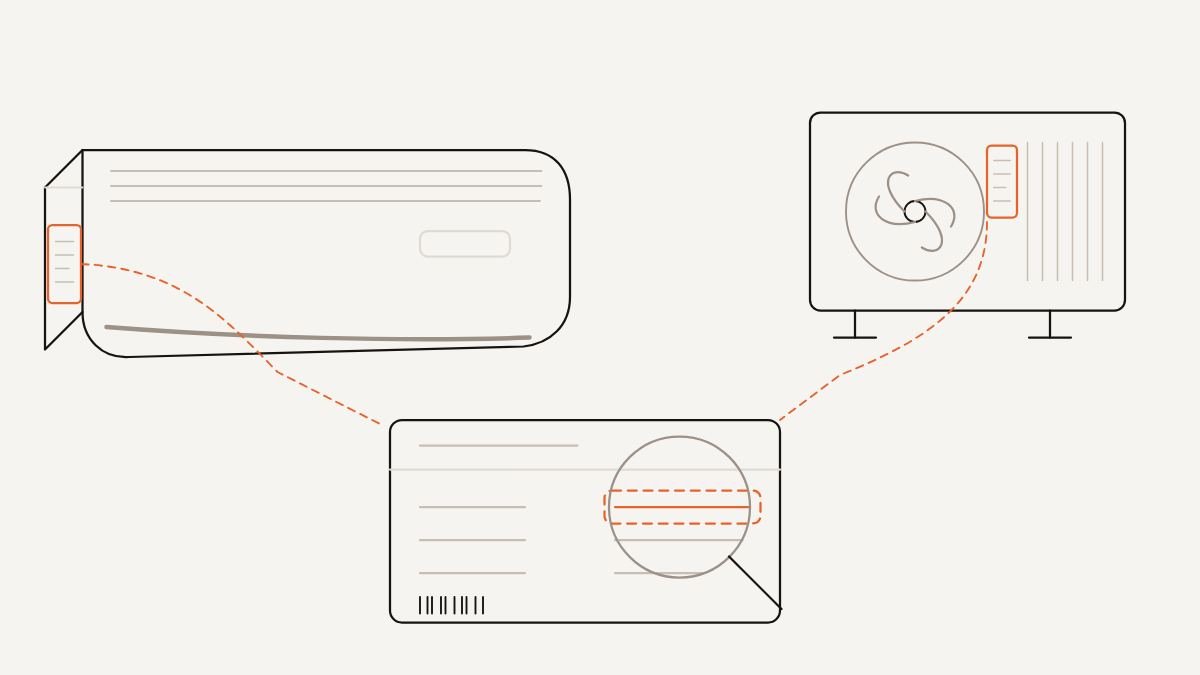
- Where the Rating Label Lives on a KSV or KSD Unit
- How to Read a Model Code Such as KSV25HRH
- Telling the HRH Series Apart From Codes That Look Similar
- What Changes Inside the System in Summer and in Winter
- What You Can Safely Check Before Calling
- Kelvinator KSV25HRH Error Codes and What They Point To
- When the Fault Needs a Technician
- Finding the Right Manual for Your Model
- A Preparation Checklist Before the Season Turns
- What Reviews, Specs and Prices Really Tell You
- How We Work on HRH Series Systems Around Australia
- Common Questions About the HRH Series
- Keeping the Key Points in View
Why the Time of Year You Notice a Fault Matters
Very few owners find a problem in mild weather. Instead the system rests through spring, then falters on the first genuinely hot afternoon.
Because the unit has been idle, small weaknesses stay hidden. A clogged filter, a tired fan bearing or a weak capacitor does nothing at low load.
Then full demand arrives and the control board starts protecting itself. So the fault and the heatwave land on the same day, which feels like bad luck.
Winter repeats the pattern in reverse. The first cold morning pushes reverse cycle heating hard, and a sensor that was drifting finally trips a shutdown.
Timing changes your options as well. However, an owner who already knows the exact model can usually shorten the diagnosis considerably.
That is the practical reason this page starts with the label rather than the symptom. In short, the model code is the key that unlocks everything else.
Why Guessing the Series Costs You Time
An air conditioner model code is not decoration. It drives the parts catalogue, the wiring diagram and the fault code table a technician works from.
Get the series wrong and you order the wrong control board. Then the unit sits dead for another week while the part goes back.
Remote handsets suffer the same problem. A handset that pairs with one generation may simply do nothing on the next one, even though it looks identical.
Fault codes are the worst trap of all. Because different generations reuse the same short codes for different meanings, a mismatched table sends you chasing the wrong part.
So five minutes with a torch saves hours later. Above all, it stops you acting on advice written for somebody with a different machine.
Where the Rating Label Lives on a KSV or KSD Unit
Every Kelvinator split system carries at least two rating labels. One sits on the indoor head and the other sits on the outdoor condenser.
The two labels do not carry the same code. Because the indoor and outdoor halves are separate products, each one has its own model number and serial number.
That matters more than it sounds. For example, a technician ordering an indoor fan motor needs the indoor code, while a compressor part needs the outdoor code.
Here is a safe order for finding both labels without any tools.
Some outdoor labels fade badly after years in direct sun. If yours has gone, the indoor sticker is usually still readable.
The paperwork from the original installation often repeats the same codes. So check the meter box, the manual pouch and any handover folder before giving up.
- Switch the system off at the wall isolator before you touch anything.
- Lift the hinged front panel of the indoor head until it rests open.
- Look along the right hand side of the chassis, behind the filters, for a printed sticker.
- Write down every line on that sticker, including the serial number.
- Walk out to the outdoor unit and check the side wall of the casing.
- Photograph the outdoor label as well, then compare the two codes.
- Store both photographs somewhere you will find them again.
How to Read a Model Code Such as KSV25HRH
A Kelvinator model code packs three pieces of information into one short string. There is a product family, a capacity class and a series marker.
Once you can split the code into those three parts, the label answers most of your questions. So the pattern is worth learning once and remembering.
What the Leading Letters Tell You
The first letters name the product family. KSV and KSD both belong to wall mounted split system families, and they sit alongside window and wall codes such as KWH.
Because the leading letters differ, the accessories often differ too. For example, a wall bracket or a drain kit for one family may not suit another.
So read the leading letters first, not last. They narrow the search long before the digits become relevant.
What the Digits in the Middle Refer To
The digits sit between the family letters and the series suffix. They indicate a capacity class, which is why KSV25HRH and KSV50HRH are not the same size machine.
Do not rely on a number you have seen quoted on a forum. Instead read the digits from your own label, because a previous owner may have swapped the unit.
The rating plate also prints the electrical and capacity figures in full. Therefore your own label, rather than any web page, is the accurate source.
What the HRH Suffix Marks
The final letters mark the series. HRH units belong to one generation, while HWH, HRE and HRF codes belong to other generations entirely.
That suffix is the part owners misread most often. Because H and W look alike on a scuffed sticker, people confuse HRH and HWH constantly.
So check the suffix twice under good light, and use a phone camera to zoom in. In short, the suffix decides which fault table and which service manual apply.
Telling the HRH Series Apart From Codes That Look Similar
Mixing up two series is the single most common reason an owner follows the wrong troubleshooting advice. The letters are close and the stickers are small.
If your suffix reads HWH rather than HRH, our page on the KSV and KSD HWH series will fit your machine far better.
Older inverter systems often carry an HRE suffix instead. Those units have their own habits, which we cover in the guide to the legacy KSV HRE inverter range.
A code beginning with KWH is not a split system at all. Those are window and wall boxes, described on the KWH HRF window and wall page.
Within the HRH family the codes run across a spread of sizes. KSV25HRH, KSV35HRH, KSV50HRH, KSD71HRH and KSV90HRH all appear on Australian walls.
If your sticker shows none of those, you may own a different brand under a similar badge. Then the safest move is to photograph the label and ask before buying parts.
Talk it through with a technician
Tell us the model and what the unit is doing, and we will bring the right parts to the first visit.
What Changes Inside the System in Summer and in Winter
An inverter split system does not simply switch on and off. Instead it varies compressor speed to hold the room close to your set point.
In summer the outdoor coil rejects heat into air that is already hot. Because that job grows harder as the day peaks, pressure inside the system climbs.
A dirty outdoor coil then pushes pressure past the safe limit. So the board stops the compressor and stores a code rather than risking damage.
In winter the roles swap over. The outdoor coil now absorbs heat, and moisture in the air freezes onto its fins as frost.
The system answers frost with a defrost cycle. Meanwhile the indoor fan pauses, which owners often mistake for a breakdown on a cold morning.
Both conditions load the same components in different ways. Therefore a unit that behaves perfectly in autumn can still fail on the first extreme day.
What You Can Safely Check Before Calling
Plenty of HRH series call outs end with a filter and a five minute clean. So it is worth working through the safe checks first.
Nothing below involves opening sealed covers or touching wiring. If a step seems to need a screwdriver on an electrical panel, stop there and call for help.
Kelvinator KSV25HRH Filter Cleaning
Kelvinator KSV25HRH filter cleaning takes only a few minutes. Lift the front panel, slide each filter upward slightly, then draw it out and down.
Wash the mesh in cool water with a little mild detergent. Then let both filters dry fully in the shade before you slide them back into place.
Do this monthly through heavy use. Because airflow drives everything else, a blocked filter can imitate a refrigerant fault very convincingly.
Kelvinator KSV25HRH Reset
A Kelvinator KSV25HRH reset clears a stored code and restarts the control board. Switch the unit off at the isolator, wait several minutes, then switch it on again.
A Kelvinator KSV35HRH reset follows exactly the same sequence. However, a reset you repeat every week is hiding a fault rather than fixing one.
So note the code before you clear it. Otherwise the evidence disappears, and a technician arrives to a machine that looks perfectly healthy.
The Remote Handset and Wifi Setup
A flat handset explains a surprising number of reported faults. If the Kelvinator KSV25HRH remote shows nothing on its screen, change the batteries before anything else.
Point a phone camera at the emitter and press a button. Then watch for a faint flash on the phone screen, which confirms the handset still transmits.
Kelvinator KSV25HRH wifi setup depends on the module fitted to your particular unit. Because app support changes over time, follow the instructions packed with that module.
If the app connects but the unit ignores it, treat the wifi module as a separate item. In practice the underlying system usually still responds to the handset.
Kelvinator KSV25HRH Error Codes and What They Point To
The indoor panel reports faults either by flashing lights or by showing a short code. Both signals mean the board has stopped the system deliberately.
Owners ask about Kelvinator KSV25HRH error codes more than anything else on this series. Yet the same table also covers Kelvinator KSV35HRH error codes.
That shared table answers Kelvinator KSV50HRH error codes and Kelvinator KSD71HRH error codes as well. In addition, Kelvinator KSV90HRH error codes come from the same list.
Some documents call them fault codes instead. So Kelvinator KSV35HRH fault codes and Kelvinator KSV HRH series error codes come with the same guidance.
Codes fall into broad groups rather than carrying one fixed meaning each. Here is how our technicians sort them on arrival.
Write the code down exactly as the panel shows it. Because one character changes the meaning completely, an approximate code helps nobody.
Count the flashes if there is no display. Then record how many times each light blinks and how long the pause between groups lasts.
- Sensor codes, which point to a thermistor reading outside its expected range.
- Communication codes, which suggest the indoor and outdoor boards have lost contact.
- Pressure and protection codes, which usually follow airflow loss or a refrigerant problem.
- Fan and motor codes, which report a speed the board cannot achieve.
- Supply codes, which flag voltage outside the range the inverter will accept.
When the Fault Needs a Technician
Some symptoms sit outside what an owner can safely address. Refrigerant work in Australia requires a licence, so that boundary is legal rather than optional.
Reports of a Kelvinator KSV25HRH not working usually fall into three patterns. Either nothing starts, or the fan runs without cooling, or the unit starts and then stops.
Why is a Kelvinator KSV25HRH not cooling while the fan still blows? Usually the outdoor half has stopped, and a Kelvinator KSV35HRH not cooling shows the very same picture.
With a Kelvinator KSV35HRH not working at all, we check the supply and the isolator first. Then we move to the indoor board and its fuse.
A Kelvinator KSV50HRH not working on a hot afternoon frequently means high pressure protection. Meanwhile a Kelvinator KSD71HRH not working may involve a heavier load on a larger condenser.
A Kelvinator KSV90HRH not working after a storm often traces back to the power supply. So we test voltage and earthing before we touch the refrigeration side.
Common Kelvinator KSV50HRH problems include coil fouling and blocked drainage. Therefore a Kelvinator KSV50HRH service visit usually begins with cleaning rather than with parts.
Where cleaning does not restore performance, a Kelvinator KSV50HRH repair becomes the next step. The same order applies to a Kelvinator KSD71HRH repair on a bigger system.
Widely reported Kelvinator KSV HRH series problems tend to be maintenance related rather than design faults. In short, neglect explains more failures than manufacturing ever does.
Finding the Right Manual for Your Model
Manuals come in two flavours, and owners frequently download the wrong one. The user guide explains the handset, while the service manual explains the fault codes.
A search for the Kelvinator KSV25HRH manual normally returns the user guide first. However, the Kelvinator KSV35HRH manual and the Kelvinator KSV50HRH manual often sit in that same booklet.
The same is true of the Kelvinator KSD71HRH manual and the Kelvinator KSV90HRH manual. Because one document covers the range, the Kelvinator KSV HRH series manual is what you actually want.
Check the cover of any download against your own suffix. If that cover lists HWH or HRE codes, close it and keep looking.
Beware of sites that repackage manuals behind a sign up form. Instead look for a document that names your exact model on its first page.
A Preparation Checklist Before the Season Turns
Most breakdowns announce themselves weeks earlier if you know where to look. So a short run through before summer or winter is time well spent.
Work through it before the weather turns rather than during it. Because demand rises sharply in extreme weeks, an early booking is much easier to place.
Photograph both rating labels and store the images with your household records.
Wash the indoor filters and let them dry fully before refitting them.
Clear leaves, mulch and cobwebs from the space around the outdoor unit.
Check that the outdoor fan has generous clearance on every side.
Run the system in cooling and then in heating for twenty minutes each.
Listen for rattles, and watch for water dripping inside the room.
Note any code that appears, exactly as the panel displays it.
Smell the airflow after ten minutes and note anything musty.
Book a service if anything on this list looks wrong.
What Reviews, Specs and Prices Really Tell You
Many owners research the model before deciding whether to repair or replace. That is sensible, although the results need reading with care.
A Kelvinator KSV25HRH review written by an owner describes one installation, not a whole series. Similarly, a Kelvinator KSV35HRH review reflects that room, that installer and that climate.
The same limit applies to any Kelvinator KSV HRH series review you find online. So read for repeated themes rather than for individual verdicts.
Kelvinator KSV25HRH specs run into a related trap. Because sellers list figures for several variants at once, the rating label on your wall stays the only reliable source.
We do not publish a Kelvinator KSV25HRH price, and no honest repair page should. Instead, our guide to what shapes a repair cost explains the factors that matter.
Those factors include access, part availability, system size and the nature of the fault itself. Therefore an accurate figure follows an inspection rather than a phone estimate.
How We Work on HRH Series Systems Around Australia
Our technicians are qualified specialists in Kelvinator air conditioners. We are not the manufacturer, and we hold no relationship with the Kelvinator brand.
Having no link to the manufacturer matters while a unit remains under the Kelvinator warranty. Because the manufacturer handles those claims directly, we will tell you when that route serves you better.
We work on wall mounted KSV and KSD systems in houses, apartments and small offices. In addition, we handle multi head installations where several indoor heads share one condenser.
Every visit starts with the label, the code and the symptom you describe. Then we test rather than assume, because guesswork on an inverter system gets expensive quickly.
Our own workmanship guarantee sits separately from anything the manufacturer offers. So you keep both, and neither one cancels the other.
If you would rather have the whole system looked at properly, you can arrange a service visit at a time that suits you.
Common Questions About the HRH Series
How do I tell whether I own a Kelvinator KSV25HRH or another model?
Read the rating label rather than trusting memory. Lift the indoor front panel and look for the printed sticker beside the filters. Then compare it against the label on the outdoor casing.
Why do Kelvinator KSV25HRH error codes come back after a reset?
A reset clears the stored code, yet it does nothing about the cause. So the board detects the same condition again and stops the system. Repeating codes almost always need a proper diagnosis.
Is a Kelvinator KSV35HRH reset safe to do myself?
Yes, provided you only use the wall isolator or the circuit breaker. Never open panels or touch wiring inside the unit. Write the code down first, because clearing it erases useful evidence.
Why is a Kelvinator KSV25HRH not cooling on very hot days?
High outdoor temperatures make the outdoor coil work much harder. If that coil carries dust or lint, pressure rises and the board halts the compressor. Cleaning the coil often restores normal cooling.
Where do I find a genuine Kelvinator KSD71HRH manual?
Start with the manufacturer support pages for Australian models. Check that the cover names your exact suffix before you download anything. If the booklet lists other suffixes, keep searching.
What are the most common Kelvinator KSV50HRH problems?
Blocked filters, fouled outdoor coils and blocked condensate drains lead the list. Each of those reduces airflow or heat transfer, so the system protects itself. Regular cleaning prevents most of them.
Does Kelvinator KSV25HRH wifi setup need a technician?
Usually no, because the module comes with its own pairing instructions. However, fitting a module that was not supplied with the unit involves opening the indoor casing. That part belongs to a qualified technician.
How often does a Kelvinator KSV90HRH need a service?
Once a year suits most homes, ideally before the season of heaviest use. Systems in dusty or coastal locations often benefit from more frequent attention. Filters still need cleaning every month regardless.
Keeping the Key Points in View
Start with the sticker, not the symptom. The model code on the rating label tells you which series you own and which advice applies.
Once you know the suffix, the error code table, the manual and the parts list all fall into place. So the torch and the phone camera do real diagnostic work.
Handle the safe items yourself, which means filters, batteries, clearance and a single careful reset. Then hand over anything involving refrigerant, wiring or repeated codes.
If you are still unsure which series is on your wall, send us the label photograph and we will read it with you. We are happy to point you toward the right guide, even when the answer is a simple clean.
Browse the site
Book a technician
Speak to a qualified technician who works on Kelvinator systems
Call 1300 495 033 and tell us the model and the fault, or book online and we will come back to you.