Model series
Kelvinator KWH26CRE Servicing and the Older Box Unit Question
A Kelvinator KWH26CRE in a wall sleeve or a window frame usually announces its age by sound. The fan drones, the compressor thumps in, and the room takes longer to cool than it once did.
Most owners reach a page like this after reading the code from the rating label and looking it up. They want one thing, an honest answer about whether a Kelvinator kwh26cre still deserves a technician visit.
So this guide runs in the order the questions actually arrive. We start with the repair decision, then move through fault codes, controls, parts, cleaning and a checklist you can work through yourself.
You will not find specifications for your machine here. The label on your own unit remains the only source we trust, and we will show you where it hides.
Our work is independent of the manufacturer, and so is our advice.
On this page
- Is a Kelvinator kwh26cre still worth repairing?
- What does the model number on a Kelvinator kwh box unit mean?
- Why does Kelvinator kwh26cre e1 turn up so often?
- What do Kelvinator kwh26cre error codes really tell a technician?
- Which fault codes matter most on these box units?
- Why is a Kelvinator kwh26cre not cooling the way it used to?
- Why do box units age differently to split systems?
- Does a Kelvinator kwh26cre reset achieve anything?
- What does a Kelvinator kwh26cre not working at all point to?
- Where do you find a Kelvinator kwh26cre manual?
- Can you do a Kelvinator kwh26cre wifi setup on an older box unit?
- What if the Kelvinator kwh26cre remote stops responding?
- How much does Kelvinator kwh26cre filter cleaning actually matter?
- What are the usual Kelvinator kwh cre series problems?
- Can parts still support a Kelvinator kwh35cra repair?
- What does a Kelvinator kwh cre series review actually tell you?
- What shapes the Kelvinator kwh26cre price of a repair?
- What happens during a service visit on a box unit?
- A practical checklist before you call anyone
- Where we work on Kelvinator kwh box units
- Questions owners ask about older KWH CRE box units
- The short answer on older box units
Is a Kelvinator kwh26cre still worth repairing?
Yes, in more cases than owners expect, although the answer turns on which part has failed. A control board fault, a fan motor fault or a capacitor fault usually sits well inside sensible repair territory.
Sealed system faults sit at the other end. Once refrigerant escapes through a corroded joint inside a box unit, the labour to reach it climbs, and the outcome carries less certainty.
So the useful question never mentions age at all. It asks which component failed, whether that part still reaches Australian suppliers, and how the rest of the machine looks under a cover.
Our technicians answer that on site rather than over the phone. A short inspection tells you more than any forum thread about Kelvinator kwh cre series problems.
What does the model number on a Kelvinator kwh box unit mean?
The code splits into parts that each carry meaning. KWH marks the window and wall box family, the digits relate to a capacity class, and the letters after them identify a design generation.
CRE and CRA sit in that final group. A Kelvinator kwh35cra and a Kelvinator kwh35cre share a family, yet they can differ in board layout, sensor type and part numbers.
That difference matters more than most owners realise. Ordering a part against the wrong suffix wastes a visit, so our technicians ask for the full string before they source anything.
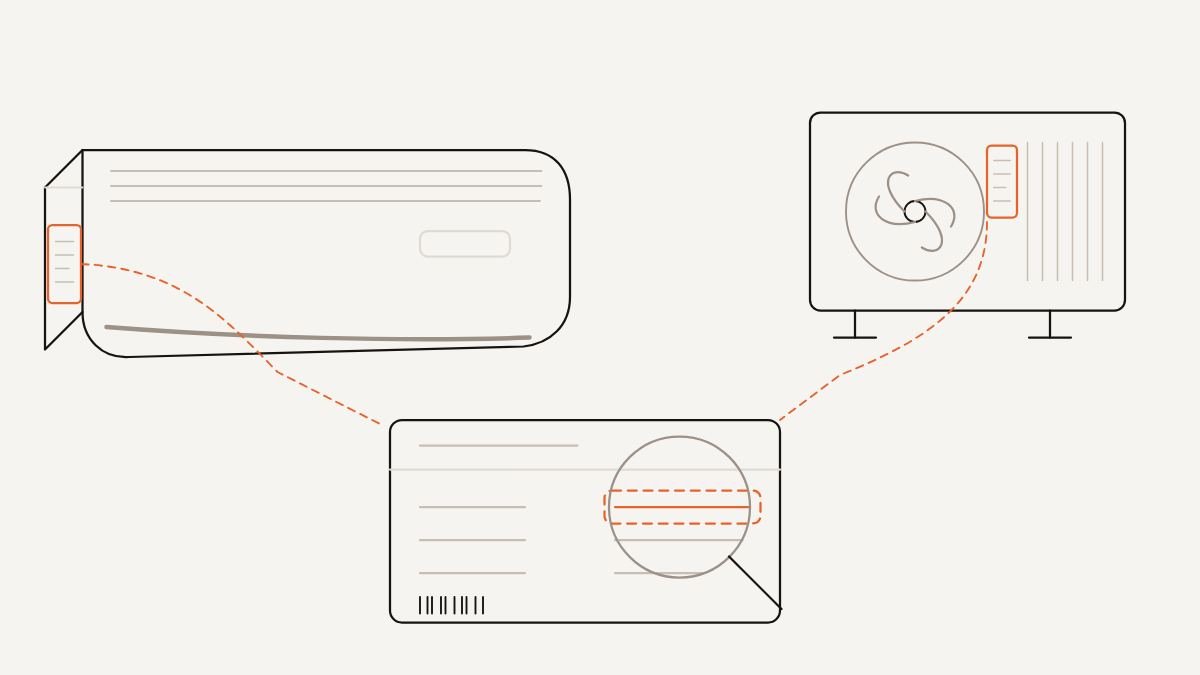
Where the rating label usually hides
On a window mounted box unit, look along the side of the chassis or under the front grille. On a wall sleeve installation, the label frequently sits behind the removable front panel.
Photograph it while you have the panel open. A clear image of the full model and serial string saves a phone call later, and it settles arguments about Kelvinator kwh26cre specs before they start.
Why we will not publish Kelvinator kwh26cre specs
Production runs change without any change to the badge. Two units wearing the same name can carry different boards, different sensors and different refrigerant charges.
So we quote nothing from memory. Read your own label, and treat any figure you find on a forum as a rough guide rather than a fact about your machine.
Why does Kelvinator kwh26cre e1 turn up so often?
Two very different reasons drive that question, and confusing them wastes hours. Some rating labels carry a short suffix after the base code, so owners treat the whole string as the model code.
Other owners see E1 flashing on the display or blinking through an indicator lamp. In that case the E1 reports a fault rather than an identity.
Before you troubleshoot anything, work out which one applies to you. Look at the label first, then at the display, because the two lead down completely different paths.
Where the suffix belongs to the label, treat Kelvinator kwh26cre e1 as the model name. That string then matters for a Kelvinator kwh26cre e1 repair, because parts lists follow the suffix.
What do Kelvinator kwh26cre error codes really tell a technician?
They narrow the search, and nothing more. A code names the circuit that reported trouble, so it points at a sensor, a communication line or a protection limit.
It does not name the faulty part. A code that flags a room sensor can come from the sensor itself, from its plug, or from the board that reads it.
So our technicians treat a code as a starting point. They measure temperatures, currents and pressures, then compare those readings against what the code claims.
Kelvinator kwh26cre e1 error codes, Kelvinator kwh35cre error codes and Kelvinator kwh35cra error codes all end in the same place. The code shortens the diagnosis, and the meter finishes it.
Which fault codes matter most on these box units?
Owners describe the same handful of readings again and again. The list below shows the shapes those searches usually take.
None of those lists replace a diagnosis. They tell a technician where to point the meter first, and that alone saves time on site.
- Kelvinator kwh26cre error codes that latch on the indoor display and stay there.
- Repeating Kelvinator kwh box unit error codes that appear across several chassis when the boards match.
- Installer paperwork and service sheets listing Kelvinator kwh cre series error codes.
- The Kelvinator kwh35cre fault codes that owners report when a room stays warm.
Talk it through with a technician
Tell us the model and what the unit is doing, and we will bring the right parts to the first visit.
Why is a Kelvinator kwh26cre not cooling the way it used to?
Airflow explains most cases. Dust builds on the filter, then on the indoor coil, and finally in the blower wheel, so the machine moves less air through the same room.
Heat rejection explains much of the rest. The outdoor side of a box unit lives in the weather, and its fins collect lint, leaves and salt until they cannot shed heat properly.
Refrigerant loss comes third, not first. A unit that has lost charge cools weakly at the start of a cycle, then ices at the coil, and finally trips on protection.
Larger machines behave no differently. A Kelvinator kwh35cre not cooling shows the same pattern, so the diagnosis follows airflow, then heat rejection, then charge.
Why do box units age differently to split systems?
Everything lives in one cabinet, and that changes how the machine wears. Compressor vibration reaches the indoor side directly, so mounts, panels and grilles loosen over the seasons.
Weather reaches further in as well. Wind drives rain and dust past the outdoor grille, and a tired sleeve seal lets both track towards the electrical side.
Drainage adds its own pressure. Many box units fling condensate onto the condenser by design, so mineral deposits build where a split system would never see them.
None of that rules out a long working life. It simply means cleaning and sealing matter more here than they do on a wall mounted split system.
Does a Kelvinator kwh26cre reset achieve anything?
Sometimes, and it costs nothing to try. Isolating power at the wall for a short period clears a latched code, so the unit restarts its own checks from scratch.
That helps after a blackout or a voltage dip. Control boards can lock out on a momentary event, and the lockout survives long after the event itself has gone.
It does nothing for a real fault. If the code returns within a cycle, the machine has told you something true. So it needs a technician rather than another reset.
A Kelvinator kwh35cre reset works the same way. Cut the power, wait, restore it, and watch what the unit does on its next start.
What does a Kelvinator kwh26cre not working at all point to?
Power comes first, every time. Check the outlet, the plug top, the isolating switch and the circuit breaker before you suspect anything inside the cabinet.
Then listen at the moment of switch on. A click with no motion suggests a start component or a seized motor, while total silence points at supply or control.
The same order applies whatever the badge says. A Kelvinator kwh35cre not working, a Kelvinator kwh35cra not working or a Kelvinator kwh box unit not working all begin at the supply.
Where a suffix appears on your label, a Kelvinator kwh26cre e1 not working follows exactly the same path. Nothing about the suffix changes the order of those checks.
Where do you find a Kelvinator kwh26cre manual?
Start with the paperwork from the installation, because it matches your exact build. Failing that, the manufacturer keeps documentation for many older models, and support pages list them by model code.
Owners hunt for several different documents without always realising it. The list below covers what people usually mean.
Owner manuals cover controls, filters and drainage. Service documentation goes much further, and most of it stays with trade suppliers rather than the public.
- A Kelvinator kwh26cre manual when the label carries no suffix at all.
- Owners with a suffix on the label want a Kelvinator kwh26cre e1 manual instead.
- The larger chassis calls for a Kelvinator kwh35cre manual and its own part list.
- An earlier label ending in those letters points to a Kelvinator kwh35cra manual.
- Some support pages publish a Kelvinator kwh box unit manual covering a whole family.
- Trade suppliers hold a Kelvinator kwh cre series manual written for installers.
Can you do a Kelvinator kwh26cre wifi setup on an older box unit?
Usually not through the unit itself. Many box units of this style carry no communication module at all, so an app has nothing to talk to inside the cabinet.
Owners still gain remote control another way. A smart infrared bridge learns the handset signals, so a phone can send the same commands the remote sends.
That approach has limits worth knowing. The bridge sends commands blind, so it cannot read the state of the machine or report a fault back to you.
Ask before you buy anything. Our technicians will tell you whether a Kelvinator kwh26cre wifi setup makes sense on your particular installation.
What if the Kelvinator kwh26cre remote stops responding?
Check the simple things first, since most handset faults turn out trivial. Fresh batteries, a clean lens and a clear line of sight fix a surprising share of them.
Then test the handset with a phone camera. Point it at the lens, press a button, and look for a flicker on the screen that your eye cannot see.
If the handset transmits and the unit ignores it, suspect the receiver. That part sits behind the display panel, and it shares a loom with the indicator lamps.
Universal handsets work on many units, though they do not always reach every function. So keep the original handset while it still works at all.
How much does Kelvinator kwh26cre filter cleaning actually matter?
More than any other job you can do yourself. A choked filter starves the coil, and a starved coil ices, which drags the whole machine into protection.
Through the cooling season, rinse the filter regularly and let it dry fully before it goes back. Dust, pet hair and cooking grease all shorten that interval.
Filter work stops at the filter, though. The coil behind it needs chemical cleaning and clear drainage, and that belongs to a service visit rather than a weekend.
Regular Kelvinator kwh26cre filter cleaning also protects the fan motor. Less load means less heat, and less heat means the bearings last longer.
What are the usual Kelvinator kwh cre series problems?
Box units fail in a narrow set of ways, because their layout leaves little room for variation. Our technicians meet the same short list across the whole family.
Kelvinator kwh26cre e1 problems usually come down to one of those. So do the wider Kelvinator kwh cre series problems.
- Water inside the room when the drain path silts up and the tray overflows.
- Rattles and drone when mounting rubbers harden and the chassis touches the sleeve.
- Weak cooling when the outdoor fins clog and heat has nowhere to go.
- Random shutdowns when a capacitor weakens and the compressor struggles to start.
- Dead controls when moisture reaches the board through the sleeve or the grille.
Can parts still support a Kelvinator kwh35cra repair?
Often yes, and the answer depends on the part rather than the model. Capacitors, fan motors, thermistors and switches come from general stock, so supply rarely blocks a repair.
Control boards sit in the difficult group. Once a board leaves production, the trade relies on remaining stock, and matching depends on the exact suffix.
Sealed system parts fall somewhere in the middle. Compressors for common capacity classes still reach the trade, although labour on a box unit chassis adds to any such job.
We check availability before you commit to anything. That conversation belongs at the start of a Kelvinator kwh26cre e1 service, not halfway through it.
What does a Kelvinator kwh cre series review actually tell you?
Less than you hope, because a review describes a different machine to yours. Comments written about a new unit say nothing about how the same model behaves after long service.
Read them for patterns instead of verdicts. If several owners describe the same noise, the same drainage habit or the same board fault, that pattern carries real information.
Ignore star counts entirely. A Kelvinator kwh26cre review, a Kelvinator kwh35cre review or a broader Kelvinator kwh cre series review all mix installation quality with product quality.
Your own service history beats every review online. A technician who has opened your machine knows more about it than any stranger with a keyboard.
What shapes the Kelvinator kwh26cre price of a repair?
Several factors move the figure, and none of them relate to the badge on the front. Access, part supply, the type of fault and the time on site all matter.
Access dominates on box units. A chassis in a tight wall sleeve takes longer to pull and refit than one sitting in a ground floor window.
Part supply comes next. A common capacitor costs little in labour terms, while a discontinued board turns into a search as much as a repair.
We explain our approach on the page about what shapes our pricing. When you would rather talk it through, you can book a service and describe the symptom.
What happens during a service visit on a box unit?
The chassis usually comes out of the sleeve, because almost nothing on a box unit reaches far enough from the front. That single step separates a real service from a filter rinse.
Once the chassis sits on a bench or a trolley, the technician cleans both coils properly. Then the drain tray, the blower wheel and the condenser fan all get attention.
Electrical checks follow the clean. Run currents, capacitor values, sensor resistance and control voltages all tell a story about what will fail next.
Finally the technician refits the chassis and reseals the sleeve. Poor sealing lets hot air and water track back inside, which undoes much of the work.
A practical checklist before you call anyone
Work through these in order, and stop at the first step that needs tools you do not own. Each one either fixes the fault or narrows it usefully.
That list answers most of the easy cases. Anything beyond it needs meters, gauges and a refrigerant licence, so hand it over at that point.
If you would rather skip the checking, our page on air conditioner repairs explains what a visit covers.
Switch the unit off at the wall, then restore power after a short wait.
Remove the filter, rinse it, and let it dry completely before refitting.
Look at the outdoor fins and clear leaves, lint and cobwebs by hand.
Check the drain path outside and confirm that water actually escapes.
Set the mode to cooling and drop the set point below room temperature.
Listen for the compressor once the fan has settled into a steady note.
Note any code on the display, and write down exactly what it shows.
Photograph the rating label so the full model string travels with your booking.
Where we work on Kelvinator kwh box units
Our technicians travel across metropolitan and suburban areas, and box units make up a steady share of the work. Older installations in rental properties, granny flats and small offices appear most.
We also service split systems from the same brand. Owners with more than one machine often ask about the legacy KSV HRA range or the KSV HRE inverter models during the same visit.
A Kelvinator kwh box unit sits in a different service category to a split system. Access, drainage and mounting all differ, so we plan the visit accordingly.
Questions owners ask about older KWH CRE box units
What does the E1 in a Kelvinator kwh26cre e1 actually mean?
It depends where you saw it. On the rating label it forms part of the model identity, so parts lists follow it. Flashing on the display, it reports a fault instead, and that calls for diagnosis rather than a reset.
Why is my Kelvinator kwh26cre not cooling on hot afternoons?
Heat load exposes weak airflow and poor heat rejection. Clean the filter, clear the outdoor fins, and watch whether performance improves. If it still fades once the day heats up, book a proper check.
How do I carry out a Kelvinator kwh26cre reset safely?
Switch off at the wall outlet or the isolator, then wait a few minutes before restoring power. Never reach inside the cabinet while power remains live. If the code returns quickly, stop resetting and call someone.
Where can I download a Kelvinator kwh35cre manual?
Try the manufacturer support pages first, since they hold documentation for many older models. Your installation paperwork sits close behind as a source. Match the full model string, because variants within one family differ.
What causes a Kelvinator kwh35cra not working after a storm?
Voltage dips and surges upset control boards, and moisture through a wall sleeve does the same. Try one power cycle first. If nothing returns, the board or a start component usually needs attention.
Are Kelvinator kwh box unit error codes the same across models?
Many overlap, although none of them match perfectly. Two chassis in one family can use different boards, so the same letter and number can mean different things. Always check documentation for your exact model.
Is a Kelvinator kwh26cre e1 repair worth doing on an older unit?
It depends entirely on the failed component. Fans, capacitors and sensors rarely change the answer, because they cost little to put right. A sealed system fault deserves a longer conversation about replacement.
How often should a Kelvinator kwh box unit get a service?
Once a year suits most installations, ideally before the cooling season starts. Add a mid season filter clean when the unit runs hard. Units in dusty or coastal locations benefit from more frequent attention.
The short answer on older box units
Age alone decides nothing here. Which part failed, whether a replacement still reaches the trade, and how the chassis looks inside decide it together.
So gather evidence before you gather quotes. Your label, your fault code and a short list of symptoms give any technician a real starting point.
When you would like that assessment done properly, get in touch and describe what the unit does. We will tell you honestly whether repair still makes sense on your machine.
Browse the site
Book a technician
Speak to a qualified technician who works on Kelvinator systems
Call 1300 495 033 and tell us the model and the fault, or book online and we will come back to you.